Key Takeaways
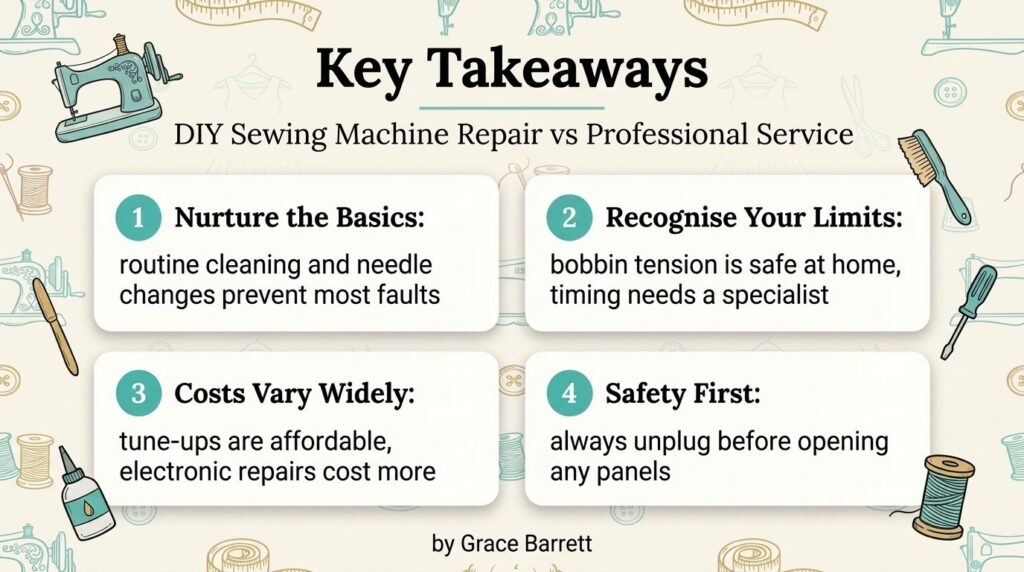
- Nurture the Basics: Routine cleaning and regular needle changes prevent most common mechanical faults, much like watering a new plant to ensure it thrives.
- Recognise Your Limits: Adjusting bobbin tension is safe to try at home, but altering complex timing mechanisms often requires a trained, experienced specialist.
- Costs Vary Widely: Standard maintenance might only be a small expense, whereas intricate electronic repairs on modern machines demand careful financial consideration.
- Safety First: Always unplug your equipment before opening any panels or attempting a deep clean of the delicate internal components.
Every creative journey experiences a few tangled threads along the way. When your beloved equipment starts skipping stitches or making unusual grinding sounds, you face a common dilemma: DIY sewing machine repair vs professional service. Deciding whether to roll up your sleeves or call in an expert can feel incredibly daunting for any maker. However, you are not alone in this learning process. We all want our creative tools to flourish and bear beautiful fruit over the years. This requires giving them the proper care they deserve on a regular basis. This article explores the delicate balance between simple home maintenance and seeking expert intervention. By understanding a few simple principles, you can confidently nurture your machine back to full, vibrant health. Let us walk through this gentle process together today. We will examine when a soft touch at home is enough and when it is wiser to seek a seasoned technician.
Cultivating Good Habits: The Root of Machine Health
Much like a seed requires rich soil to sprout, your machine needs a clean environment to function beautifully. Dust, lint, and stray threads quickly accumulate inside the delicate internal mechanisms. If left unchecked, this debris can strangle the moving parts, leading to costly and frustrating breakdowns. A compassionate approach to daily maintenance ensures your equipment continues to bloom for years to come. You do not need to be a mechanical genius to perform basic, effective upkeep. Simple, loving attention is often all that is required to keep the gears turning smoothly.
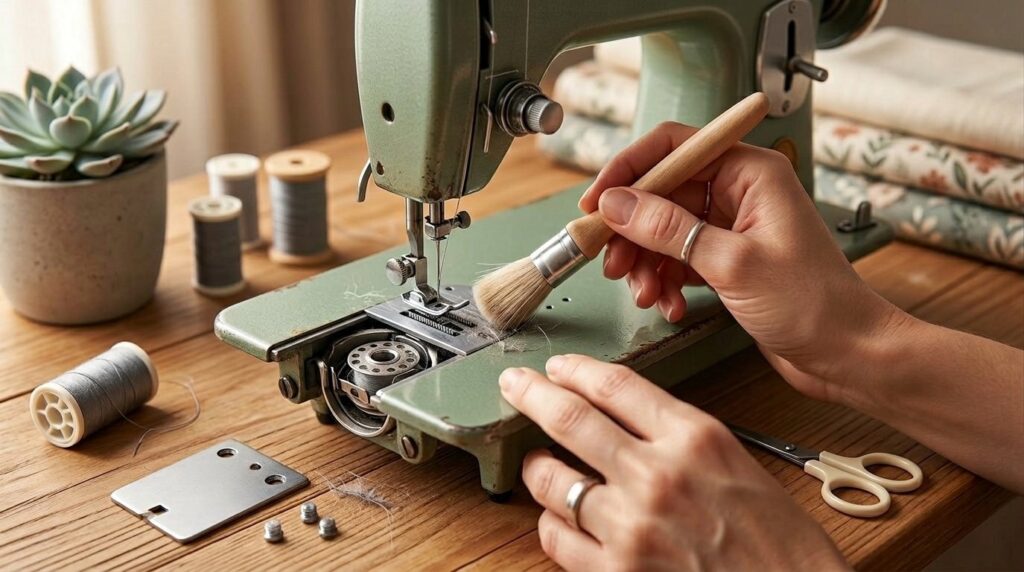
Many beginners feel intimidated by the thought of opening their machine casing. Yet, a quick brush around the feed dogs after a long project works absolute wonders. It prevents small problems from taking root and growing into stubborn, immovable blockages. Think of it as pruning a cherished shrub in your back garden. By carefully snipping away the dead leaves, you encourage fresh, vibrant growth. When you embrace these small acts of care, you build a deeper bond with your craft. You might even find that learning about your machine’s inner workings is a deeply rewarding part of the sewing process. If you want to build your foundational knowledge further, joining foundational workshops designed for those just starting out can be incredibly helpful.
singer sewing machine repair guide: Finding the Right Path
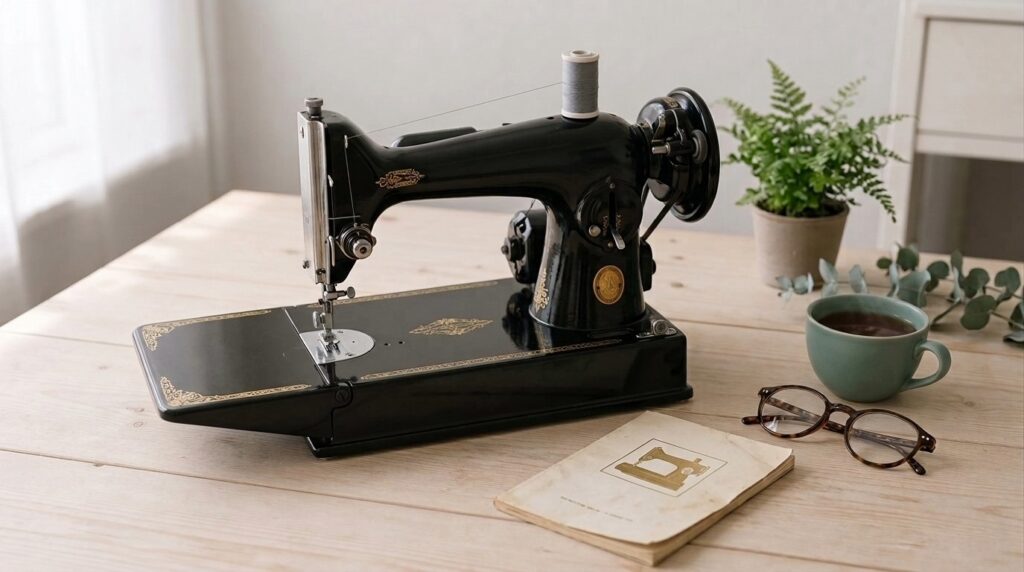
When you encounter a stubborn issue, knowing exactly where to look for guidance is essential. Finding a reliable singer sewing machine repair guide or a manual for your specific brand is the first vital step toward self-sufficiency. These comprehensive manuals are the botanical maps of your machine. They show you exactly where to apply a single drop of oil and how to safely remove the needle plate. Never underestimate the immense power of reading the original instructions provided by the manufacturer.
Consulting your manual empowers you to tackle minor adjustments safely and calmly. It gently steers you away from delicate areas that are best left entirely alone. For example, your manual will clearly illustrate how to rethread the upper tension discs correctly. Often, what appears to be a major mechanical failure is simply a thread that has slipped out of its proper groove. By following the original guidelines, you plant the seeds of true confidence. You learn to diagnose simple quirks without fear, ensuring your projects continue to grow beautifully. For those wishing to connect with fellow makers, exploring local workshops based in the north of the city offers a wonderful supportive environment.
Building a Toolkit for Home Maintenance
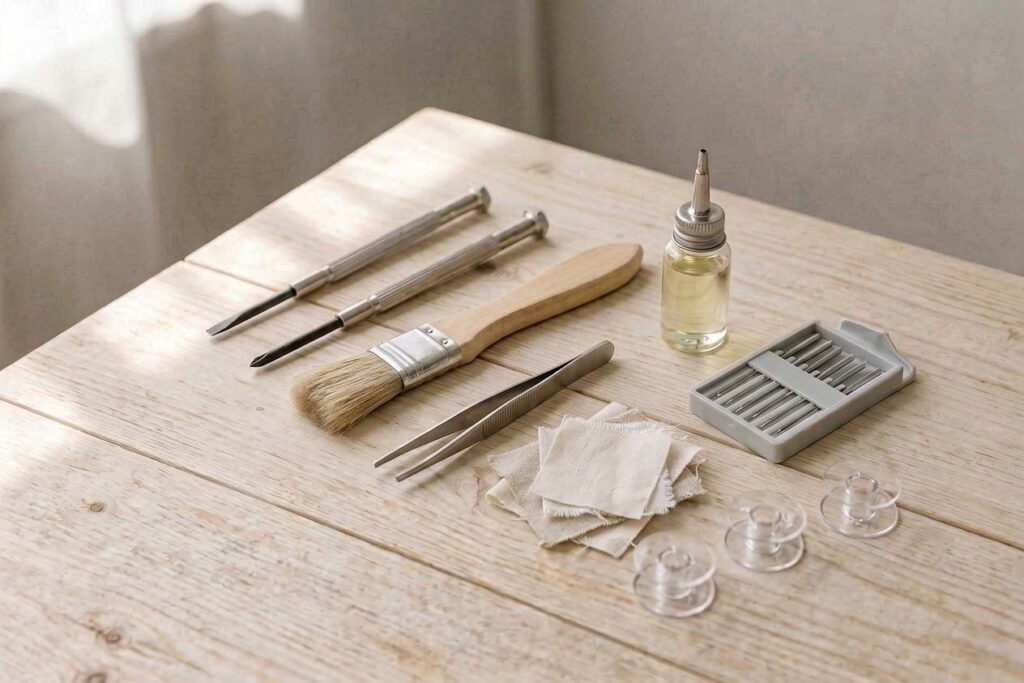
Every good gardener keeps a trusted set of tools in the shed. Similarly, assembling a small maintenance kit for your equipment prepares you for minor hiccups. You do not need expensive, complicated gadgets to perform effective home care. A simple set of small screwdrivers, usually provided with your machine, is your most valuable asset. These allow you to gently lift the needle plate and access the bobbin area safely.
Alongside your screwdrivers, a soft, dry brush is absolutely essential for clearing away trapped lint. A clean makeup brush works perfectly for sweeping dust out of tight corners without causing any damage. You should also keep a pair of fine tweezers nearby to pluck out stubborn, tiny thread nests. Finally, ensure you have a bottle of dedicated machine oil if your specific model requires it. Storing these simple items together creates a dedicated care station for your creative practice. Should you wish to discuss tools and techniques in person, you can always reach out to our friendly studio team.
Our Unique Insight: The Lifecycle of Your Equipment
Your machine has a natural, predictable lifecycle, much like a fruit-bearing tree in a quiet orchard. In its early years, it runs with quiet efficiency, requiring only basic nourishment like regular cleaning and good quality thread. As it matures, it may develop a few gentle, entirely normal quirks. You might notice the motor sounding slightly different or the tension dial needing a bit more coaxing. This is perfectly normal and simply part of the natural ageing process. Acknowledging this rhythm helps you respond with patience and care rather than sudden frustration.
Eventually, you will encounter a moment where standard care is simply no longer enough. The internal gears might stiffen, or a crucial part might finally wear out after years of faithful service. This is the quiet winter season of your machine’s long life. It is during these moments that we must pause and calmly evaluate the best course of action. Does the machine need a deep, restorative professional service to bring back the spring? Or is it perhaps time to thank it for its service and gently retire it? Understanding this lifecycle removes the anxiety from unexpected mechanical failures. It allows you to make calm, informed decisions about your most trusted creative tools.
sewing machine repair vs replace: Making the True Choice
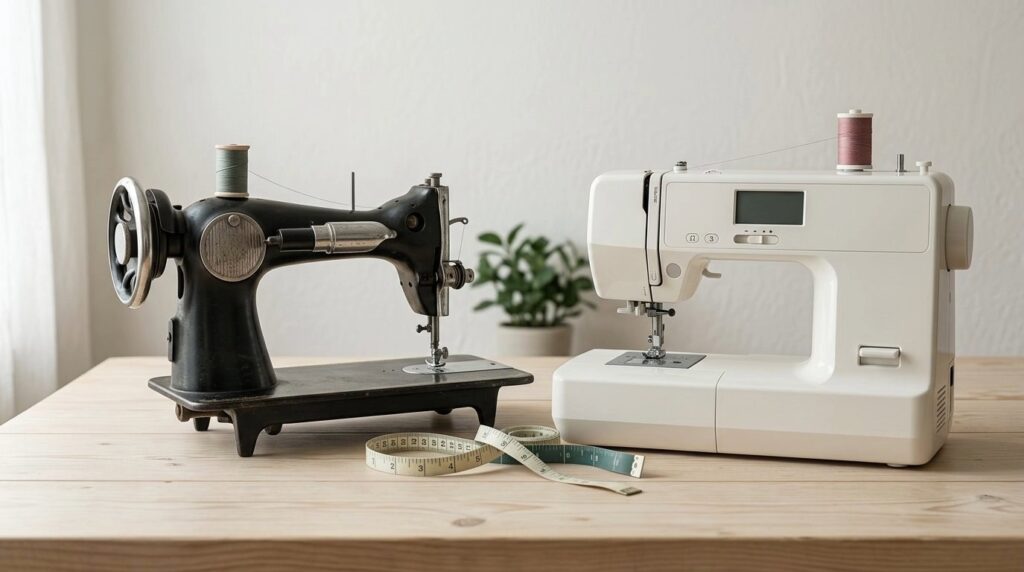
We often reach a distinct crossroads where we must weigh sewing machine repair vs replace. This decision is deeply personal and depends heavily on the sentimental and practical value of your equipment. A vintage, all-metal workhorse often justifies a more expensive repair because its sturdy roots run deep. These older models were built to last generations, much like a robust, towering oak tree. Restoring one can breathe fresh new life into a truly magnificent piece of heavy engineering.
Conversely, some entry-level modern machines are constructed primarily with lightweight plastic components. When their delicate internal gears fail, the cost of mending them often exceeds their original purchase price. In these specific cases, choosing to replace the machine might be the most sensible, practical option. It allows you to invest your resources into a stronger, more reliable model that will support your growing skills. Always ask for a detailed estimate before committing to a costly fix. This ensures you can confidently decide whether to prune the existing tree or plant a brand new seed. To explore more advanced techniques once your equipment is ready, consider next-level modules tailored for those with basic skills.
Actionable Strategy: Nurturing Care You Can Provide Today
Taking control of your machine’s health begins with a few gentle, highly practical steps. You can perform these tasks in the comfort of your own home, setting a strong foundation for your future projects. By dedicating just fifteen minutes to maintenance, you will save hours of frustration later on. Here is a simple, actionable strategy to implement right away to keep your equipment humming.
First, always start by changing your needle. A dull or bent needle is the root cause of countless stitching problems, from skipped stitches to tangled bobbin threads. Treat needles like fresh water for cut flowers; they need changing regularly to keep everything looking beautiful. Ideally, insert a brand new needle at the start of every large, important project. This tiny adjustment makes an enormous difference to the overall quality of your final seams.
Secondly, take your soft brush and gently sweep out the bobbin case area. Remove the needle plate and carefully clear away the compacted lint hiding beneath the metal feed dogs. Do not use compressed air, as this can forcefully blow the dust deeper into the delicate internal gears. Instead, use your small, dry brush to sweep the dirt outward and away from the moving parts. By gently clearing this debris, you allow the machine to breathe and move freely once more.
when to take your sewing machine in for service
Understanding precisely when to take your sewing machine in for service is a crucial skill for any maker. If you have cleaned the bobbin, changed the needle, and rethreaded the machine completely, yet the problem persists, it is time to seek help. Continuous thread breaking, loud knocking noises, or a sudden burning smell are clear signs that a professional touch is required. These troubling symptoms suggest a deep internal issue, such as a timing misalignment or a struggling electrical motor.
A skilled technician possesses the specialised tools and deep knowledge needed to diagnose complex ailments. They can safely open the main casing, assess the internal health, and apply the correct lubricants to the deepest gears. Trusting an expert in these difficult moments prevents you from accidentally causing further harm to the equipment. Think of them as experienced tree surgeons, capable of healing problems that lie far beneath the outer bark. Regular check-ups, ideally once a year for heavy users, ensure your machine remains a highly reliable companion on your creative journey.
The Financial Side of Caring for Your Machine
Budgeting for upkeep is a highly sensible part of any fulfilling creative hobby. Just as a gardener budgets for fresh compost and new clay pots, a seamstress must plan for occasional maintenance costs. Repair prices vary significantly depending on the exact make, model, and the severity of the specific issue. A simple mechanical tune-up is generally quite affordable and represents a wonderful, lasting investment in your craft. This routine care ensures your stitches remain perfectly balanced, strong, and beautiful.
However, complex electronic failures on modern, computerised embroidery machines can be considerably more expensive to resolve. These advanced machines contain delicate motherboards and precise digital sensors that require specialist diagnostic software. If you sew frequently, setting aside a small monthly maintenance fund can cushion the sudden blow of an unexpected breakdown. It brings immense peace of mind, allowing you to focus entirely on the pure joy of creating. Knowing what to expect financially gently removes the stress from the entire repair process. If you want further advice on managing your craft smoothly, you can always browse our collection of helpful stitching articles.
brother sewing machine repair cost and General Estimates
When facing a sudden breakdown, you will naturally wonder about the brother sewing machine repair cost or the typical charges for other major brands. Generally, a standard service and routine tune-up will range between fifty and eighty-five pounds. This usually covers a thorough internal cleaning, fresh lubrication, and a complete, precise tension recalibration. It is a very reasonable price for restoring perfect harmony to your essential equipment.
If the technician needs to replace a specific broken part, such as a worn motor belt or a damaged bobbin case, the price will naturally increase. A complex timing adjustment might push the final bill slightly higher, usually hovering around the hundred-pound mark. It is always a wise decision to request a transparent, written quote before authorising any major work. Most reputable repair shops are incredibly happy to explain exactly what your machine needs to thrive once again. For an immersive experience in learning how your tools work, evening and weekend workshops for grown-ups are a delightful option.
The Importance of Using Quality Materials
The materials you feed into your machine have a profound impact on its overall lifespan. Just as a plant needs pure water to thrive, your equipment needs high-quality thread to perform at its very best. Cheap, bargain threads are often highly fibrous and shed an enormous amount of lint as they pass through the tension discs. This excessive shedding quickly clogs the internal pathways, leading to completely avoidable mechanical jams.
Investing in beautifully smooth, strong thread is one of the best preventative measures you can possibly take. It glides effortlessly through the needle, reducing friction and preventing unnecessary wear on the internal moving parts. Similarly, using the correct bobbin size specifically designed for your model is absolutely critical. A bobbin that is even a millimetre too small will rattle loudly and disrupt the delicate stitch formation. By choosing excellent materials, you actively protect your machine from daily wear and tear.
Cultivating Confidence in Your Abilities
As you spend more quiet time with your equipment, your confidence will naturally blossom and grow. You will slowly start to recognise the sweet, steady humming sound of a perfectly balanced machine. You will instantly notice when the top tension feels a little tight or when the bobbin thread is pulling unevenly. This intuitive, deep understanding is the beautiful, rewarding fruit of patience and continuous practice. It transforms the machine from a frightening mechanical box into a deeply trusted, familiar partner.
Do not be disheartened if you make a simple mistake while trying to fix a minor issue. Every single tangled thread is simply a gentle lesson waiting to be learned. We all have moments where we thread the needle backwards or forget to lower the presser foot before starting. These small, harmless stumbles are entirely normal parts of the universal learning curve. Approach your machine with a gentle, highly forgiving spirit, and it will surely respond in kind. If you desire highly personalised, focused guidance, bespoke one-to-one tuition can gently accelerate your progress.
The Beauty of a Well-Maintained Machine
There is a profound, quiet joy in sitting down at a freshly serviced, beautifully humming machine. The fabric glides effortlessly under the presser foot, and the stitches form a perfect, continuous, strong line. It truly feels as though the equipment is working in pure, uninterrupted harmony with your own hands. This seamless experience allows your creativity to flow completely freely without any frustrating mechanical interruptions. You can focus entirely on the beautiful colours, the rich textures, and the sweeping shape of your garment.
Achieving this wonderful state of flow requires only a tiny bit of routine discipline. By committing to regular cleaning and knowing precisely when to ask for expert help, you guarantee many happy hours of stitching. Your machine is a vessel for your imagination, capable of turning simple flat fabrics into glorious, three-dimensional art. Nurture it carefully, treat it with immense respect, and it will reward you with years of faithful, beautiful service.
Embracing the Journey of Making
Sewing is a profoundly grounding practice that connects us to a very long, proud lineage of makers. Whether you are crafting a simple canvas tote bag or tailoring a highly complex winter coat, the process itself is deeply nourishing. Dealing with occasional mechanical hiccups is simply part of this rich, incredibly fulfilling creative journey. It teaches us true patience, strong resilience, and the immense value of carefully maintaining our essential tools.
Remember that flawless perfection is never the actual goal; joyful, expressive creation is what truly matters most. If your machine suddenly acts up, take a deep breath and gently step away for a brief moment. Make a warm cup of tea, look out the window, and return with a calm, refreshed mind. You have the knowledge and the resources to easily overcome these little hurdles. To read more about my personal experiences with these exact creative challenges, you can discover more about my own journey.
Frequently Asked Questions (FAQ)
How often should I oil my sewing machine? You should oil your machine according to the manufacturer’s specific guidelines found in the manual. Generally, older mechanical models require a drop of oil every few months if used regularly. Modern computerised machines often use self-lubricating nylon gears and may not need home oiling at all. Always use dedicated sewing machine oil, as household lubricants will quickly gum up the delicate mechanisms and cause significant damage.
Why is my top thread constantly breaking? Your top thread is likely breaking due to improper threading or a damaged needle. Start by completely removing the spool and rethreading the machine from scratch, ensuring the presser foot is raised. Next, replace your needle with a brand new one, as a tiny burr can easily snap the thread. Finally, check that your top tension is not set too high for the specific fabric you are using.
Can I use canned air to clean my machine? No, you should never use compressed canned air to clean the inside of your machine. The high pressure simply blows lint, dust, and stray threads deeper into the internal gears and computerised sensors. This compacted debris can cause severe mechanical blockages over time. Instead, use a small, soft brush to gently sweep the dirt outward and away from the delicate moving parts.
What causes my machine to skip stitches? Skipped stitches almost always point to an issue with the needle. You might be using a needle that is too dull, bent, or simply the wrong type for your fabric. For instance, using a universal needle on stretchy jersey fabric will frequently cause skipped stitches. Always ensure the needle is inserted fully and facing the correct direction, then try a fresh, appropriate needle to resolve the issue.
Conclusion
Navigating the choice between home maintenance and professional intervention does not have to be a stressful experience. By tending to the basic needs of your equipment, you encourage it to flourish wonderfully day after day. Small, gentle acts of care, like sweeping away lint and changing the needle, act as the fertile soil for a long, productive lifespan. When deeper, more complex issues eventually arise, leaning on the expertise of a professional ensures your beloved machine receives the restorative care it truly deserves. Trust your instincts, consult your manual, and never hesitate to seek help when the gears feel stuck. May your creative journey remain fruitful, joyful, and filled with beautifully straight stitches.
About the Author: Grace, Founder of London Sewing Courses
Grace is the heart and hands behind London Sewing Courses. A passionate and experienced sewing instructor, she founded the studio with a unique mission: to create a calm, friendly space for adults to learn and connect, while using the profits to fund free sewing classes for local children in need. Her personal expertise and commitment to community building are at the core of every class and every stitch.
Sources
Singer Sewing Machine Service Manual | PDF – Scribd
Maintenance Service guide – Brother Sewing Machines
Cost of Sewing Machine Repair: Complete Guide & Tips
How Much Does Sewing Machine Repair Cost in 2025? | Airtasker AU