Key Takeaways
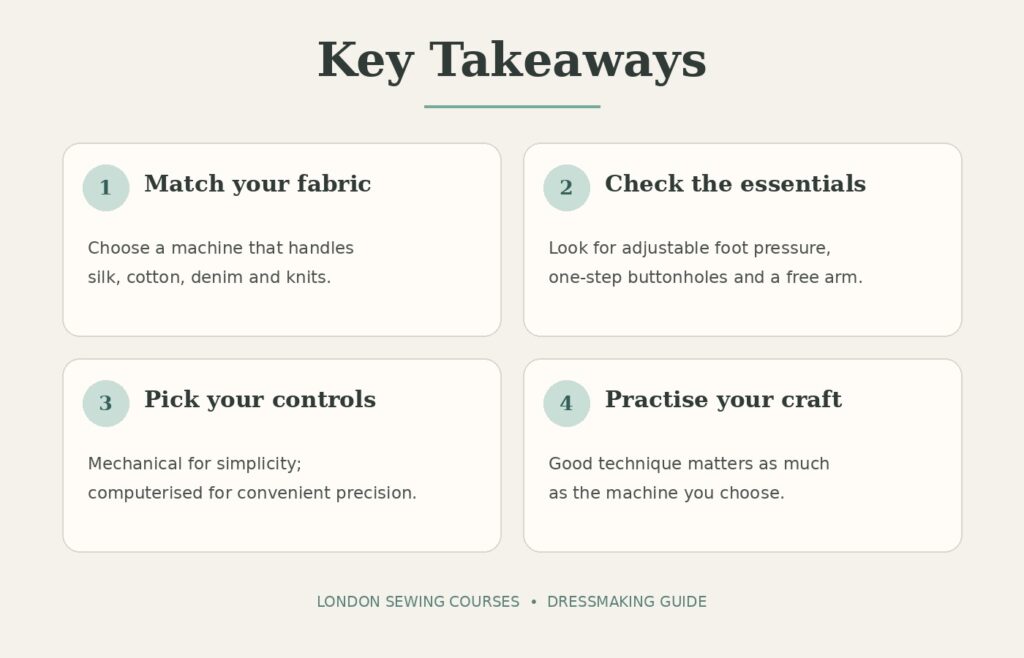
- Match Machine to Fabric: Dressmaking demands a machine capable of handling varied textiles, from lightweight lawn and slippery silk to heavy denim and stretch knits.
- Focus on Essential Features: Look for adjustable presser foot pressure, a precise one-step buttonhole function, a drop-in bobbin, and a smooth feed dog mechanism.
- Choose Your Technology: Mechanical machines offer straightforward, durable simplicity, whereas computerised models provide automated tension, speed control, and stitch precision.
- Nurture Technique alongside Tools: A good sewing machine provides fertile ground for your creativity, but mastering garment construction requires patient practice and proper guidance.
Finding the Right Sewing Machine for Dressmaking
When you begin your garment creation journey, asking what is the best sewing machine for dressmaking is much like asking a gardener which soil produces the most bountiful blooms. The answer depends on what you wish to plant and cultivate. Dressmaking is a creative process where raw fabric blossoms into wearable art. Unlike basic craft sewing or simple homeware repairs, making clothes requires precision, adaptability, and smooth tension control across a wide variety of textiles.
Choosing your sewing machine is an exciting step. Whether you dream of crafting floating linen dresses, tailored wool trousers, or delicate silk blouses, your machine is your trusted partner. The right machine will respond gently to your touch, feed fabric effortlessly, and help your confidence grow with every seam you sew.
Understanding Your Fabric Needs: From Delicate Silk to Heavy Denim
Every garment fabric possesses its own unique personality. A delicate cotton lawn glides differently under the presser foot than a thick, structured denim or a springy jersey knit. To achieve crisp seams and clean drapes, your machine must adapt to these changing textures.
Standard budget machines often apply a fixed foot pressure, which can pucker lightweight fabrics or push stretch knits out of shape. A machine suited for dressmaking allows you to adjust foot pressure easily. This gentle control keeps fine chiffons smooth while allowing multi-layered denim seams to pass without hesitation.
Essential Features for Garment Construction
Garment making involves specific techniques that require specialized machine features. When evaluating prospective models, look for these practical tools:
- Adjustable Presser Foot Pressure: Essential for controlling fabric flow without stretching fine knits or dragging lightweight woven fabrics.
- One-Step Automatic Buttonhole: Takes the guesswork out of sizing by measuring your exact button and stitching identical buttonholes consistently.
- Variable Stitch Length and Width: Allows you to fine-tune straight stitches for gathering or adjust zigzag widths for stretch seams.
- Free Arm Capability: Removable storage compartments reveal a slender arm, making it simple to stitch narrow sleeve cuffs, trouser hems, and necklines.
- Drop-In Bobbin System: A top-loading bobbin with a clear cover allows you to monitor thread levels before starting a long seam.
Developing strong foundational skills on a supportive machine makes all the difference. If you are starting from scratch, joining beginner sewing courses
provides a wonderful environment to build your confidence alongside hands-on guidance.
What is the Best Sewing Machine to Buy UK Dressmakers Recommend?
When exploring what is the best sewing machine to buy uk dressmakers consistently praise, you will discover options across two main categories: mechanical and computerised. Both paths offer distinct benefits depending on your personal learning style and creative ambitions.
Mechanical machines use manual dials to select stitches and adjust length or width. They are robust, straightforward, and easy to maintain. Computerised machines use digital screens and internal microprocessors to adjust tension and stitch settings automatically, providing remarkable consistency at the press of a button.
Top Recommended Models in the UK Market
The UK sewing community holds several stand-out models in high regard for dressmaking quality and long-term reliability:
- Janome Sewist 725S: A mechanical marvel featuring 23 stitches, a sturdy internal frame, and an automatic one-step buttonhole. It provides clean, reliable stitching across light and medium-weight fabrics without complex menus.
- Janome 525S / 5060 QDC: Revered by dressmaking enthusiasts and tutors alike. The 5060 QDC offers computerised ease with 200 stitch options, an automatic thread cutter, and outstanding tension stability across delicate and heavy fabrics.
- Brother Innov-is A50: A top-tier entry into computerised sewing. It features 50 built-in stitches, an intuitive jog dial, five automatic buttonhole styles, and a smooth slider for electronic speed control.
- Singer Heavy Duty 4423: Built with a high-speed motor and a stainless steel bedplate. This model is ideal for sewists working frequently with structured, heavier materials like denim, canvas, or coat wool.
Mechanical vs Computerised: Which Sprouts Better Results?
Neither technology is inherently superior; rather, each serves different sewing preferences. Mechanical machines appeal to those who enjoy tactile dials and straightforward operation. They have fewer electronic parts, making them easy to service and care for over many years.
Computerised machines excel in convenience. Features like an automatic thread cutter save thread and time, while needle up/down positioning ensures your needle stays down in the fabric when pivoting corners on collars and pockets. For those balancing busy lives, these small automations allow your creative time to flourish.
Entry-Level Models for Emerging Tailors
If you are just beginning to explore dressmaking, you do not need to invest in a top-of-the-range machine right away. Solid starter models like the Brother Innov-is A16 or Janome 2200XT offer dependable stitch quality without overwhelming you with excessive settings.
Learning on a clear, approachable machine allows your skills to take root naturally. Many students find that combining a reliable starter machine with structured sewing classes in London for adults
helps them master key techniques quickly and enjoyably.
Best Sewing Machine for Experienced Sewer UK Options
As your dressmaking skills mature, your expectations from a machine naturally elevate. A confident seamstress or tailor seeks high stitch precision, speed control, superior feeding mechanisms, and decorative versatility. When researching the best sewing machine for experienced sewer uk options, advanced features become essential for executing complex garment details.
Experienced sewers often work with challenging fabrics like slippery silk satin, heavy velvet, or delicate lace. They require machines that maintain perfect tension across varying fabric layers without skipping stitches or pulling threads.
Advanced Machines for Confident Garment Makers
For seasoned makers seeking professional-level performance at home, these high-spec models stand out:
- Janome DKS30SE / M50 QDC: Offers direct stitch selection keys, powerful needle penetration, and an extra-high presser foot lift for thick wools and winter coats.
- Brother Innov-is A150: Delivers 150 stitches, multiple font styles for subtle garment labelling, an advanced needle threader, and an electronic keypad for swift adjustments.
- Bernina 335: A premium Swiss-engineered compact machine known for exceptional stitch accuracy, industrial-grade stitch quality, and a robust metal hook system.
- Juki HZL-F600: Features industrial box-feed technology that moves the feed dogs in a rectangular motion rather than an oval path, ensuring superior fabric contact and flat, even seams.
Key Features the Seasoned Seamstress Needs
Advanced garment making requires tools that save time while elevating garment finish. Here are features experienced dressmakers rely on:
- Box Feed Mechanism: Keeps fabric in continuous contact with feed dogs, eliminating fabric shifting on silky fabrics or thick seam intersections.
- Automatic Thread Trimming: Snips upper and lower threads neatly at the end of a seam with a button press or heel tap on the foot control.
- Knee Lifter Bar: Allows you to raise and lower the presser foot using your knee, keeping both hands free to guide intricate garment curves and gathers.
- Programmable Needle Position: Automatically places the needle down into the fabric whenever you stop sewing, making precise pivoting effortless.
Refining advanced techniques like lining coats, setting sleeves, and inserting invisible zips becomes much easier with dedicated instruction. Attending intermediate sewing workshops
allows experienced sewists to polish their finishing touches under expert guidance.
Investing in Precision and Longevity
High-end dressmaking machines represent a long-term investment in your craft. Choosing a machine with an all-metal interior chassis ensures stability at high sewing speeds, reducing vibration and noise. Regular maintenance and professional servicing every twelve to eighteen months will keep your machine stitching flawlessly for decades.
Sewing Machine for Experienced Sewer UK 2025 Reviews and Standouts
Reflecting on user experiences and expert testing, the sewing machine for experienced sewer uk 2025 reviews highlight consistent priorities: stitch reliability, presser foot versatility, and effortless buttonhole creation. Recent reviews show that experienced UK makers prioritize build quality and tension consistency over flashy digital extras.
Top-reviewed models consistently receive praise for handling tricky seam crossings without stalling or dropping stitches. When sewing dress collars, waistbands, or coat lapels, consistency is paramount.
Buttonhole Quality and Garment Finishing
A poorly stitched buttonhole can compromise an otherwise exquisite garment. Reviews from experienced sewists emphasize the value of sensor buttonhole feet. These advanced feet measure button dimensions digitally while monitoring fabric thickness, delivering uniform, beautifully dense satin stitches every single time.
Having access to multiple buttonhole styles—such as keyhole buttonholes for tailored jackets or rounded buttonholes for delicate blouses—gives your handmade wardrobe a polished, high-street appearance.
Handling Stretch Fabrics and Fine Knits
With modern wardrobes featuring jersey dresses, knit cardigans, and stretch trousers, a machine’s ability to sew knits is vital. Top-rated dressmaking machines include dedicated stretch stitches, such as the triple straight stitch and super stretch zigzag, which expand with the fabric without popping seams.
For sewists looking to master fit and garment construction across various fabric types, reviewing a comprehensive guide on altering and fitting garments
provides valuable insights into adjusting patterns and finishing seams professionally.
Best Sewing Machine for Home Dressmaking: Features That Matter Most
Setting up a home dressmaking studio requires balancing space, noise level, and practical equipment. Identifying the best sewing machine for home dressmaking involves selecting a tool that fits your home environment while supporting your creative ambitions.
A quiet, smooth-running machine allows you to sew peacefully without disturbing family members or neighbours. Portability is also helpful if your sewing space doubles as a dining table or multi-purpose creative nook.
Setting Up Your Home Sewing Sanctuary
Creating an inspiring space to sew helps your creative ideas bloom. Consider these supportive home setup tips:
- Stable Working Surface: Place your machine on a firm, heavy table to minimize vibration and maintain stitch accuracy at high speeds.
- Adequate Lighting: Good lighting reduces eye strain when threading needles or picking out stitches. Supplement your machine’s built-in LED with an adjustable desk lamp.
- Ergonomic Seating: Choose an adjustable chair that supports comfortable posture during extended sewing sessions.
- Dedicated Storage: Keep essential feet, bobbins, needles, and tailor’s chalk organized nearby to maintain a smooth creative workflow.
Must-Have Accessories for Garment Making
While your sewing machine comes with standard presser feet, adding specialized dressmaking feet expands your capabilities significantly:
- Concealed/Invisible Zipper Foot: Essential for inserting hidden zips neatly into dresses and skirts.
- Overcasting/Overedge Foot: Guides fabric edges cleanly while sewing a overcasting stitch, preventing woven fabrics from fraying.
- Walking Foot / Even Feed Foot: Feeds top and bottom fabric layers at equal rates, preventing slipping on plaids, stripes, or slippery satins.
- Blind Hem Foot: Allows you to create discreet, professional hems on trousers, skirts, and dresses.
If you desire focused one-on-one attention to address specific garment projects or machine features, booking tailored private sewing lessons
can accelerate your learning journey significantly.
Our Unique Insight: Nurturing Your Craft Beyond the Machine
At London Sewing Courses, we view a sewing machine not merely as a mechanical appliance, but as a catalyst for creative growth. Much like a healthy seed needs nutrient-rich soil, sunshine, and attentive care to flourish, your dressmaking skills develop through patience, practice, and thoughtful instruction.
A common misconception among emerging sewists is that purchasing an expensive machine will instantly fix uneven seams or ill-fitting clothes. In reality, a machine is an extension of your hands and vision. True dressmaking joy emerges when confidence in technique aligns harmoniously with the capabilities of your machine.
The Interplay of Technique and Tools
Even the most sophisticated machine cannot compensate for an incorrect needle size, poor-quality thread, or rushed pattern preparation. Understanding how needle types interact with fabric weaves is just as vital as choosing the machine itself. For example, using a sharp Microtex needle on fine silk or a ballpoint needle on jersey prevents fabric snags and skipped stitches.
By prioritizing foundational knowledge—such as understanding grainlines, fabric drape, and proper pressing techniques—you empower your machine to perform at its very best. When tools and techniques work together, your sewing journey becomes a deeply fulfilling and peaceful creative outlet.
Actionable Strategy: Four Simple Steps to Test Your Machine Today
To ensure your sewing machine is running smoothly and ready for your next dressmaking project, perform this simple four-step check before beginning any new garment:
- The Scraps Tension Test: Take a folded 10cm scrap of your project fabric and sew a straight line. Examine both sides. If the top thread loops underneath, tighten the upper tension slightly. If the bobbin thread pulls to the top, loosen the upper tension until stitches meet evenly in the middle.
- The Buttonhole Trial: Test your machine’s automatic buttonhole function on a double layer of interfaced fabric matching your garment’s waistband or button placket. Check that the stitch density is even on both sides and that the opening fits your chosen button perfectly.
- The Curve and Hem Challenge: Practice stitching around a tight curve and over a folded hem seam on fabric scraps. Adjust your presser foot pressure if the fabric gathers or bunching occurs near seam intersections.
- The Threading and Bobbin Routine: Completely unthread your machine and bobbin, brush away accumulated lint from the bobbin casing, and insert a fresh needle appropriate for your fabric weight. Threading afresh resolves over 80% of common tension and skipped stitch issues.
Taking time to master these fundamental care habits ensures your sewing sessions remain enjoyable and stress-free. For extra guidance on machine setup and troubleshooting, explore our step-by-step guide on learning to master your machine
.
Frequently Asked Questions (FAQ)
How do I choose between a mechanical and computerised machine for dressmaking?
Choosing between a mechanical and computerised sewing machine comes down to your personal comfort with controls and your garment goals. Mechanical models rely on manual dials and offer sturdy, straightforward reliability with fewer electronic components. Computerised models provide precise digital stitch adjustments, automated thread cutting, and effortless one-step buttonholes. If you prefer tactile controls, a robust mechanical machine is ideal. If you want time-saving conveniences for complex dressmaking, a computerised machine will serve you beautifully.
Do I need an overlocker alongside my sewing machine for dressmaking?
While you do not strictly need an overlocker to begin making clothes, it is a wonderful companion to a domestic sewing machine. A standard sewing machine constructs seams, installs zips, and sews buttonholes. An overlocker trims fabric edges and wraps them in thread to prevent fraying, giving your handmade clothes a crisp, professional finish. You can easily start dressmaking using zigzag or stretch stitches on your standard machine, then add an overlocker as your passion grows.
Can a basic beginner sewing machine handle heavy fabrics like denim or coat wool?
Many entry-level beginner sewing machines can stitch lighter woven cottons, but they may struggle with heavy denim, thick coating wool, or multi-layered seams. If you plan to make structured jackets or jeans, look for a machine with a heavy-duty metal frame and adjustable presser foot pressure. Machines designed with stronger motors ensure smooth fabric feeding without skipped stitches or motor strain, letting your creative ideas flourish regardless of fabric weight.
How often should I service my dressmaking sewing machine?
To keep your dressmaking machine stitching smoothly, brush out lint from the bobbin race after every completed garment. For regular home sewists, a professional service once every twelve to eighteen months is recommended. A professional technician will clean internal gears, adjust timing, check tension mechanisms, and lubricate moving parts. Consistent care prevents sudden stitch timing issues and ensures your trusted machine enjoys a long, healthy life in your creative studio.
Conclusion
Finding the right machine for dressmaking is the first step in a deeply rewarding creative adventure. When you select a machine that aligns with your fabric choices, learning style, and project ambitions, sewing becomes an inviting conversation between hand, fabric, and tool. Like a small seed planted in rich, fertile soil, your sewing confidence will blossom with every completed garment, turning humble lengths of fabric into beautiful pieces you can wear with pride.
Whether you choose a straightforward mechanical workhorse or an advanced computerised model, remember that your machine is there to support and encourage your artistic vision. If you ever feel in need of extra guidance or friendly support along the way, exploring structured hands-on sewing classes in North London
offers a warm, welcoming environment to nurture your skills and watch your creative garden grow.
About the Author: Grace, Founder of London Sewing Courses
Grace is the heart and hands behind London Sewing Courses. A passionate and experienced sewing instructor, she founded the studio with a unique mission: to create a calm, friendly space for adults to learn and connect, while using the profits to fund free sewing classes for local children in need. Her personal expertise and commitment to community building are at the core of every class and every stitch.
Sources
You Sew and Sew – Best Sewing Machine Reviews for Making Clothes https://yousewandsew.com/best-sewing-machine-reviews/making-clothes/
Fabric Mouse – Best Sewing Machine for Dressmaking: 2026 Guide https://fabricmouse.co.uk/blogs/news/best-sewing-machine-for-dressmaking
Sewing Machine 360 – 7 Best Mechanical Sewing Machines UK https://sewingmachine360.co.uk/best-mechanical-sewing-machine-uk/
Simply Sewing Magazine – Best Sewing Machines Complete Guide https://simplysewingmag.com/guides/best-sewing-machines-complete-guide
Sewing Machine Finder – Best Sewing Machines UK Top Picks https://sewingmachinefinder.com/sewing-machines/best-sewing-machines-uk-2026/
London Sewing Courses – Beginner’s Guide to Top Rated Sewing Machines https://londonsewingcourses.co.uk/sewing-blog/top-rated-sewing-machines-beginners-guide/