
Key Takeaways
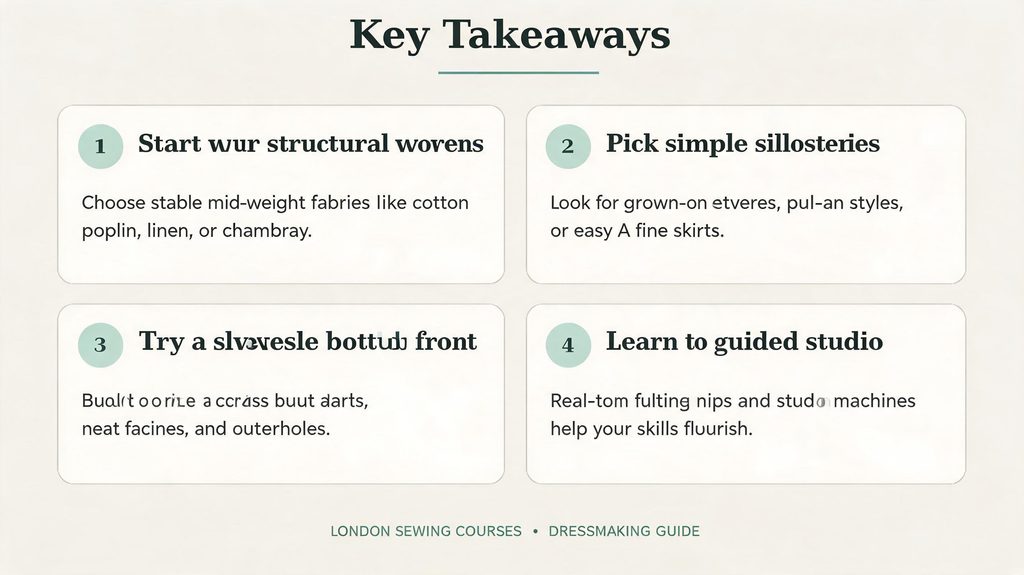
- Start with Structured Wovens: Beginners achieve the cleanest finish by starting with mid-weight fabrics like cotton poplin, linen, or chambray.
- Prioritise Simple Silhouettes: The most popular easy dress patterns for beginners UK makers choose feature grown-on sleeves or simple A-line skirts.
- Master the Sleeveless Button-Front Dress: Sewing a sleeveless button-front flared dress builds foundational skills, including bust darts, buttonholes, and neck facings.
- Learn in a Guided Studio Environment: Joining a local class provides real-time adjustments, professional machinery, and hands-on guidance to help your skills flourish.
Step Into the Joy of Sewing Your Own Clothes
Stepping into the world of dressmaking is remarkably like planting a seed in a spring garden. At first, looking at a flat piece of fabric can feel a little daunting. However, with clear guidance and basic stitches, that cloth gradually transforms into a wearable piece of art.
If you have been searching for the best beginner dressmaking patterns uk crafters truly rely on, you are in safe hands. Many aspiring dressmakers worry about tricky zip installations or gaping armholes. Additionally, they fear choosing a pattern that feels far too complex for a first attempt. However, the truth is that making your own clothes should feel encouraging, light, and deeply satisfying.
Fortunately, the UK indie pattern scene is brimming with thoughtful designers. These creators design beautifully illustrated instructions specifically for new makers. Therefore, whether you are aiming to sew your very first garment to sew uk dressmakers recommend or building machine confidence, starting with the right pattern makes all the difference. In this guide, we share our studio-tested favourites alongside practical advice to help your sewing skills blossom effortlessly.
Why Indie Sewing Patterns Are Perfect for Beginners
Indie pattern houses have completely transformed the home dressmaking experience across the UK. Traditional commercial patterns often rely on brief, cryptic instructions. In contrast, modern indie brands focus on clarity, warmth, and step-by-step learning.
- Clear Visual Guides: Most indie patterns include step-by-step photography or clear diagrams. Consequently, you will never feel lost when sewing a seam or inserting elastic.
- Realistic Sizing and Fitting Notes: UK indie designers provide comprehensive measurement charts. Furthermore, they offer clear fitting tutorials tailored to real body shapes.
- Community and Support: When you sew an indie pattern, you join a vibrant community of makers. As a result, you can share fabric choices and finished garments across London and beyond.
What Makes a Dress Pattern Beginner-Friendly?
Before picking up your fabric shears, it helps to understand what makes a pattern approachable. Choosing easy dress patterns for beginners uk sewing enthusiasts adore means looking for simple construction details.
Evaluating Pattern Difficulty: Key Elements to Look For
When browsing patterns, pay close attention to the specific design features:
- Sleeve Style: Grown-on sleeves or sleeveless designs are much easier to sew than set-in sleeves. This is because set-in sleeves require gathering fabric around a curved shoulder seam.
- Fastenings: Pull-on styles, elasticated waists, or simple button fronts are very forgiving. Therefore, they are much easier than invisible zips or fitted waistbands.
- Fabric Choice: Look for patterns designed for stable woven fabrics such as linen, cotton lawn, or chambray. Meanwhile, try to avoid stretchy jerseys until your machine confidence grows.
Distinguishing Your Goals: First Garment vs. Skill Builder
As you begin your journey, consider what you hope to achieve with your project.
Your Very First Garment
If you have never sewn a piece of clothing before:
- Focus on Pure Simplicity: Choose simple shift dresses, pull-on tunics, or simple elastic-waist dresses.
- Build Basic Machine Confidence: Focus on keeping straight seam allowances. In addition, learn how to finish raw fabric edges properly.
Building Intermediate Skills
If you have completed a simple project and want to stretch your abilities:
- Introduce Structured Details: Choose a pattern with gentle bust darts, waist gathers, or a simple button placket.
- Focus on Fit and Technique: Learn how to read pattern markings accurately. Furthermore, press your seams at every stage for a crisp finish.
Actionable Strategy: Preparing Your Sewing Workspace Today
Before cutting into your fabric, lay a strong foundation with these three simple preparation steps:
- Pre-Wash Your Fabric: Always wash and dry your fabric first. Use the exact settings you plan to use for the finished garment to prevent shrinkage later.
- Press Everything: Iron your pre-washed fabric and paper pattern pieces on a low heat setting to remove every crease.
- Use the Right Needle: Insert a fresh Universal sewing machine needle (size 80/12 for mid-weight cottons) for smooth, skipped-stitch-free sewing.

Our Unique Insight: 10 Best Beginner Dressmaking Patterns in the UK
At our London studio, we have guided hundreds of students through their very first stitches. As a result, we continuously test pattern recommendations to see which designs bring the highest success rate to new dressmakers.
The Studio-Tested Top 10 Selection
Here is our curated list of the absolute best beginner dressmaking patterns available in the UK today:
- Tilly and the Buttons – Stevie Tunic: A modern classic featuring a comfortable loose fit and grown-on sleeves. Additionally, it requires no zips and sews up wonderfully in crisp cottons.
- Sew Over It – Ultimate Shift Dress: The quintessential starter dress. It introduces basic bust darts and neck facings while keeping the silhouette clean and timeless.
- Merchant & Mills – The Trapeze Dress: A beautifully relaxed flared dress that hangs gracefully from the shoulders. Therefore, it is ideal for medium-weight linens.
- Tilly and the Buttons – Lotta Dress: A charming pull-on dress with an elasticated waist. Furthermore, optional patch pockets build practical sewing skills smoothly.
- Papercut Patterns – Pinnacle Dress: Featuring clean geometric lines and relaxed fitting, this pattern serves as a marvellous intro to indie garment construction.
- Sew House Seven – Felt House Smock: An ultra-comfortable oversized tunic dress. Its soft neck gathering hides minor stitch imperfections effortlessly.
- Avid Seamstress – The Day Dress: Designed right here in the UK, this elegant pattern features a fitted waist with gentle pleats.
- Closet Core Patterns – Maya Dress: A breezy shift dress with subtle shaping. Thus, it teaches subtle seam finishing without overwhelming complexity.
- Fold Line / Style Arc – Hope Woven Dress: A relaxed midi dress with raglan sleeves and a gathered skirt that feels luxurious to wear.
- London Sewing Courses – The Studio Sleeveless Button-Front Flared Dress: Taught in our signature 8-week London course, this design combines a fitted bodice, a front placket, and a flared skirt for maximum versatility.
Actionable Strategy: Selecting the Ideal Starter Fabric
To ensure your chosen pattern sews up smoothly, match it with one of these forgiving fabrics:
- Cotton Poplin: Highly stable and easy to pin. Consequently, it does not slip under the presser foot.
- Linen-Viscose Blends: Offers natural breathability combined with a soft drape that hides minor fitting discrepancies.
- Chambray: Looks like light denim but sews as easily as standard quilting cotton. Therefore, it is perfect for everyday casual dresses.
The Practical Path: Sewing the Sleeveless Button-Front Dress
If you are looking for a classic staple that teaches essential techniques, a sleeveless button front dress pattern beginners can master is the ultimate choice.
Why the Sleeveless Button-Front Flared Dress Works Wonders
This specific dress design serves as a comprehensive bridge between basic craft sewing and true dressmaking mastery:
- Bust Darts: You will learn how to fold, pin, and stitch subtle darts to shape fabric gently around the bust area.
- Neck and Armhole Facings: Master the art of clean-finishing raw armholes and necklines neatly.
- Button Plackets & Buttonholes: Practice placing automatic buttonholes, opening up a whole new world of garment options.
- Flared Skirt Seams: Learn how to sew long, smooth skirt seams and finish a rounded hem gracefully.
Mastering the Details Studio-Style
When building a garment like this, working through each stage systematically ensures a gorgeous outcome.
Drafting and Cutting
First, take time to measure your bust, waist, and hips accurately using a flexible tape measure. Avoid relying on high-street clothing sizes because sewing patterns use unique sizing charts. Next, pin your paper pattern pieces along the grainline of your fabric to ensure the finished dress hangs perfectly straight.
Assembly and Finishing
Sew your seams using a standard 5/8-inch (1.5cm) seam allowance. However, remember to press each seam flat with an iron immediately after stitching. Finally, finish the raw edges using a zig-zag stitch or an overlocker to ensure your dress withstands years of washing.
Cultivating Your Sewing Skills in London
Self-guided learning at home is a wonderful starting point. Nevertheless, sitting down in a welcoming, equipped studio space speeds up your progress immensely.
The Power of Guided Learning
Learning to sew alongside fellow creatives fosters a supportive environment. As a result, questions are welcomed and mistakes become valuable learning moments.
- Instant Feedback: A professional tutor can look at your fit in real time. Consequently, they help you make minor pattern adjustments before you cut into your fabric.
- Professional Equipment: Practice sewing on high-quality machines and steam pressing stations that make your dressmaking process faster.
- Community Connections: Share recommendations for local London fabric shops. Furthermore, swap pattern ideas and celebrate every finished hem together.
Exploring London Course Options
Whether you are completely new to the craft or looking to elevate your homemade wardrobe, choosing the right learning format can nurture your passion effectively:
- Beginner Evening Classes: Perfect for busy professionals who want to unwind after work. Explore dedicated sewing classes london for beginners designed to take you from threaded needle to finished project effortlessly.
- Comprehensive Multi-Week Courses: For those ready to build a complete garment from scratch, enrolling in a structured dressmaking course london provides step-by-step mentorship through pattern fitting and construction.
- Next-Level Skill Workshops: Once you have mastered your first few dresses, taking intermediate sewing courses london allows you to tackle trickier fabrics and tailor garments precisely.
Addressing the Bigger Picture: Sustainable Fashion & Community
Learning to sew your own clothes is more than just a creative hobby. In addition, it is a quiet, powerful act of personal sustainability and mindful living.
The Sustainable Shift in Modern Sewing
Recent industry studies show a growing movement toward sustainable wardrobe choices across the UK. According to research from the global environmental charity WRAP, repairing existing clothing displaces brand-new purchases at a remarkable rate of 82.2%. Similarly, buying preloved items displaces new sales by 64.6%. Therefore, choosing to make, mend, and care for your own garments directly cuts down on textile waste.
- Quality Over Quantity: Creating a single high-quality linen dress replaces the cycle of buying inexpensive fast fashion that wears out quickly.
- Mindful Consumption: When you invest time and care into crafting a garment, you develop a deeper appreciation for the labour required to make clothing.
Community Learning & Educational Access
Every individual deserves the chance to experience the creative joy of hands-on crafting. National initiatives highlighting adult education show that participating in creative learning significantly boosts personal confidence and mental well-being.
For families interested in introducing the next generation to textile crafts, exploring free educational opportunities like free sewing classes london can plant the seeds of creativity in young minds early on. Learning to handle needle and thread builds fine motor skills, focus, and a lifelong sense of self-reliance.
Frequently Asked Questions (FAQ)
Here are answers to common queries beginners ask when embarking on their first UK dressmaking projects.
How Do I Choose the Right Size for a Beginner Sewing Pattern?
Always select your pattern size based on your actual body measurements rather than your high-street shop size. Measure your high bust, full bust, natural waist, and hips with a soft tape measure while wearing supportive undergarments. Next, compare these figures directly against the pattern envelope’s measurement chart. If your measurements span across multiple sizes, gently blend between the pattern lines to create a custom fit tailored specifically to your silhouette.
Can I Sew a Dress if I Have Never Used a Sewing Machine Before?
Yes, absolutely! Many complete beginners successfully sew a dress as their very first project. However, the key is to start with a straightforward pull-on or shift dress pattern and take time to practice basic machine control first. Spend half an hour sewing straight lines and turns on scrap cotton fabric to get comfortable with thread tension and pedal control before pinning into your garment pieces.
What Essential Sewing Tools Do I Need to Start Making Clothes at Home?
To start dressmaking at home, you need only a few core quality tools: a reliable sewing machine with a standard straight stitch, sharp fabric shears, dressmaker’s pins, a flexible tape measure, an iron with steam settings, and a seam ripper for fixing occasional missteps. As your confidence grows, you can gradually expand your kit with items like rotary cutters, tailors’ chalk, and specialist pressing cushions.
Conclusion
Embarking on your dressmaking journey opens up a delightful world of creativity, self-expression, and sustainable style. By starting with stable fabrics and choosing the best beginner dressmaking patterns UK designers have crafted, you pave the way for a smooth, enjoyable learning experience. Whether you choose to sew a simple shift tunic on your kitchen table or join us in studio to craft your dream sleeveless button-front dress alongside supportive guidance in our sewing classes london for adults, every stitch brings you closer to a handmade wardrobe you will treasure. Give yourself the gift of patience, celebrate each small milestone, and watch your creative confidence take root and flourish.
About the Author: Grace, Founder of London Sewing Courses
Grace is the heart and hands behind London Sewing Courses. A passionate and experienced sewing instructor, she founded the studio with a unique mission: to create a calm, friendly space for adults to learn and connect, while using the profits to fund free sewing classes for local children in need. Her personal expertise and commitment to community building are at the core of every class and every stitch.
Sources
National Careers Service: Dressmaker Job Profile
WRAP Report: Fast fashion could be left on the peg as preloved and repair displace new sales
Learning and Work Institute: Adult Participation in Learning Survey