
Key Takeaways
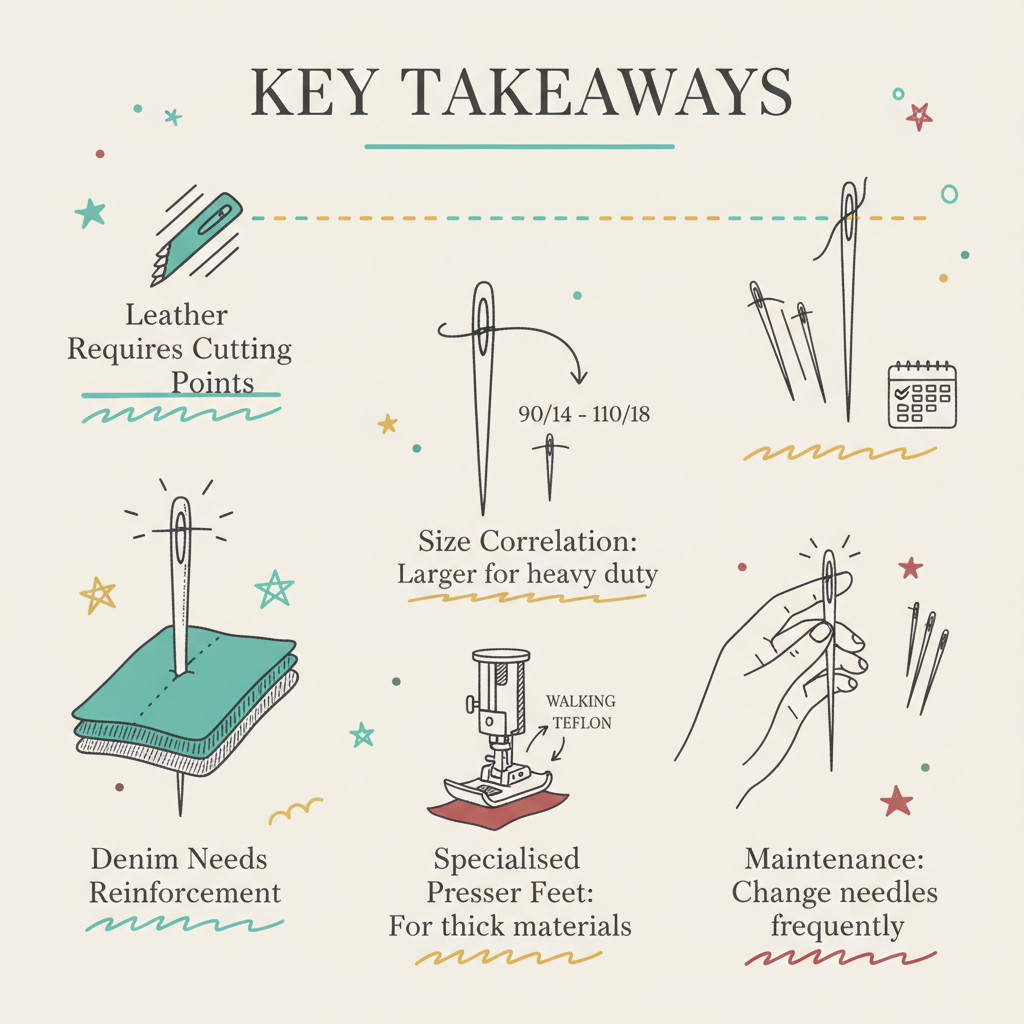
- Leather Requires Cutting Points: Unlike fabric needles, leather needles have a wedge-shaped point to slice through hide.
- Denim Needs Reinforcement: Heavy fabrics like denim require a thick, strong shaft and a very sharp point to prevent bending.
- Size Correlation: Use larger needle sizes (90/14 to 110/18) for heavy-duty materials to ensure the needle doesn’t snap.
- Specialised Presser Feet: Using a walking foot or Teflon foot is essential for helping thick or “sticky” materials glide through.
- Maintenance: Change needles frequently when sewing tough materials as they dull much faster than when sewing cotton.
Starting a project with heavy-duty materials like denim or leather is an exciting milestone in any sewist’s life. It signifies a move toward more structured, professional-grade garments and accessories. However, the most common question I hear in our studio is: what type of needle for leather is actually safe for my machine? Transitioning from soft cottons to tough hides or thick twills requires more than just a bit of extra muscle; it requires a specific understanding of needle geometry. Using the wrong tool won’t just result in poor stitches; it can actually damage your machine’s timing or break your internal components. Whether you are upcycling a pair of vintage jeans or crafting a bespoke leather clutch, your choice of needle is the most critical technical decision you will make.
The Science of the Slice: What Type of Needle for Leather?
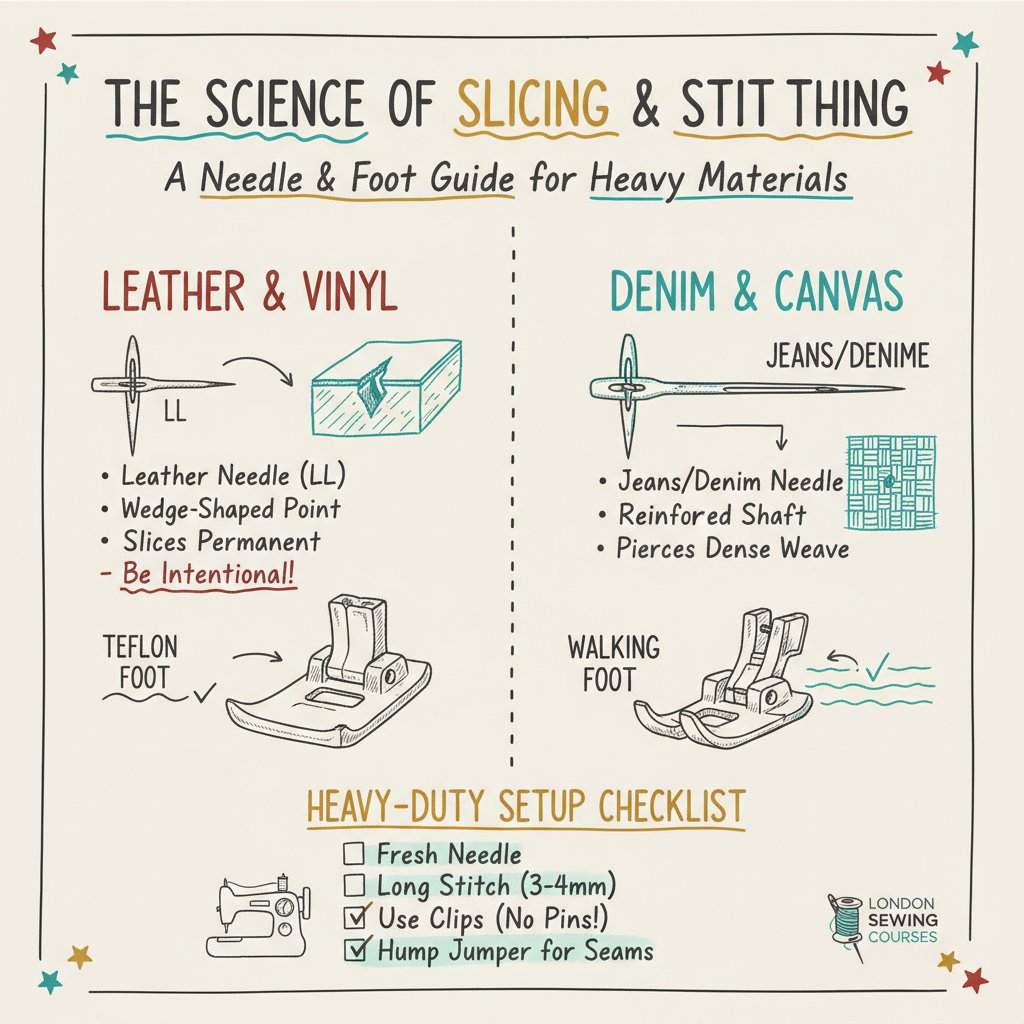
Leather is not a woven fabric; it is a dense, non-fibrous material. This means that a standard needle, which is designed to push threads aside, will simply struggle and fail to penetrate the surface cleanly. When asking what needle do you use to sew leather, the answer is always a “Leather Needle” (often marked as LL). [cite_start]These needles feature a unique wedge-shaped cutting point that actually slices a small hole as it enters the material[cite: 3].
Because leather does not “heal” like fabric, every hole is permanent. This is why having the correct cutting point is so vital; it ensures the hole is exactly the right size for the thread to pass through without tearing the surrounding hide. If you are joining us for private sewing lessons London, we always emphasise that you must never use a leather needle on woven fabrics, as the wedge point will cut the yarns and cause the fabric to unravel.
Conquering Canvas and Twill: What Type of Needle for Denim?
Denim is a tightly woven, heavy-duty cotton twill that presents a different challenge. While it is a woven fabric, its density and thickness—especially at the seams—can easily snap a standard needle. When considering what type of needle for denim, you must look for a “Jeans” or “Denim” needle. [cite_start]These are specifically engineered with a reinforced shaft to reduce needle deflection (bending) and a very sharp, slim point[cite: 1, 4].
The sharp point is designed to pierce through the dense weave without pushing the fabric down into the needle plate. If you have ever wondered what type of sewing needle for denim provides those iconic, straight topstitching lines, it is this combination of a sharp tip and a strong body. For those in our sewing classes London for beginners, we recommend starting with a 90/14 Jeans needle for standard denim and moving up to a 100/16 or 110/18 for heavy-duty projects like jackets or bags.
Our Unique Insight: The “Memory” of Heavy Materials
At London Sewing Courses, we teach our students that heavy-duty sewing is as much about psychology as it is about hardware. Unlike lightweight silk, materials like leather and heavy denim have a “memory.” If you make a mistake and have to unpick a seam in leather, the holes remain forever. This can create a sense of “perfectionist paralysis” in many students.
Our insight is this: treat your first few heavy-duty projects as a dialogue with the material. Instead of fearing the permanent nature of the stitch, use it to your advantage by being more intentional with your prep. Use clips instead of pins (which leave holes) and take the time to hand-crank your machine over thick intersections. This slower, more mindful approach doesn’t just protect your needle; it builds a deeper connection between your hands and the craft, resulting in a garment that feels truly “built” rather than just “sewn.”
Actionable Strategy: Handling the Bulk with the Right Foot
Even with the perfect needle, thick fabrics can get “stuck” under the presser foot. When asking what sewing machine needle to use for thick fabric, you must also ask what presser foot to use for thick fabric. To ensure smooth sailing, implement these three tool strategies:
- The Walking Foot: This is essential for denim and canvas. It has its own set of feed dogs on the top, ensuring that all layers of fabric move through the machine at the exact same speed, preventing the dreaded “shifting” of seams.
- The Teflon (Non-Stick) Foot: This is the secret weapon for leather and vinyl. Standard metal feet can “stick” to the surface of leather, causing the machine to skip stitches. A Teflon foot glides right over the surface.
- The Hump Jumper: When sewing over the flat-felled seams of jeans, use a “clearance plate” or hump jumper. This keeps the presser foot level as it climbs over the bulk, preventing the needle from snapping.
Choosing the Right Gauge: What Needle to Use for Jeans
Weight matters just as much as type. When deciding what needle to use for jeans, you must match the size (the number) to the weight of your denim. Standard retail jeans are usually around 10–12oz, which pairs perfectly with a 90/14 Jeans needle. [cite_start]However, if you are working with “raw” or heavyweight selvedge denim (14oz and above), you must move to a 100/16 or even 110/18[cite: 1, 4].
A needle that is too small for the thread or the fabric will struggle to create a clean stitch loop, leading to the thread shredding or the needle breaking. If you are progressing through intermediate sewing courses London adults often attend, you will find that having a variety of Jeans needles in your kit is essential for tackling the diverse range of denims available today.
Actionable Strategy: The Heavy-Duty Setup Checklist
Before you drop the needle into your leather or denim, run through this 60-second checklist to ensure a perfect result:
- Freshness Check: Have you used a brand-new needle? Heavy fabrics dull tips instantly.
- Thread Match: Are you using heavy-duty polyester or topstitching thread? Standard cotton thread is often too weak for these materials.
- Stitch Length: Have you increased your stitch length? For leather and denim, a longer stitch (3.0mm to 4.0mm) looks more professional and prevents the fabric from being “perforated” like a postage stamp.
- Tension Test: Have you tested your tension on a scrap? You will likely need to slightly increase your top tension to pull the heavier thread through the thick layers.
Understanding the “LL” and “R” Markings
When shopping for leather needles, you might see letters like “LL” or “R”. The “LL” stands for “Leather Left,” referring to the specific angle of the cutting point. [cite_start]This creates a slightly slanted stitch that is traditionally associated with high-end leatherwork[cite: 3]. Understanding these nuances is part of what we cover in our seamstress courses, helping you move from amateur hobbyist to someone with a professional technical vocabulary.
Custom Learning: Mastering the Machine for Heavy Fabrics
Modern domestic sewing machines are surprisingly capable, but they have their limits. If you find your machine “groaning” or struggling, it might not be your skill—it might be the machine’s motor. This is where private sewing lessons London can be invaluable. A tutor can show you how to “help” your machine through thick sections using the handwheel and how to adjust the presser foot pressure—a hidden setting on many machines that can make sewing thick fabric significantly easier.
Frequently Asked Questions (FAQ)
Can I use a denim needle for leather?
While it may seem tempting because both are “strong” needles, you should generally not use a denim needle for leather. [cite_start]A denim needle has a sharp, round point designed to pierce fabric, whereas leather needs a wedge-shaped point to slice through the material[cite: 3]. Using a denim needle on leather can cause the machine to struggle, resulting in uneven stitches or the needle getting “stuck” in the hide. For the best results and to protect your machine’s motor, always use the dedicated needle type for the material.
What is the best size needle for sewing thick upholstery fabric?
[cite_start]For thick upholstery fabrics like heavy canvas or tapestry, a size 100/16 or 110/18 Universal or Jeans needle is typically best[cite: 1, 4]. These fabrics are often very dense, and a thicker needle shaft is required to prevent the needle from bending as it enters the material. Additionally, these larger sizes have a bigger “eye,” which is necessary if you are using the thicker, stronger threads often required for upholstery projects to ensure the seams don’t rip under pressure.
How do I stop my machine from skipping stitches on leather?
Skipped stitches on leather are usually caused by the needle “sticking” to the material as it tries to rise, which prevents the thread loop from forming correctly for the bobbin to catch. [cite_start]To fix this, first ensure you are using a dedicated leather needle[cite: 3]. Secondly, switch to a Teflon or non-stick presser foot, or place a small piece of “magic tape” on the bottom of your standard foot to help it glide. Finally, try increasing your stitch length, as short stitches can cause the leather to bunch.
Why does my thread keep snapping when I sew denim?
Thread snapping on denim is often caused by a “size mismatch” between the thread and the needle. If you are using thick topstitching thread with a needle that has a small eye, the thread will shred as it passes through. [cite_start]Ensure you are using a Jeans needle, which has a larger eye designed for heavier threads[cite: 1, 4]. Also, check that your needle isn’t slightly bent or burred; even a tiny nick on the needle can catch and break the thread as you sew through tough layers.
Conclusion
Mastering heavy-duty sewing is a badge of honour for any sewist. By understanding what type of needle for leather you need and identifying the best sewing machine needle to use for thick fabric, you open up a world of creative possibilities—from rugged outdoor gear to sophisticated leather accessories. Remember that your sewing machine is a partner in this process; give it the right tools, and it will reward you with beautiful, durable results. Whether you are learning at our sewing blog or joining us for sewing classes North London, the key is to stay curious, keep testing, and always have a fresh pack of needles ready for your next big adventure.
About the Author: Grace, Founder of London Sewing Courses
Grace is the heart and hands behind London Sewing Courses. A passionate and experienced sewing instructor, she founded the studio with a unique mission: to create a calm, friendly space for adults to learn and connect, while using the profits to fund free sewing classes for local children in need. Her personal expertise and commitment to community building are at the core of every class and every stitch.
Sources
- Schmetz Needle Chart & [cite_start]Guidelines (https://www.sewing.org/files/guidelines/22_115_sewing_machine_needle_charts.pdf) [cite: 1]
- [cite_start]Leather Sewing Needles Guide (https://www.wawak.com/sewing/sewing-needles-by-type/leather-sewing-needles/) [cite: 2]
- [cite_start]Leather Sewing Machine Needle Types (https://www.sailrite.com/leather-sewing-machine-needle-types) [cite: 3]
- [cite_start]Understanding Needle Points for Heavy Fabrics (https://fabricland.ca/howto/images/instructions-schmetz-needle.pdf) [cite: 4]