
Key Takeaways
- Dressmaking is following a pattern, not inventing one: a first term takes you from a printed tissue pattern to one garment you can wear out of the room.
- It is a different craft from tailoring: dressmaking finds its shape in darts, seams and drape, while tailoring builds structure into the layers of a jacket.
- Most beginners classes still assume a little sewing: if you cannot yet run a straight seam on a machine, a general beginners class is the better booking.
- Fit is the real reason people learn: only one woman in ten can correctly identify her own body shape, which is why off-the-peg sizing so often misses.
- Taught dressmaking in London is old news: the London County Council was running adult dressmaking classes long before the war made them fashionable.
What Dressmaking Classes for Beginners Actually Cover
Search for dressmaking classes for beginners and you will find a great many booking pages and almost no description of the work. So here is the work, set beside how much of this you can pick up on your own, because most people are weighing the two against each other.
A dressmaker, in the National Careers Service description, creates, alters and repairs garments for a customer. The day to day of it is taking measurements, using or making a pattern, cutting out, tacking pieces together for a fitting, then stitching by machine or by hand.
A beginners class teaches the middle of that list. You choose a commercial paper pattern, measure yourself, cut the cloth, and sew the pieces into one finished garment.
What it does not teach is design. You are not inventing the dress, you are building somebody else’s drawing of it, and that is the fastest way to learn how a garment is actually put together.
That is also where a class earns its keep, because the answer differs by skill. Threading a machine is a video. Fitting a bodice to your own back is not.
Dressmaking and Tailoring Are Not the Same Craft
The two words get used interchangeably and they describe different work. The government keeps separate job profiles for each, which is a fair signal that the trades themselves see a line.
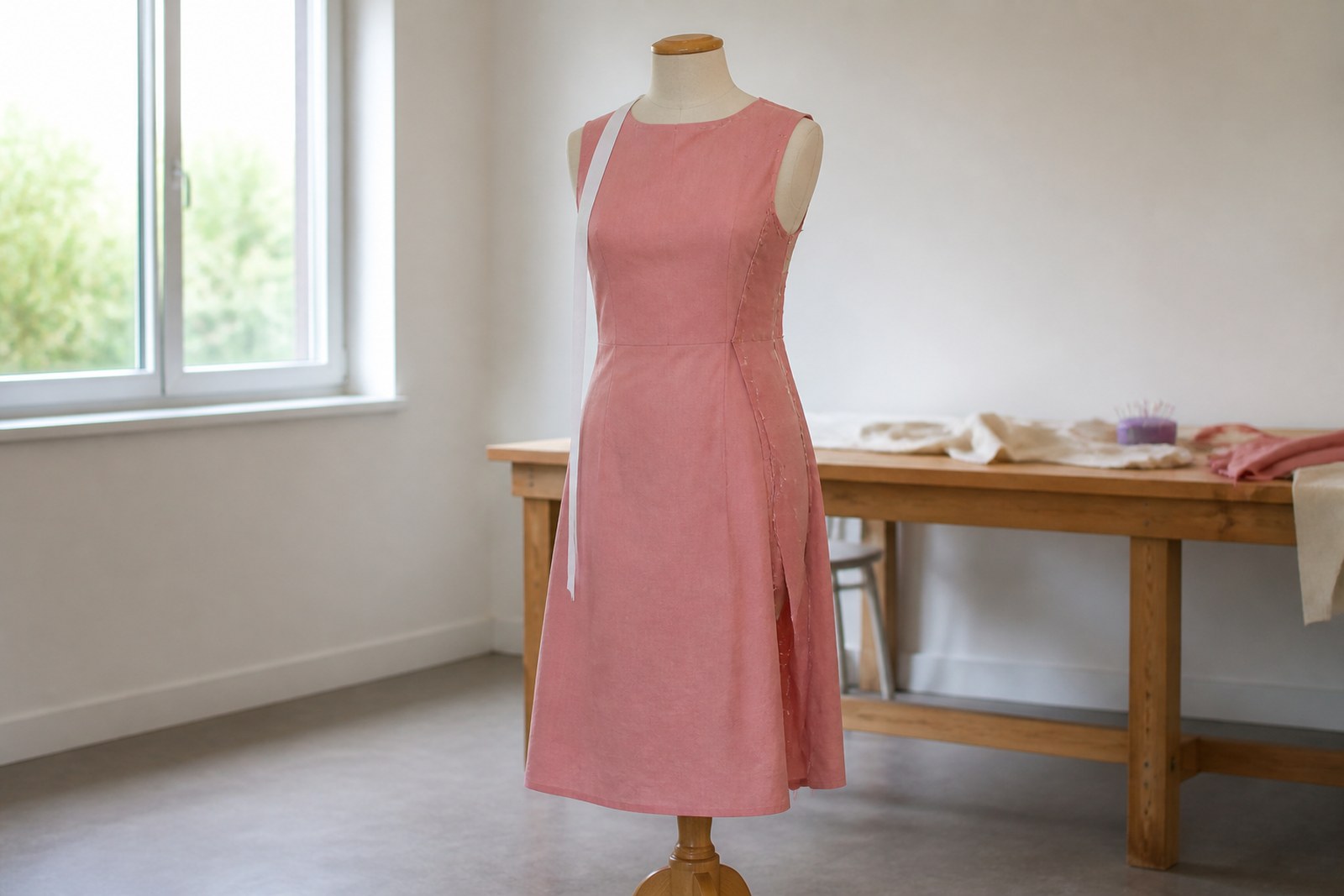
Dressmaking finds its shape on the outside of the cloth. Darts, seams and the way a fabric hangs do the work, and the inside of the garment is mostly empty.
Tailoring builds the shape underneath. Canvas, shaping and pressing are worked into the layers of a jacket so the garment holds a form the body is not making for it.
That difference decides what a beginner should book. Soft garments teach you seams, fit and finishing; structured ones teach you construction, and they take much longer to get wrong. If the second is what you are after, where tailoring actually begins is a separate conversation.
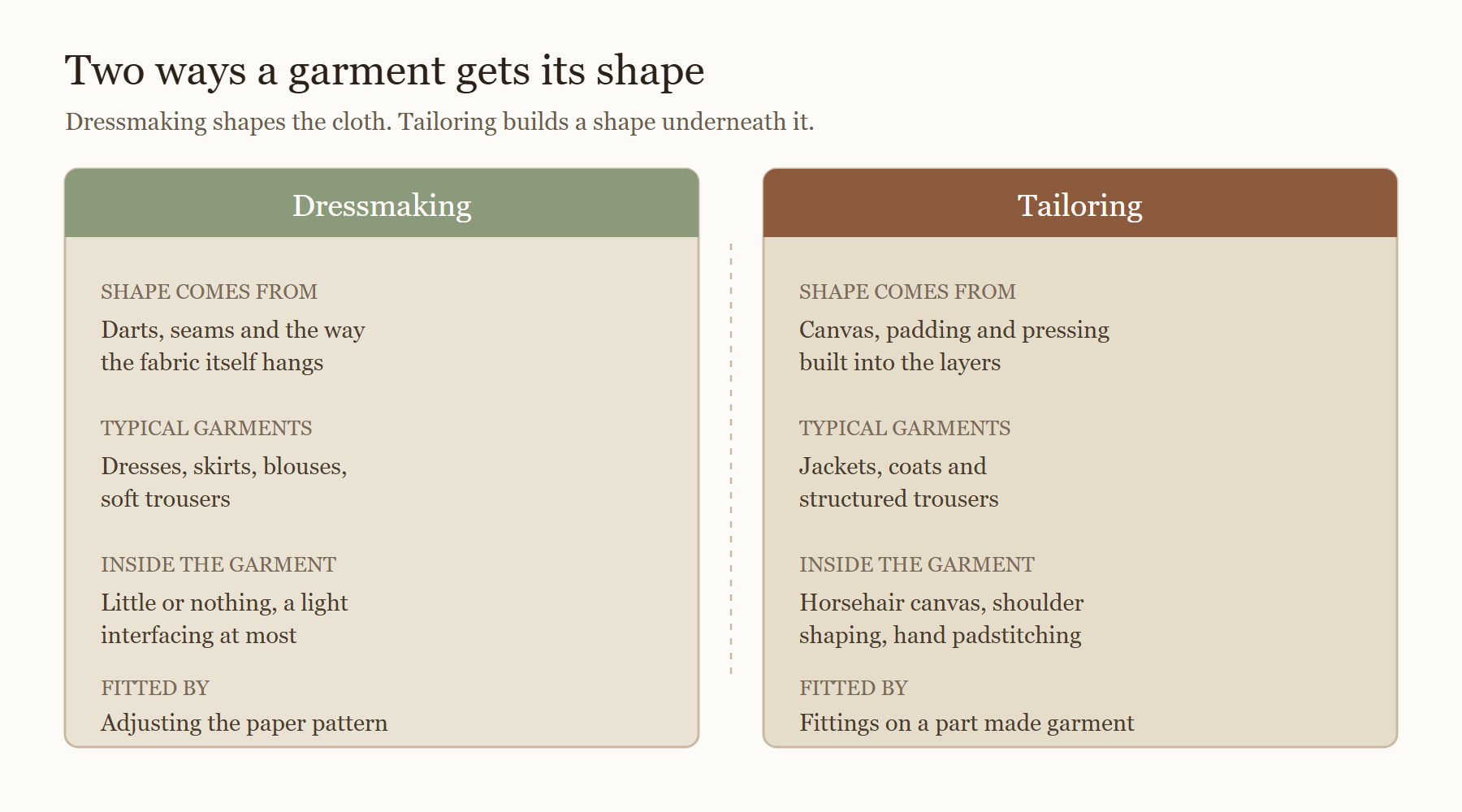
Two crafts, one needle, and a horsehair canvas between them.
What You Should Be Able to Do Before You Start
This is the part the listings leave out, so here it is plainly.
Most beginners dressmaking classes assume you can already thread a machine, wind a bobbin, and sew a straight line at a consistent distance from the edge. They assume you can press a hem flat. They do not assume you have ever used a pattern.
If that first list is not yet true of you, book a general sewing class instead. Turning up to cut into two metres of cloth without machine hours behind you is how people decide they are bad at sewing, when what actually happened is that they started one step too far along.
There is no shame in it either. BBC News reported in 2024 that, on British Heart Foundation research, nearly six in ten people cannot sew confidently. Almost nobody arrives with school sewing behind them any more.
So: a beginners class that starts at the machine first, dressmaking second. If you want to see the shape of that earlier stage, what a first sewing course tends to cover sets it out.
Inside a Beginners Dressmaking Course
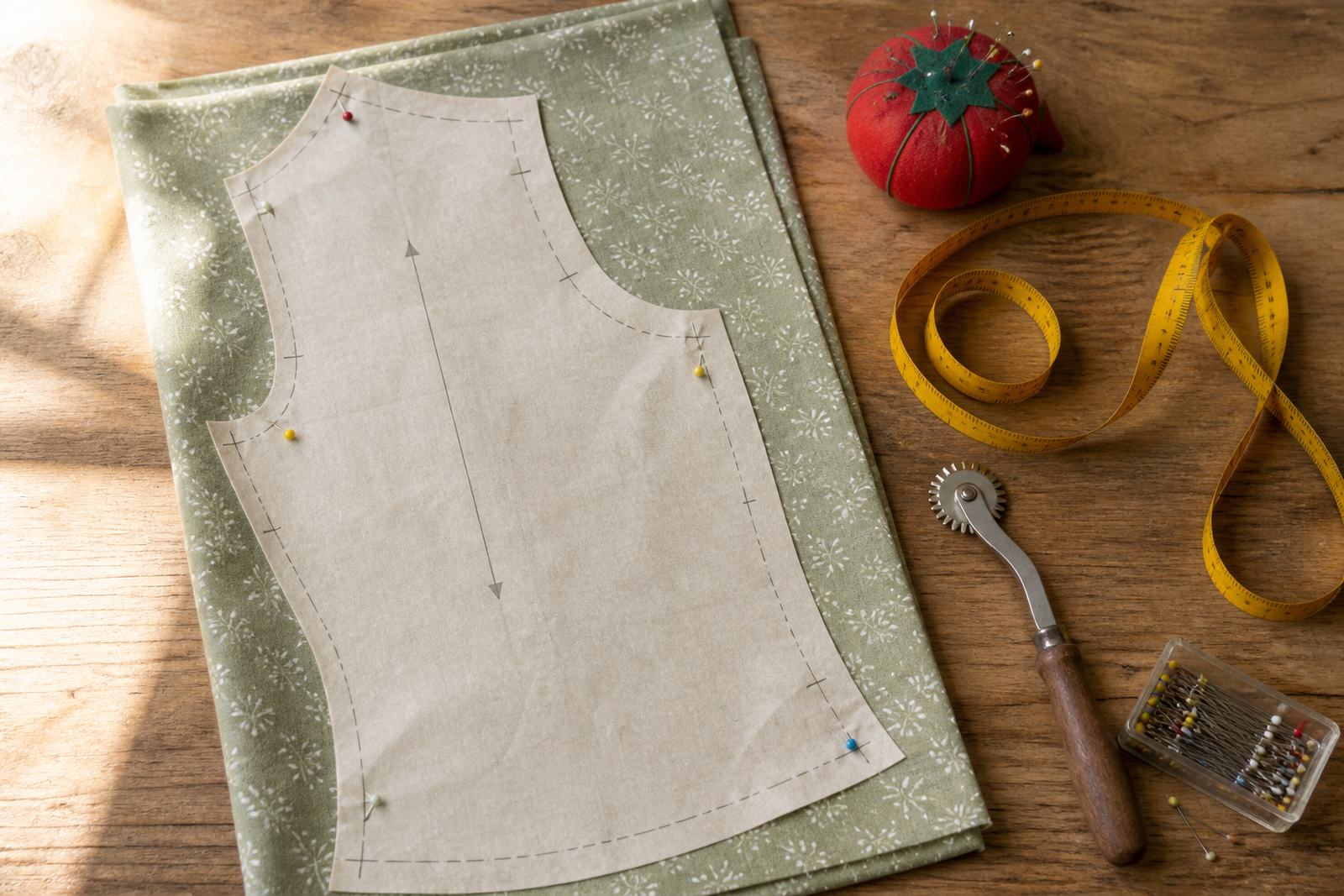
A beginners dressmaking course usually runs one garment across a term, in roughly this order.
You take your own measurements first, then choose a pattern size from them rather than from the label in your coat. You lay the pattern on the grain, cut, and mark the notches. Then darts, seams and seam finishes, a fastening, a hem, and a press.
The measuring step is the one people underrate. Manchester Metropolitan University body scanning research found only 10 per cent of women can correctly identify their own body shape, and 63 per cent of those scanned were a rectangle while 26 per cent believed they were an hourglass.
A 2023 study in the Journal of Fashion Marketing and Management puts the consequence bluntly, describing an industry plagued by non-standardised sizing and vanity sizing and citing the view that fit is about body shape rather than clothing size.
That is the whole appeal of making a garment from scratch. You are not picking the closest available size, you are cutting to your own numbers.
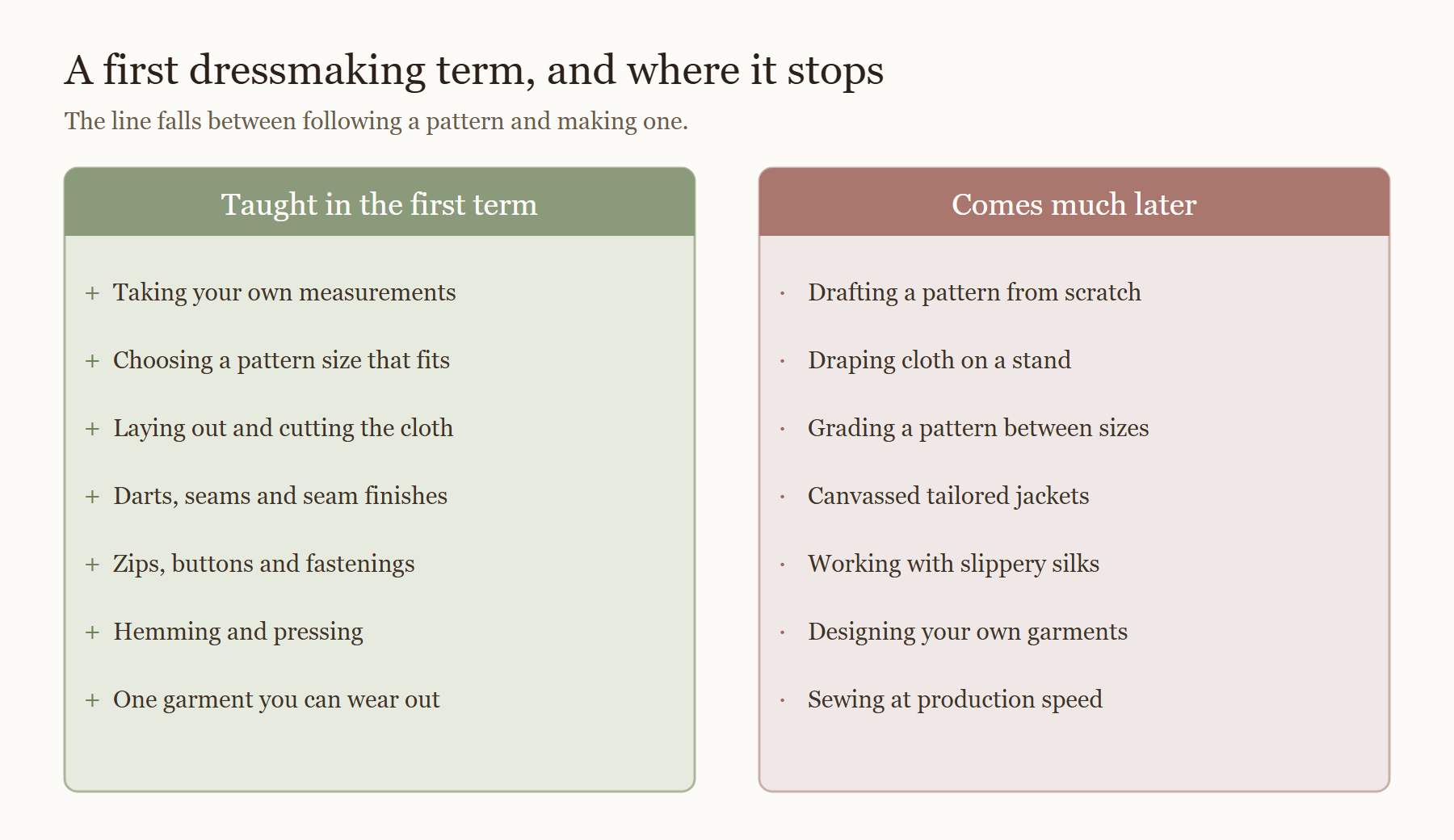
The right hand column is not a warning. It is a reading list.
How to Tell a Real Beginners Class from One That Assumes Too Much
Course listings use the same vocabulary at very different levels. These are the phrases worth reading carefully.
| What the listing says | What it usually means |
|---|---|
| No experience necessary | Machines are provided and set up, and somebody will thread yours |
| Suitable for beginners | You can sew a straight seam already, but you have never used a pattern |
| Bring your own pattern and fabric | You are expected to choose a size and a cloth unaided |
| Pattern cutting or drafting | You are making the pattern, not following one, which is a later skill |
| Garment making | Assumes machine confidence and usually some fitting experience |
Three questions settle it before you pay. What do you expect me to be able to do on day one?
Are machines provided and set up? And do I choose the pattern, or is one chosen for the group?
A provider who answers all three plainly is telling you they have taught actual beginners before. Vagueness on the first question is the signal to keep looking.
Finding Dressmaking Classes in London
London gives you four genuinely different options, and they are easy to confuse. Fashion college short courses are excellent and usually assume real machine hours.
Private studios vary enormously. Community and adult education classes are the ones built for people starting from nothing.
The fourth is dress design, which teaches you to draw and develop a garment rather than construct one. If that is the appeal, classes built around designing a garment rather than sewing one are a different search entirely.
When you type dressmaking courses near me, the results will not tell you which of the four you are looking at. The course description will, if you read it against the table above.
None of this is new, incidentally. An Imperial War Museums photograph records London County Council dressmaking classes running in a Brixton school in 1943, and notes the council had been running them for many years before rationing made them popular.
We teach in North London, at Edmonton Green Library, which is a small operation and says nothing about the rest of the city. Plenty of good dressmaking classes in London sit nowhere near us.
Frequently Asked Questions (FAQ)
Can a complete beginner join a dressmaking class?
Usually yes, if the class provides machines and sets them up. Most beginners dressmaking classes still expect you to manage a straight seam. If you have never used a machine at all, a general beginners sewing class first will make the dressmaking class far more useful.
What is the difference between dressmaking and tailoring?
Dressmaking shapes softer garments such as dresses, skirts and blouses using darts, seams and the drape of the cloth. Tailoring builds structure into jackets and coats with internal canvas and shaping. They share the same foundation skills, so neither is wasted time.
Do I need to buy a sewing machine before I start?
Not to begin. Most in-person classes provide machines, which lets you try several before spending anything. It also means the machine is threaded and tensioned correctly, which removes the single most common reason beginners give up in week one.
What will I make in a beginners dressmaking course?
Typically one simple garment across the term, often a skirt or an unlined dress with few pattern pieces and a straightforward fastening. The point is not the garment. It is that you have been through every stage once, in order, with somebody watching.
Is dressmaking harder to learn than general sewing?
It is a stage further on rather than harder. General sewing teaches you to control the machine and the cloth. Dressmaking adds reading a pattern, choosing a size from your own measurements and fitting the result, which are new skills rather than more difficult ones.
Conclusion
A beginners dressmaking class is worth booking once you can sew a straight seam, and worth postponing until you can. The order matters more than the pace.
If you are already comfortable at a machine, choose a class that supplies the pattern and the fabric for your first garment. If you are well past that, one to one lessons for people already past the basics will move faster than any group. If you are not there yet, start one step earlier and come back in a couple of months.
Either way, measure yourself before you buy a pattern. If you would rather learn with somebody watching, the adult sewing courses that run in Edmonton begin where a beginner actually is.
Sources
1. National Careers Service, Department for Education, Dressmaker job profile 2. Manchester Metropolitan University, Research reveals clothes sizing confusion, January 2014 3. Chrimes, Boardman, McCormick and Vignali, Investigating the Impact of Body Shape on Garment Fit, Journal of Fashion Marketing and Management, 2023 4. Carys Nally, BBC News, We need to build a culture of caring for clothes, November 2024 5. Imperial War Museums, Mend and Make Do: Dressmaking Classes in London, 1943
Leave a Reply