
Key Takeaways
- Tailoring is a destination, not a starting line: it is what sewing becomes once the machine has stopped being the obstacle.
- The craft is genuinely long: a Savile Row suit averages fifty hours of work and three fittings, and the apprenticeship route runs two years at level 5.
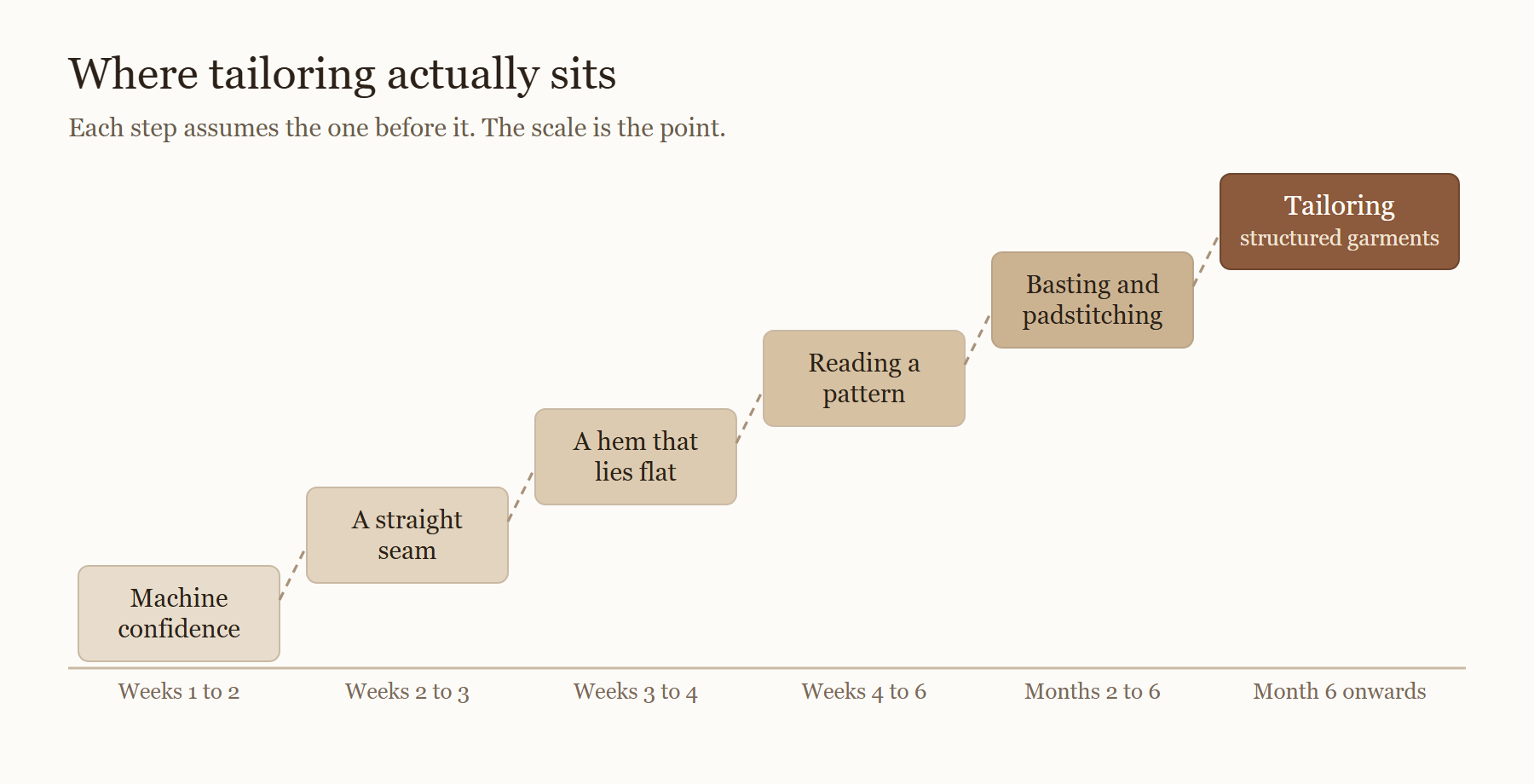
- Machine confidence comes first: a straight seam, a flat hem and the ability to read a pattern are the four to six weeks that make everything after them possible.
- Alteration is the honest first step: taking in a seam uses real tailoring skills on clothes you already own, with a result the same evening.
- Local classes fill a gap the formal system leaves open: sewing has largely fallen out of the school curriculum, so most adults start from nothing.
What Tailoring Lessons for Beginners Actually Mean
If you have searched for tailoring lessons for beginners and come away confused, the confusion is not yours. The results split into two worlds that have little to say to a person holding a needle for the first time, which is worth knowing before you spend anything and worth reading alongside how far you can genuinely get teaching yourself. the softer, pattern-led side of garment making.
One is Savile Row, a craft measured in years. The other is a short course that quietly assumes you can already thread a machine. Neither is aimed at you.
Here is the honest position. Tailoring is the construction of fitted, structured garments, usually jackets and trousers, built around a body rather than draped over one.
It sits on top of general sewing skills and does not replace them. Dressmaking is its close relative, leaning towards softer garments with less internal structure. Alteration is changing a garment that already exists.
So the useful question is not where to find tailoring lessons for beginners. It is what to learn first so that tailoring becomes possible at all.
How Long It Takes to Learn Tailoring
The scale of the craft is worth seeing clearly, because it explains why the courses you found looked so intimidating.
The Savile Row Bespoke Association, which sets the standard for the trade, defines a bespoke suit as averaging fifty hours of work, three intermediate fittings and around three months from commission to finished garment. Roughly thirty measurements are taken from one body and drafted into a paper pattern used for nobody else.
Their standard also insists the jacket foreparts are entirely hand canvassed, the buttonholes sewn by hand, the sleeves attached and the linings felled by hand. That is not decoration. It is the definition.
The formal route into that trade in England is an apprenticeship. The bespoke cutter and tailor standard sits at level 5, equal to a higher national diploma, and runs for 24 months.
None of that is a reason to stop. It is a reason to stop measuring yourself against it in week one, because nobody learns tailoring in a weekend.
Where a Beginner Actually Starts
The first four to six weeks of learning to sew are not glamorous and they decide everything that follows.
You need a machine that no longer frightens you. That means threading it without the manual, winding a bobbin, changing a needle, and recognising the sound it makes when the tension is wrong.
Then a straight seam, sewn at a consistent distance from the edge, in a fabric that behaves. Then a hem that lies flat. Then a seam that meets another squarely at a corner.
After that, reading a pattern: understanding what the notches, the grainline and the seam allowance are telling you to do. This is where most people stop feeling like they are guessing.
That progression is why a class beats a video for most adults. Somebody watching you sew will spot in four seconds what you would spend an hour failing to diagnose alone.
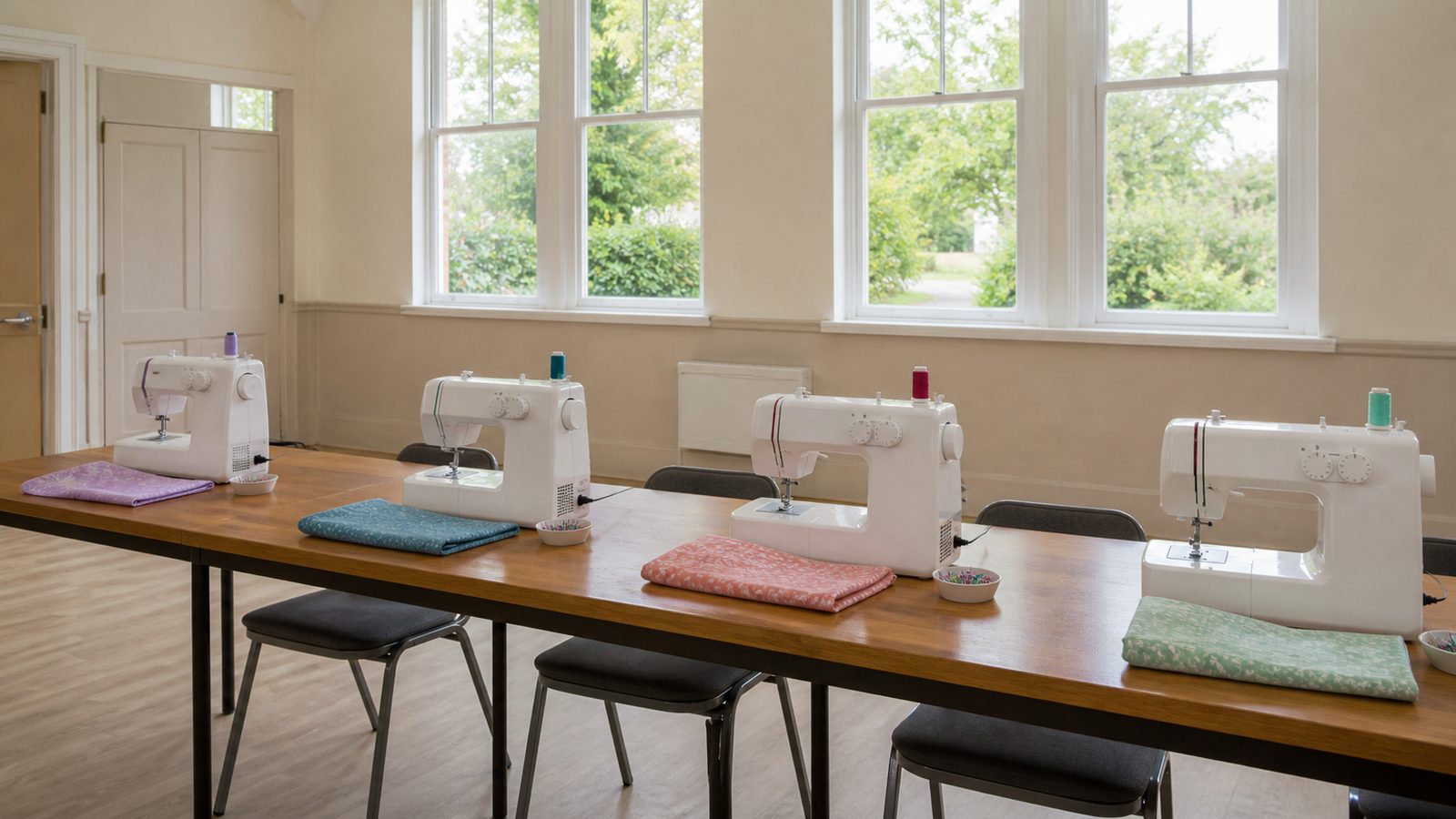
It is also why a beginners class where the machine is threaded before you arrive removes the obstacle that ends most attempts. If you are weighing it up, read whether the learning curve is as steep as it looks.
The Hand Skills Tailoring Is Built On
Once the machine is easy, tailoring turns out to be surprisingly hand-led. The Savile Row definition is explicit that the structural work is done by hand, and those skills are learnable long before anyone cuts a jacket.
| Hand skill | What it does | When to learn it |
|---|---|---|
| Basting | Holds pieces together temporarily so you can fit before committing | Immediately, it is forgiving |
| Padstitching | Shapes a lapel and collar with small stitches through canvas | Once seams are consistent |
| Felling | Attaches a lining by hand so it moves with the garment | After hems are reliable |
| Hand buttonhole | The finish that separates bespoke from everything else | Late, and worth the wait |
Basting is the one to start with today. It is the least technical skill on the list and it lets you check a fit before a seam becomes permanent, which is the single habit that most improves a beginner’s results.
None of this needs an expensive setup. A needle, thread, sharp scissors and a machine you understand will carry you a long way, and the small kit worth buying before anything else is genuinely small.
Alteration Is the Honest First Step
If you want to do something tailoring-shaped this month rather than next year, alter something you own.
Taking in a side seam, shortening a sleeve, moving a button, replacing a lining: these are tailoring skills. They are performed on a finished garment instead of a cut one, so you get a result the same evening and something wearable at the end of it.
The case goes beyond your wardrobe. WRAP, the UK waste and resources body, found that extending the average life of clothes by just nine months would save five billion pounds in the resources used to supply, launder and dispose of clothing. It identifies extending clothing life as the single largest opportunity to reduce the carbon, water and waste footprints of UK clothing.
That is also why mending has stopped being something people hide. Rebecca Harrison of Old Flame Mending, speaking to the Washington Post in June 2026, put it plainly: mending has become a values thing, and a visible patch says sustainability matters to the person wearing it.
Alteration is the cheapest way to find out whether you enjoy this work, and altering the clothes you already own is where most people discover they do.
Finding Tailoring Courses Near Me in London
Search for tailoring courses near me in London and you get three genuinely different things, priced and pitched differently.
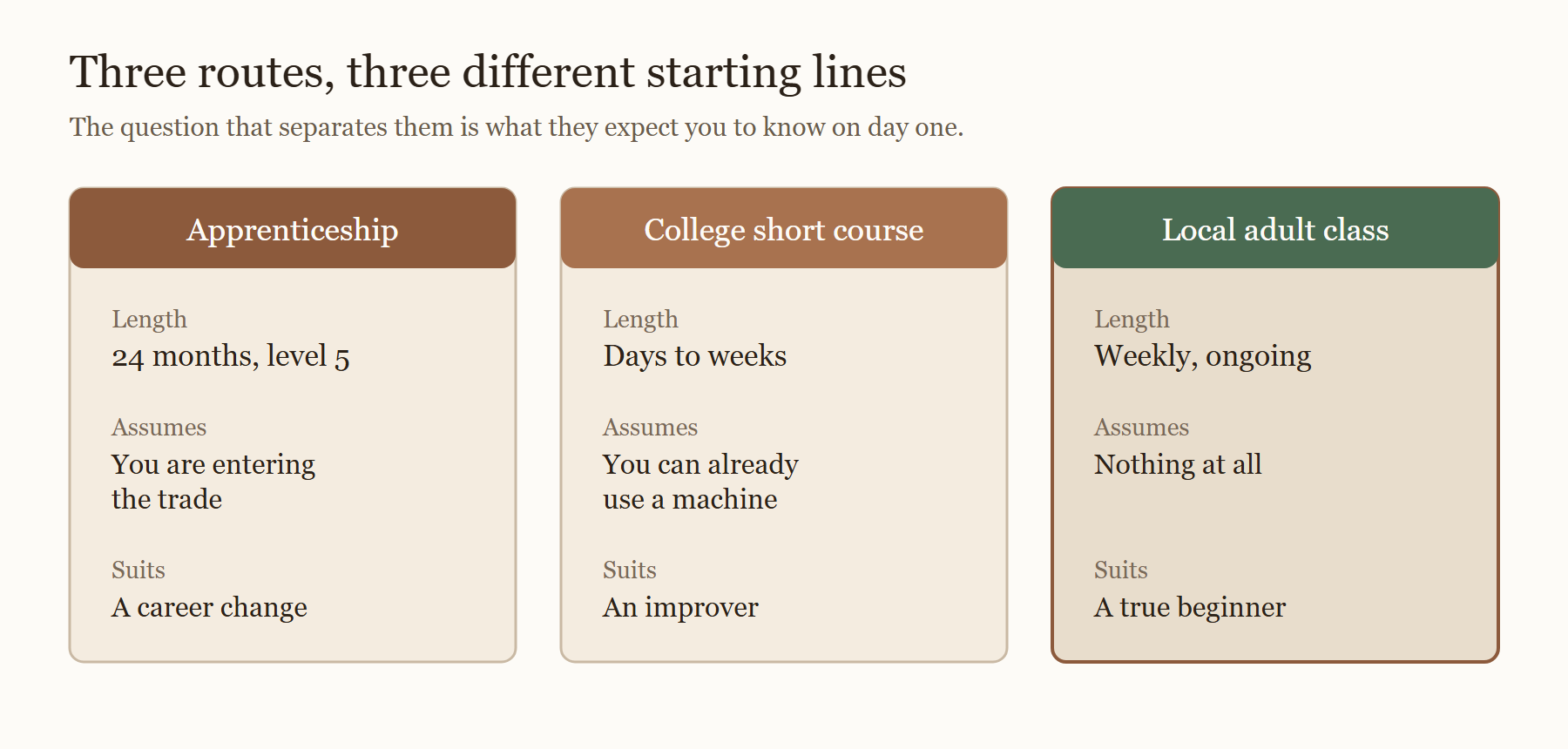
Apprenticeships are the professional route, two years at level 5, for people entering the trade rather than people curious about it. Formal short courses at fashion colleges are excellent and largely assume you can already use a machine. Local adult classes are the ones that teach from nothing.
When you search tailoring classes near me, the question worth asking any provider is this: what do you expect me to be able to do on day one? A good answer is honest in both directions.
The shortage of this teaching is structural rather than accidental. Only 130 people have started the level 2 sewing machinist apprenticeship since it was introduced in 2018, against a projection of 450 in the first year alone, according to UKFT figures. Their director of skills and training notes that fashion and textiles is under-represented in the National Curriculum before the age of 16.
Most adults now arrive at sewing with no school grounding in it at all. That is not a personal deficit. It is a gap in the system, and small local classes are largely what fills it.
Frequently Asked Questions (FAQ)
Can a complete beginner learn tailoring?
Yes, but not as a first step. Tailoring assumes machine confidence, consistent seams and pattern reading. Most people need four to six weeks of general sewing before tailoring instruction makes sense.
What is the difference between tailoring and dressmaking?
Tailoring builds structured, fitted garments, typically jackets and trousers, using internal canvas and hand shaping. Dressmaking leans towards softer garments with less internal structure. They share the same foundation skills, so time spent on either is not wasted.
How long does it take to learn tailoring?
The professional apprenticeship route in England runs 24 months at level 5. Useful hobby-level skill comes far sooner: a few months of regular practice will let you alter garments confidently and understand how a jacket is built.
Do I need my own sewing machine to start?
Not to begin. Most in-person classes provide machines, which lets you try one before buying. It also means the machine is set up correctly, removing the most common reason beginners give up.
Is tailoring worth learning if I only want to fix my clothes?
Yes, and alteration is the most practical entry point there is. Taking in a seam or shortening a sleeve uses genuine tailoring skills and extends the life of clothes you already own.
Conclusion
Tailoring is worth learning and it is not where you start. The order is the whole trick: get comfortable with a machine, sew a straight seam, hem something, read a pattern, then start shaping fabric with your hands.
Alter something you own this month. It is the fastest way to find out whether the craft suits you, and it costs almost nothing to try.
If you would rather learn with somebody watching, the adult courses that run at Edmonton Green Library begin exactly where a beginner is.
Sources
- Savile Row Bespoke Association, About Us
- Department for Education, Bespoke cutter and tailor apprenticeship, level 5
- FashionCapital, The Great British Sewing Shortage, September 2025
- WRAP, Design for Extending Clothing Life
- Jennifer Barger, The Washington Post, Mending clothes makes a comeback, June 2026
Leave a Reply