Tag: sewing machine needles

  • What Needle Should I Use for Stretch Fabric and Beyond?

    What Needle Should I Use for Stretch Fabric and Beyond?

    Key Takeaways

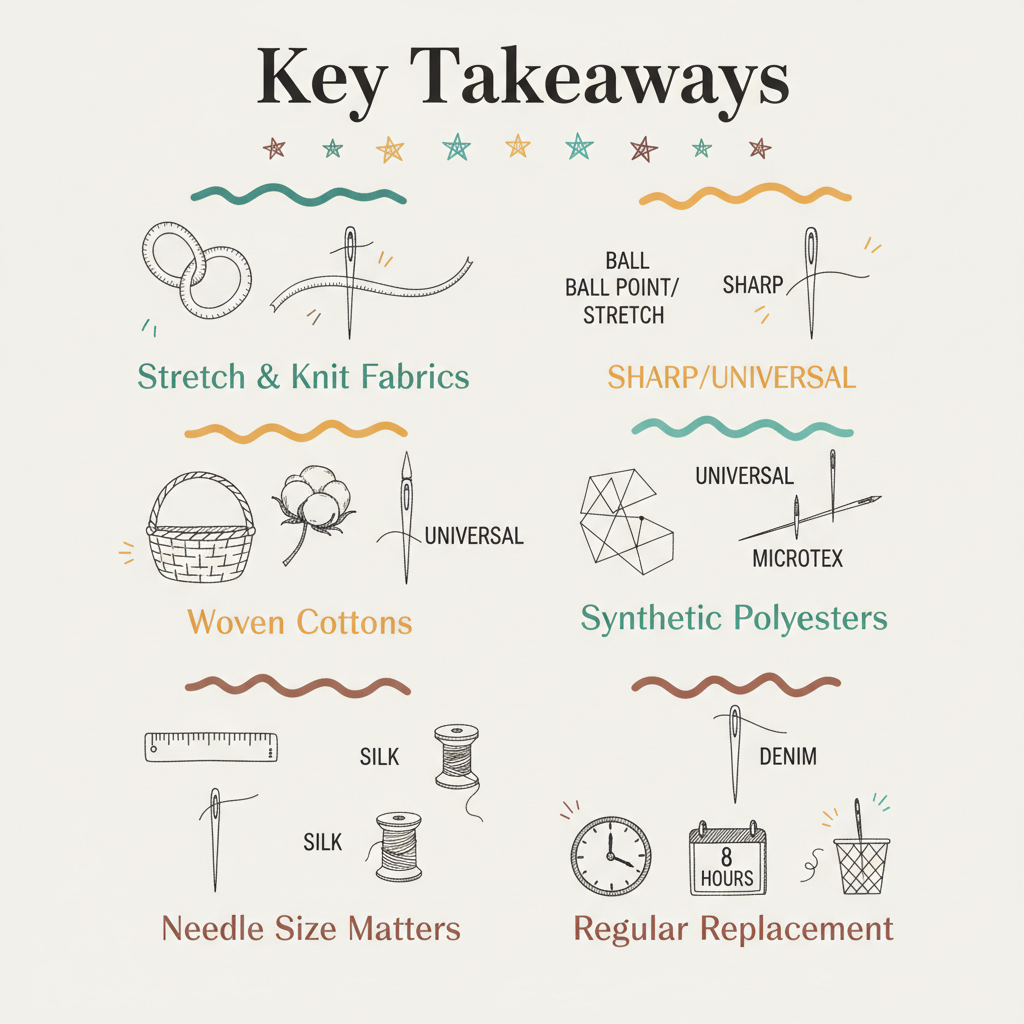
    • Stretch and Knit Fabrics: Always use a Ball Point or Stretch needle to prevent skipped stitches and fabric damage.
    • Woven Cottons: A Sharp or Universal needle works best for stable, natural fibres like cotton.
    • Synthetic Polyesters: Universal needles are suitable, but Microtex needles offer superior precision for fine synthetics.
    • Needle Size Matters: Match the needle size to the fabric weight—finer needles for silks, thicker for denim.
    • Regular Replacement: Change your needle every 8 hours of sewing to maintain stitch quality and protect your machine.
    Choosing the right tool is the first step in any creative journey. When you sit down at your machine, the question of what needle should I use for stretch fabric often arises as soon as you touch a piece of jersey or Lycra. It is a vital question because the wrong choice can lead to frustrating skipped stitches or, worse, tiny holes in your beautiful material. For many beginners, the world of sewing machine needles feels like a secret language, but once you understand the “why” behind the needle tip, your confidence will grow. Whether you are sewing a simple cotton tote or a complex stretch garment, your needle is the bridge between your skill and a professional finish.
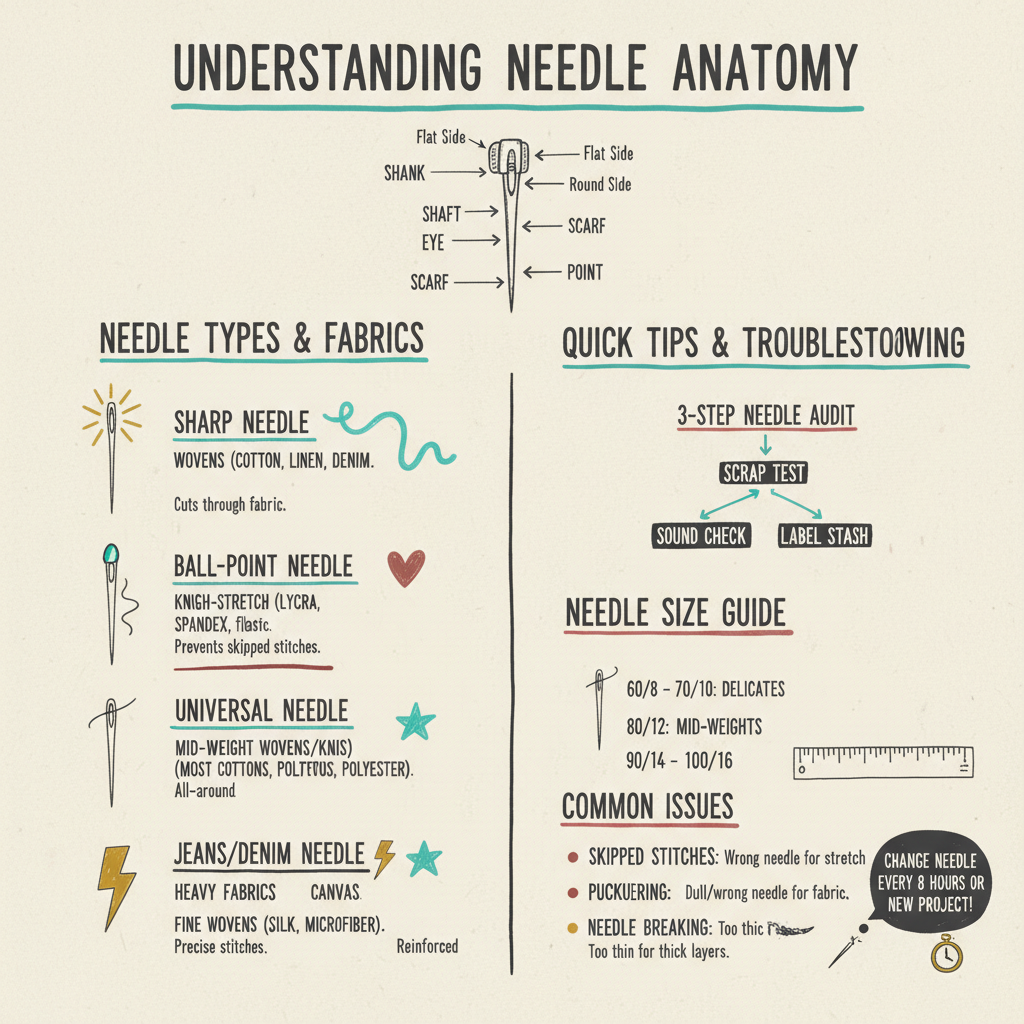
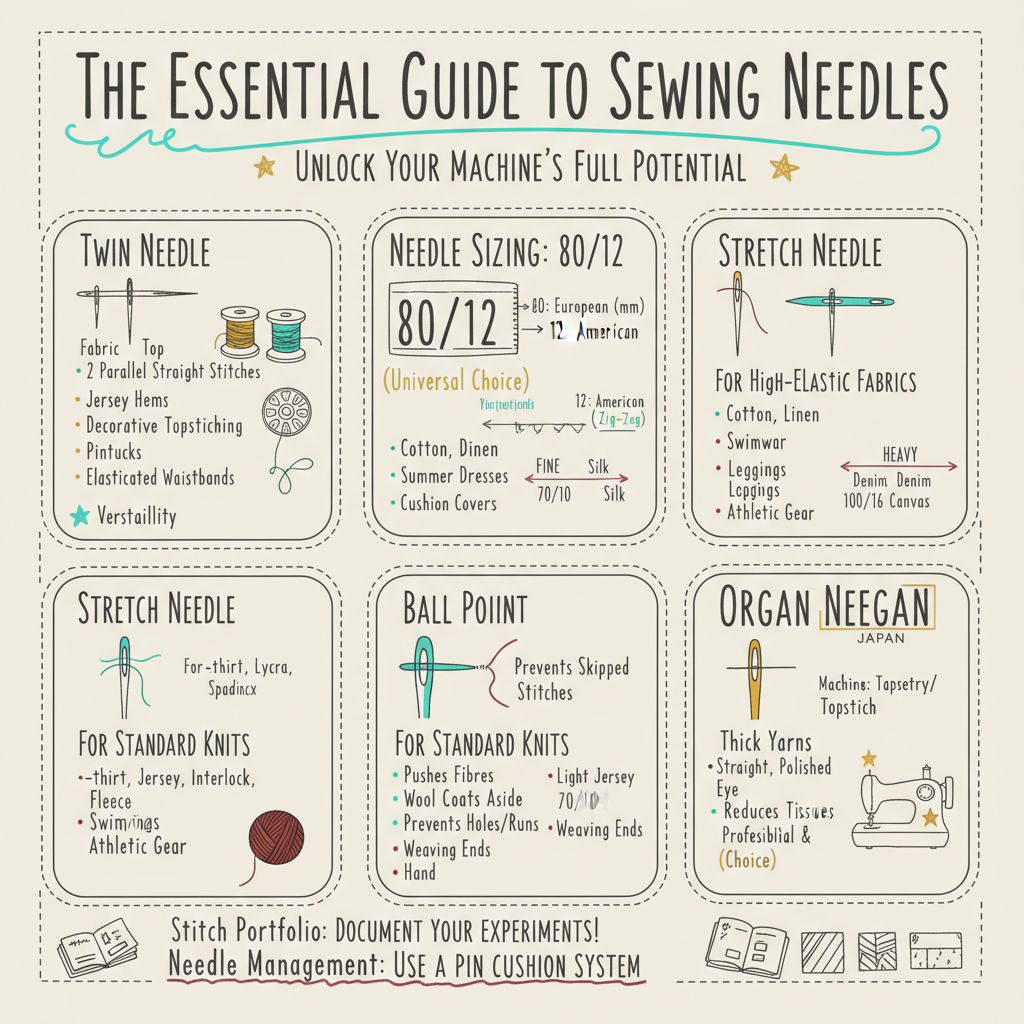
    Infographic about what needle should i use for stretch fabric for London Sewing Courses

    Understanding Needle Anatomy and Why It Matters

    Before we dive into specific fabric types, it is helpful to understand that not all needles are created equal. A sewing machine needle is an engineered tool designed to pass through fibres in very specific ways. If you use a needle designed to pierce through tough denim on a delicate knit, you will likely tear the fibres. Conversely, a blunt needle used on heavy cotton will struggle to penetrate, potentially timing out your machine.

    The “point” of the needle is the most critical factor. Sharp needles are meant to cut through the weave of woven fabrics. Ball-point needles are designed to push the yarns of a knit fabric aside rather than cutting them. This subtle difference is the key to preventing “runs” in your fabric, much like a ladder in a pair of tights.

    What Needle to Use for Lycra Fabric and Elastics

    When working with highly elastic materials, the specific question of what needle to use for lycra fabric becomes paramount. Lycra, Spandex, and other high-stretch synthetics require a “Stretch Needle.” While a standard ball-point needle is often okay for basic t-shirt jersey, Lycra has a high elastic content that can cling to the needle, causing the thread to skip.

    Stretch needles have a specially designed scarf (the indentation above the eye) that allows the bobbin hook to catch the thread more easily, even when the fabric is being pulled or compressed. If you are learning how to sew swimwear or activewear, this needle is your best friend. Similarly, when considering what needle to use for elastic, the stretch needle remains the champion. It prevents the needle from “chewing” the rubber or latex strands inside the elastic, ensuring the waistband or cuff remains durable and functional.

    The Versatile World of Cottons: Which Needle Wins?

    Cotton is the backbone of the sewing world, loved for its breathability and ease of use. However, because cotton comes in so many weights—from airy lawn to heavy canvas—you might wonder what needle should I use for cotton. For most mid-weight woven cottons, a Universal needle is perfectly adequate. It has a slightly rounded tip that is sharp enough to pierce the weave but won’t damage the fibres.

    If you are working with very fine, high-thread-count cottons, you might find that what needle to use for cotton shifts toward a “Sharp” or Microtex needle. These have a very slim, acute point that creates perfectly straight stitches. For those just starting their journey with sewing classes London for beginners, sticking to a 70/10 or 80/12 Universal needle for your first few cotton projects is a safe and reliable choice.

    What Sewing Machine Needle to Use for Cotton Quilting

    Quilting involves sewing through multiple layers—the quilt top, the batting, and the backing. Therefore, what sewing machine needle to use for cotton in a quilting context requires a bit more strength. Quilting needles are reinforced to handle the bulk without bending. They have a tapered point that can pass through several layers of cotton and wadding while maintaining a straight line. If you are exploring seamstress courses that involve patchwork, investing in a dedicated quilting needle will make the process much smoother and prevent the needle from deflecting as it hits thicker seams.

    Mastering Synthetics: What Needle to Use for Polyester

    Polyester is a modern marvel, found in everything from silky blouses to sturdy upholstery. When deciding what needle to use for polyester, you must consider the structure of the fabric. If it is a polyester knit (like many sports tops), refer back to the stretch needle. However, for woven polyester, a Universal needle is usually the standard.

    Polyester fibres are incredibly strong and can sometimes dull a needle faster than natural fibres. If you notice your machine making a “thumping” sound, it is time to change the needle. For very fine or densely woven polyesters, a Microtex needle is often the secret to success, providing the sharpest point possible to avoid puckering the seams.

    Our Unique Insight: The Psychology of the “Perfect Stitch”

    At our London sewing courses for adults, we often observe that a student’s frustration isn’t due to a lack of talent, but a mismatch of tools. We believe the needle is the “unsung hero” of the sewing room. Most sewists wait until a needle breaks to replace it, but we suggest viewing the needle as a consumable, much like thread.

    A fresh needle doesn’t just prevent damage; it changes the way the machine feels. It reduces noise, vibration, and resistance. By matching your needle precisely to your fabric, you aren’t just following a rule—you are removing a barrier between your intention and the finished garment. This small act of mindfulness at the start of a project sets the tone for a calm, successful sewing session.

    Actionable Strategy: The 3-Step Needle Audit

    To ensure you never struggle with the wrong tools again, try this simple strategy before starting your next project:

    1. The Scrap Test: Never start on your actual garment. Take a scrap of your project fabric and sew a few inches. If you see skipped stitches or “puckering,” change your needle type immediately.
    2. The Sound Check: Listen to your machine. A dull needle makes a distinct “pop” or “thump” as it enters the fabric. A sharp, correct needle should be almost silent.
    3. Label Your Stash: Use a small piece of washi tape or a pin cushion with sections to mark which needle is currently in your machine. There is nothing more confusing than forgetting if you have a Stretch or Universal needle loaded!

    Exploring Advanced Options for Specialists

    As you progress through intermediate sewing courses London adults enjoy, you might encounter more niche needles. Denim needles, for example, have a very thick, strong shaft to prevent breakage when sewing through multiple layers of heavy twill. Topstitching needles have an extra-large eye to accommodate thicker decorative threads, which is essential for that professional “jeans” look. Leather needles have a “cutting” point shaped like a wedge to slice through hide. Understanding these variations ensures that as your skills grow, your toolkit grows with you.

    Actionable Strategy: How to Build a “Core” Needle Library

    You don’t need every needle ever made, but having a “Core Library” will save you from midnight runs to the haberdashery. We recommend stocking:

    • Universal (Sizes 70, 80, 90): For almost all woven projects.
    • Stretch (Sizes 75, 90): For jersey, Lycra, and leggings.
    • Microtex (Size 70): For silks, microfibres, and delicate synthetics.
    • Jeans (Size 100): For repairs and heavy-duty bags.

    Having these on hand means you can pivot from making a cotton cushion to a jersey top without any technical delays.

    The Importance of Needle Size (Numbers Explained)

    You will notice two numbers on a needle pack, such as 80/12. The first number (80) is the European metric size, and the second (12) is the American size. Essentially, the smaller the number, the finer the needle.

    • 60/8 to 70/10: Use for very lightweight fabrics like chiffon or organza.
    • 80/12: The “goldilocks” size for most mid-weight fabrics.
    • 90/14 to 100/16: Use for heavy fabrics like denim or curtain material.

    Using a needle that is too thick for a fabric will leave visible holes, while a needle that is too thin might snap. If you are unsure, our sewing classes North London team is always happy to offer a quick bit of advice on matching your project to the right gauge.

    Custom Learning: Why One-on-One Guidance Helps

    Sometimes, reading about needles isn’t enough; you need to feel the difference in the machine. Private sewing lessons London are a fantastic way to troubleshoot specific issues you might be having. Whether you are struggling with a specific brand of sewing machine or a particularly tricky fabric like velvet, a tutor can show you the subtle nuances of tension and needle choice that make all the difference. This personalised approach often helps students overcome “machine fear” and start enjoying the creative process much faster.

    Frequently Asked Questions (FAQ)

    What happens if I use a universal needle on stretch fabric?

    Using a universal needle on stretch fabric often results in skipped stitches because the needle cannot properly catch the bobbin thread as the fabric stretches. Furthermore, the universal tip may nick the elastic fibres, leading to small holes or “ladders” that appear after the garment has been worn or washed. It is always better to switch to a dedicated ball-point or stretch needle to ensure the longevity and professional finish of your knitwear.

    How often should I actually change my sewing machine needle?

    A general rule of thumb followed by professionals is to change your needle after every 8 hours of actual sewing time or at the start of every new project. Over time, the tip of the needle becomes microscopicly dull or hooked, which can snag fabric and cause uneven tension. If you hear a “thumping” sound or notice your stitches looking irregular, it is a clear sign that your needle has reached the end of its life.

    Can I use the same needle for both cotton and polyester?

    Yes, you can often use a Universal needle for both woven cotton and woven polyester, provided the fabric weights are similar. However, if the polyester is a fine synthetic or the cotton is a heavy denim, you should adjust the needle size accordingly. Always perform a test stitch on a scrap of the fabric you intend to use to check that the needle isn’t causing puckering or leaving excessively large holes in the material before proceeding.

    Why does my needle keep breaking when I sew thick seams?

    Needle breakage on thick seams usually happens because the needle is too thin for the task or it is “deflecting” (bending) as it hits the bulk, causing it to strike the throat plate. To prevent this, switch to a larger needle size, such as a 90/14 or 100/16, or use a specific “Jeans” needle. Additionally, try slowing down your sewing speed and using a “hump jumper” tool to keep the presser foot level as you cross thick intersections.

    Conclusion

    The journey from a beginner to a confident sewist is paved with small, technical realisations. Answering the question of what needle should I use for stretch fabric is one of those “lightbulb moments” that instantly improves your results. By respecting the relationship between the needle, the thread, and the fibre, you unlock the ability to work with any material you desire. Whether you are visiting a sewing blog for inspiration or attending sewing classes london for adults to refine your technique, remember that the smallest part of your machine is often the most important. Keep your needles fresh, your tension balanced, and your creativity will have no bounds.

    About the Author: Grace, Founder of London Sewing Courses

    Grace is the heart and hands behind London Sewing Courses. A passionate and experienced sewing instructor, she founded the studio with a unique mission: to create a calm, friendly space for adults to learn and connect, while using the profits to fund free sewing classes for local children in need. Her personal expertise and commitment to community building are at the core of every class and every stitch.

    Sources

  • What is a Twin Needle Used for in Sewing? A Masterclass

    What is a Twin Needle Used for in Sewing? A Masterclass

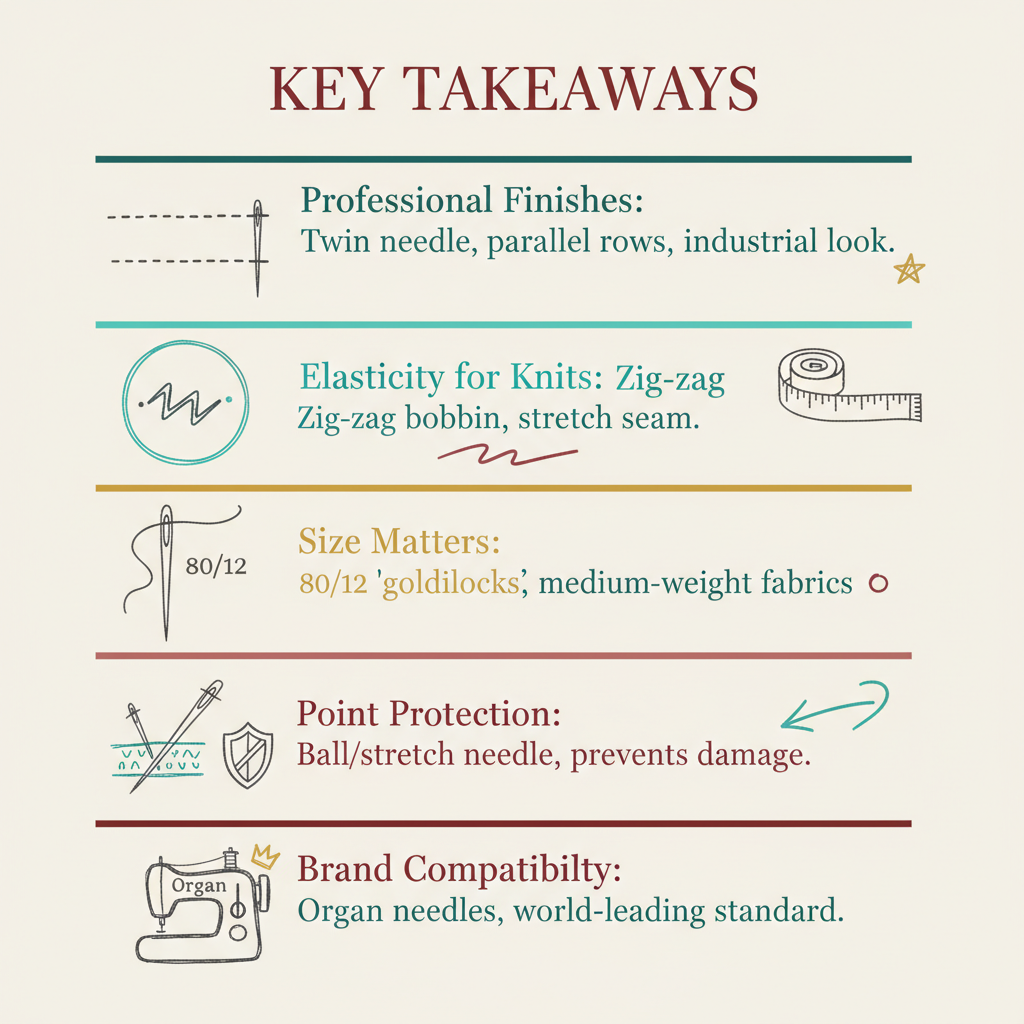
    Key Takeaways

    • Professional Finishes: A twin needle creates two perfectly parallel rows of stitching on the top of the fabric, mimicking the look of an industrial coverstitch machine.
    • Elasticity for Knits: The bobbin thread creates a zig-zag pattern on the reverse, allowing the seam to stretch without the thread snapping.
    • Size Matters: An 80/12 needle is the ‘goldilocks’ of sizes, perfect for medium-weight fabrics like cotton lawn or linen.
    • Point Protection: Using a ball point or stretch needle prevents permanent damage to knit fibres by sliding between them rather than piercing them.
    • Brand Compatibility: Organ needles are a world-leading standard, known for their precision and compatibility with most domestic sewing machines.
    Key takeaways infographic for what is a twin needle used for what is a stretch needle

    Every creative journey begins with a single step, and in the world of dressmaking, that step is often threading your first needle. As you grow in confidence, you may find yourself looking at the internal seams of your favourite shop-bought T-shirt and wondering how to replicate that sleek, parallel finish at home. The answer lies in a small but mighty tool that transforms the capability of your domestic machine.

    Understanding the nuances of needle technology is more than just technical trivia; it is the foundation of professional-standard garments. Whether you are attending our workshops tailored for grown-ups or experimenting in your own creative space, knowing which needle to reach for will save you from the frustration of skipped stitches and puckered fabric. Let us embark on this deep dive into the delicate world of sewing machine needles together.

    Exploring the Versatility: What is a Twin Needle Used For?

    The most common question I receive from students ready to tackle jersey projects is, “What is a twin needle used for?” At its most basic, a twin needle (often called a double needle) consists of two separate needles mounted onto a single plastic crossbar. This bar fits into your machine’s needle bar just like a single needle would.

    When you sew with a twin needle, your machine uses two upper spools of thread and one bobbin. As the needles move up and down, they create two parallel rows of straight stitching on the right side of the fabric. Meanwhile, the bobbin thread catches both upper threads, creating a zig-zag pattern on the underside. This clever mechanical dance is what gives the stitch its incredible flexibility.

    While most people use it for hemming T-shirts, its utility extends far beyond simple knits. You can use it for decorative topstitching on denim, creating beautiful pintucks on heirloom blouses, or even for utility stitching on elasticated waistbands. It is the secret weapon for anyone who wants their handmade wardrobe to look indistinguishable from high-end retail pieces. If you are exploring garment modification techniques, mastering the twin needle is a significant milestone in your development.

    Deciphering the Numbers: What is an 80 12 Needle Used For?

    When you look at a pack of needles, you will see two numbers separated by a slash, such as 80/12. This can feel like a secret code, but it is actually a very simple sizing system. The first number (80) is the European metric size, representing the diameter of the needle shaft in hundredths of a millimetre. The second number (12) is the American sizing system.

    So, what is an 80 12 needle used for? This size is essentially the ‘universal’ choice for the modern sewist. It is sturdy enough to handle the thickness of a standard cotton or linen, yet fine enough not to leave gaping holes in the weave. It is the needle you will likely use for the vast majority of your projects, from constructing summer dresses to sewing structured cushion covers.

    In our curriculum for aspiring dressmakers, we emphasize that an 80/12 needle is your reliable companion. However, precision is key. If you move to a very fine silk, you would drop down to a 70/10. For heavy denim or canvas, you would move up to a 90/14 or 100/16. Always remember that the needle should be as fine as possible for the fabric while remaining strong enough to pierce the layers without bending.

    Mastering the Stretch: What is a Stretch Needle?

    Jersey, Lycra, and modern performance fabrics are delightful to wear but can be a nightmare to sew if you use the wrong equipment. You might find your machine skipping stitches or the thread snapping as soon as you pull the garment on. This is where the stretch needle becomes essential.

    What is a stretch needle, exactly? While it looks similar to a universal needle, it has a specifically engineered ‘scarf’ (the indentation above the eye) and a slightly rounded tip. This design allows the bobbin hook to catch the thread loop more easily, even when the fabric is flexing and bouncing under the presser foot.

    The stretch needle is designed specifically for highly elasticated fabrics with a high Lycra or Spandex content. If you are sewing swimwear, leggings, or very stretchy athletic gear, this is the tool for the job. Using a universal needle on these fabrics often results in a ‘popping’ sound as the needle forces its way through the elastic fibres, which can eventually lead to small holes or ‘runs’ in your fabric.

    Protecting Your Knits: What is Ball Point Needle Used For?

    It is easy to confuse a stretch needle with a ball point needle, as both are used for knit fabrics. However, they serve slightly different purposes in your sewing journey. If you are wondering what is ball point needle used for, think of standard knits like T-shirt jersey, interlock, or sweatshirt fleece.

    A ball point needle has a tip that is rounded rather than sharp. Instead of piercing the yarns of the knit fabric, the rounded tip gently pushes the fibres aside and slides between them. This prevents the needle from cutting the threads that make up the fabric. If you have ever noticed tiny holes appearing along the seams of a knitted garment after a few washes, it is almost certainly because a sharp needle was used during construction, damaging the integrity of the knit.

    For students joining our North London sewing community, we often recommend keeping a variety of ball point sizes in your kit. A size 70/10 ball point is perfect for lightweight jerseys, while a 90/14 is ideal for heavy ribbing or thick winter knits. It is all about preserving the life of your creations through thoughtful tool selection.

    The Specialist’s Touch: What is a Wool Needle?

    As we move into heavier textiles and hand-finishing, we encounter the wool needle. In the context of sewing machines, a ‘wool needle’ often refers to a Topstitch or Embroidery needle with an extra-large eye and a deep groove. However, in the wider world of needlework, it usually refers to a large-eyed hand needle, often called a tapestry or darning needle.

    What is a wool needle used for in a professional setting? It is designed to accommodate thick, fuzzy yarns without shredding them. If you are sewing a heavy woollen coat and need to do decorative topstitching with a thicker silk or wool thread, a specialized topstitch needle on your machine will prevent thread breakage.

    For hand-finishing, a wool needle is essential for weaving in loose ends on knitted garments or joining knitted panels together. The blunt tip ensures you don’t split the yarn as you work. This attention to detail is what separates a hobbyist from a true artisan. Whether you are using a machine or working by hand, matching the needle to the weight and texture of your wool is a mark of a skilled maker.

    Quality and Precision: What is an Organ Needle for a Sewing Machine?

    When you invest in a high-quality sewing machine, the needles you use act as the direct interface between your creative vision and the fabric. One brand you will frequently encounter in professional circles is Organ. But what is an organ needle for a sewing machine in terms of its reputation?

    Organ is a Japanese company that has been manufacturing needles for over a century. They are the preferred choice for many industrial garment factories and high-end domestic machine manufacturers. When we talk about an ‘Organ needle’, we are talking about a standard of manufacturing that ensures the needle is perfectly straight, the eye is polished to prevent thread fraying, and the heat treatment ensures the perfect balance of flexibility and strength.

    Using high-quality needles like these reduces the risk of machine timing issues. A cheap, poorly made needle can have slight imperfections that cause it to strike the bobbin case or skip stitches. If you are currently mastering your first device, starting with premium needles is one of the best habits you can form. It ensures that any issues you encounter are likely due to technique rather than equipment failure.

    Our Unique Insight: The Philosophy of the Point

    In my years as a tutor, I have realised that the needle is not just a tool; it is a bridge. There is a philosophy to needle selection that goes beyond the technical manuals. We often think of sewing as ‘joining’ things, but at a microscopic level, sewing is about ‘negotiating’ space within the fabric’s structure.

    The unique insight I share with my intermediate students is that the needle’s point is a silent communicator. A sharp point ‘demands’ entry, which is perfect for woven fabrics where the threads are locked in a grid. A ball point ‘asks’ for entry, gently nudging aside the loops of a knit. When you start to view your fabric as a living structure rather than a flat surface, your needle choice becomes intuitive.

    This intuitive connection is what we foster in our archive of creative tutorials. Instead of just following a chart, ask yourself: “How does this fabric want to be treated?” A delicate silk chiffon needs a tiny, sharp needle to avoid snagging. A rugged denim needs a heavy, reinforced needle to punch through the indigo-dyed walls of the weave. Listen to your fabric, and the needle choice will follow.

    Actionable Strategy: The Stitch Portfolio

    To truly master the use of specialized needles, I encourage every student to create what I call a ‘Stitch Portfolio’. This is a physical record of your experiments and will become your most valuable reference guide.

    • Create Sample Swatches: Take a 10cm square of jersey and use a twin needle to hem it. Staple or sew this into a notebook.
    • Document the Data: Next to the swatch, write down the needle type (e.g., Twin Stretch 2.5/75), the thread brand, and the tension settings on your machine.
    • Test the Tension: If your twin needle hem is ‘tunnelling’ (forming a ridge between the two lines), note down how you adjusted the bobbin or top tension to fix it.
    • Compare Points: Sew a line with a universal needle and a line with a ball point needle on the same knit scrap. Pull the fabric hard. Note which one causes the thread to snap or the fabric to develop holes.

    By building this portfolio, you are not just learning; you are collecting evidence of your own growth. This strategy turns a theoretical understanding of “what is an 80 12 needle used for” into a practical, hands-on skill that you can rely on for years to come.

    The Practical Path: Transitioning to Advanced Needles

    Once you are comfortable with the basics, moving into advanced needlework requires a shift in how you manage your workspace. It is easy to lose track of which needle is currently in your machine, especially since the markings are so small they are nearly impossible to read once the needle is installed.

    Needle Management Systems

    I always recommend a simple ‘needle pin cushion’ system. Divide a small pincushion into sections using a fabric marker. Label the sections: Universal, Stretch, Ball Point, Denim, and Twin. When you remove a needle that still has life in it, place it in the correct section. This prevents you from accidentally using a sharp needle on a delicate knit later in the day.

    The Life Cycle of a Needle

    Many beginners make the mistake of using the same needle for months. In a professional studio, we change the needle after every eight hours of sewing time, or at the start of every new project. A dull needle works your machine’s motor harder, creates more noise, and damages your fabric. If you hear a ‘thudding’ sound as the needle enters the fabric, it is time for a change.

    Building Your Confidence in the Studio

    The jump from basic straight stitching to using a twin needle or a size 100 denim needle can feel intimidating. The machine sounds different, the threading is more complex, and the stakes feel higher. However, this is exactly where the most rewarding learning happens.

    If you find yourself hesitating, remember that every expert was once a beginner who wasn’t afraid to break a needle or two. In our studio, we celebrate the ‘oops’ moments because they are the fastest way to learn how the machine’s mechanics truly function. Whether you are aiming to sew your own wedding dress or simply want to repair a pair of favourite trousers, your willingness to experiment with different needles is what will get you there.

    Frequently Asked Questions (FAQ)

    What is a twin needle used for most effectively?

    A twin needle is most effectively used for hemming knit garments, such as T-shirts or leggings. Because the bobbin thread creates a zig-zag pattern on the back, the stitch is naturally elastic. This allows the hem to stretch as the wearer moves or pulls the garment on, preventing the thread from snapping. It is also excellent for decorative pintucks on lightweight woven fabrics like linen or cotton lawn.

    Can I use an 80/12 needle for all my projects?

    While an 80/12 needle is a fantastic universal choice for medium-weight fabrics, it is not suitable for everything. If you are working with very fine fabrics like silk or chiffon, you should switch to a 60/8 or 70/10 to avoid leaving large holes. Conversely, for heavy denim or multiple layers of canvas, you will need a 90/14 or 100/16 to ensure the needle doesn’t bend or break under the pressure.

    What is the main difference between a stretch needle and a ball point?

    The main difference lies in the design of the needle’s scarf and point. A ball point needle has a rounded tip designed to slide between the loops of standard knit fabrics like jersey. A stretch needle has a specialized scarf and a slightly less rounded tip, specifically engineered to prevent skipped stitches on high-stretch fabrics like Lycra, Spandex, or elasticated swimwear. Choosing the right one depends on the elastane content of your fabric.

    Conclusion

    Understanding the intricate details of needle selection is a vital part of your evolution as a sewist. From knowing what is a twin needle used for to appreciating the precision of an Organ needle for a sewing machine, these small choices culminate in a garment that is durable, comfortable, and beautiful. The world of textiles is vast and varied, and your needles are the guides that help you navigate every new fabric you encounter.

    As you continue your journey, keep your curiosity alive. Don’t be afraid to try a new needle size or experiment with a decorative twin-stitch hem. Every project is a lesson, and every stitch is a step toward mastery. Whether you are joining us for sewing classes London for beginners or taking on an advanced tailoring project, your expertise will flourish through practice and patience.

    About the Author: Grace, Founder of London Sewing Courses

    Grace is the heart and hands behind London Sewing Courses. A passionate and experienced sewing instructor, she founded the studio with a unique mission: to create a calm, friendly space for adults to learn and connect, while using the profits to fund free sewing classes for local children in need. Her personal expertise and commitment to community building are at the core of every class and every stitch.

    Sources

  • Needle Know-How: The Complete Guide to Sewing Machine Needles and Presser Feet

    Needle Know-How: The Complete Guide to Sewing Machine Needles and Presser Feet

    Key Takeaways

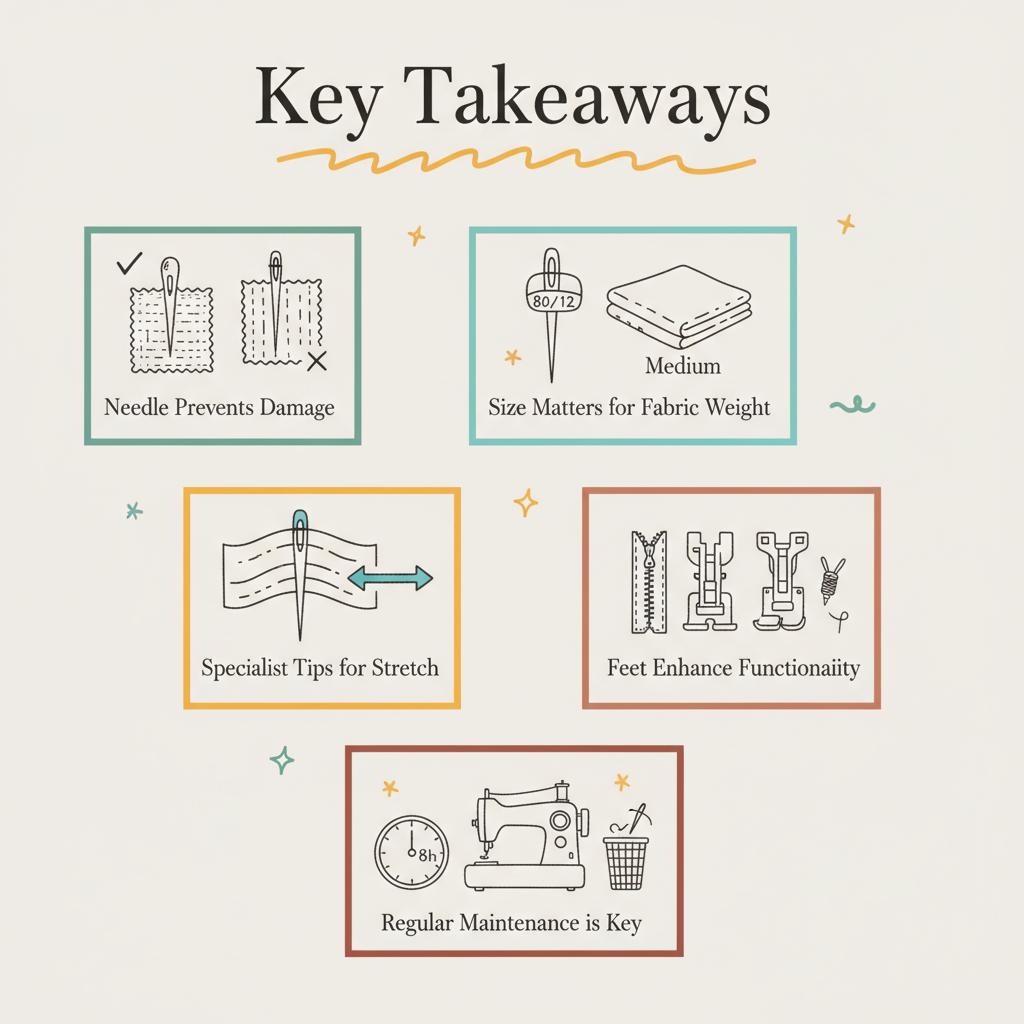
    • The Right Needle Prevents Damage: Selecting the correct needle, such as knowing what are ball point needles used for, ensures you do not snag or skip stitches on delicate knits.
    • Size Matters for Fabric Weight: Understanding what are 80 12 needles used for helps you match needle strength to medium-weight fabrics like linen or light wool.
    • Specialist Tips for Stretch: Using blue tip sewing machine needles or dedicated stretch needles is essential for high-elasticity fabrics like Lycra.
    • Feet Enhance Functionality: Learning what are different sewing machine feet used for allows you to master zips, hems, and quilting with professional precision.
    • Regular Maintenance is Key: Changing your needle every 8 hours of sewing time keeps your machine running smoothly and your stitches beautiful.
    what are ball point needles used for

    Understanding the Foundation of Your Stitches

    The journey of a thousand seams begins with a single, correctly chosen needle. When you first sit down at your machine, the sheer variety of metal “bits” can feel overwhelming. However, the secret to professional-looking garments lies in these small details. If you have ever felt the frustration of a machine “chewing” your fabric or threads constantly snapping, the culprit is often a simple mismatch between the needle and the material.

    Private tutoring in sewing often starts with this very foundation. Whether you are attending sewing classes London for beginners or practicing at home, mastering your tools is the first step toward creative freedom. Choosing the right needle is not just about getting the job done; it is about respecting the fabric you have carefully chosen. A universal needle might work for a cotton tote bag, but it will likely ruin a silk blouse or a pair of leggings.

    As we explore the specifics of needle types and presser feet, remember that every expert was once a beginner. With patience and the right knowledge, you will soon navigate your sewing box with total confidence.

    what are ball point needles used for

    The Essential Guide: What are Ball Point Needles Used For?

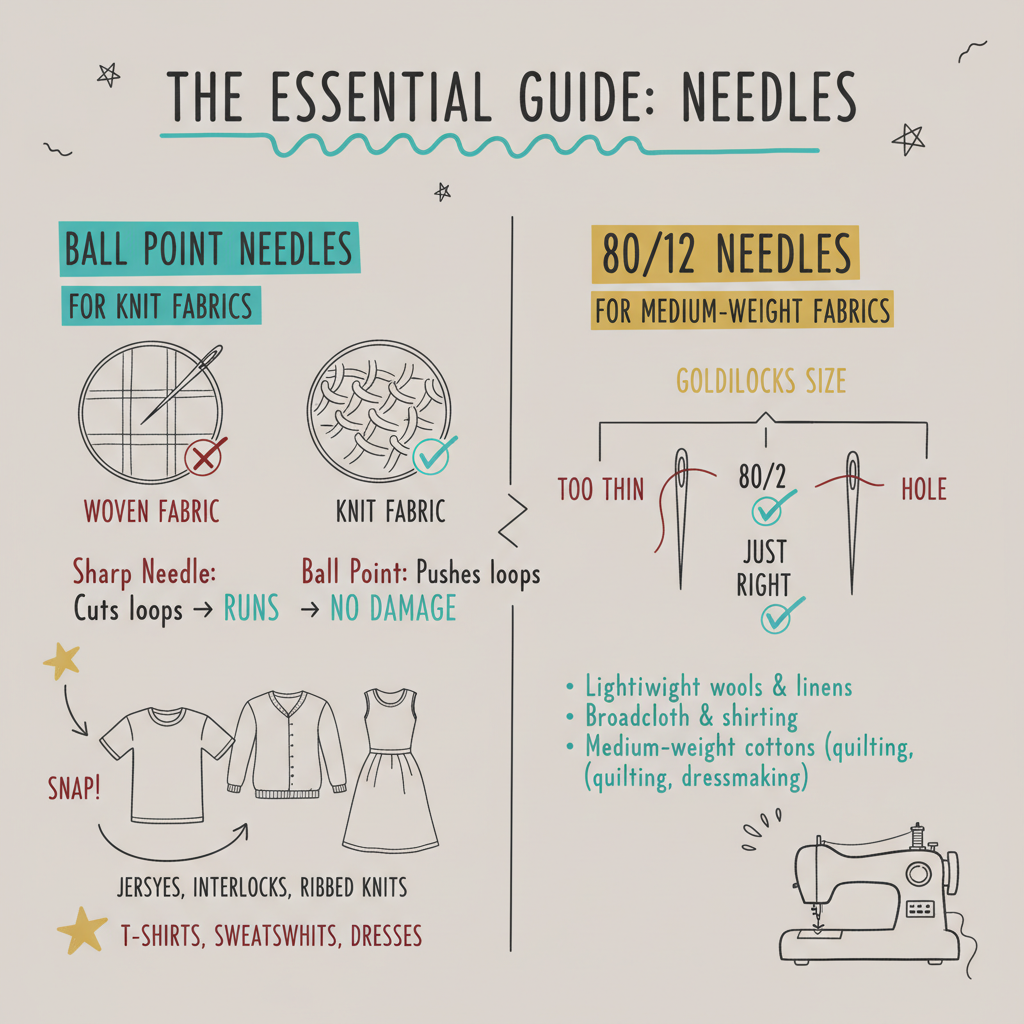
    One of the most frequent questions from new students is: what are ball point needles used for? To understand this, we must look at how fabric is constructed. Unlike woven fabrics, which consist of crossing threads, knit fabrics are made of interlocking loops.

    A standard sharp needle is designed to pierce through the threads of woven fabric. If you use a sharp needle on a knit, it can cut the delicate loops, leading to small holes or “runs” that eventually ruin the garment. A ball point needle features a rounded tip. Instead of piercing the yarn, the rounded end gently pushes the fabric threads aside, sliding between them to create the stitch without damage.

    When to Reach for the Ball Point

    You should use a ball point needle whenever you are working with jerseys, interlocks, or ribbed knits. If you are curious about what are ball point sewing machine needles used for in a practical sense, think of t-shirts, sweatshirts, and cotton-blend knit dresses. They are the “kind” choice for your fabric, ensuring the longevity of your hand-made wardrobe.

    Sizing Up: What are 80 12 Needles Used For?

    Needle packets usually display two numbers, such as 80/12. The first number is the European metric size, and the second is the American size. But specifically, what are 80 12 needles used for in everyday sewing?

    The size 80/12 is the “Goldilocks” of the sewing world—not too thin, not too thick. It is designed for medium-weight fabrics. When you are participating in London sewing courses for adults, you will likely find these needles used for:

    • Lightweight wools and linens.
    • Broadcloth and shirting fabrics.
    • Medium-weight cottons used in quilting or dressmaking.

    Using a needle that is too large for your fabric will leave visible holes, while a needle that is too small may bend or break when trying to penetrate the layers.

    Navigating Specialty Needles: Stretch and Blue Tips

    As you progress to intermediate London sewing courses for adults, you will encounter more challenging materials. This is where specialist needles become vital.

    What are Stretch Needles?

    While similar to ball point needles, stretch needles have a specially shaped “scarf” (the indentation above the eye) that prevents skipped stitches on highly elastic fabrics. If you are sewing swimwear, leggings, or anything with high Lycra or Spandex content, a stretch needle is your best friend.

    What are Blue Tip Sewing Machine Needles?

    Many sewists ask, what are blue tip sewing machine needles and how do they differ? These are a signature product, often from Janome, featuring a slightly rounded tip (similar to a ball point) but with a special coating. They are excellent for fine knits and synthetic fabrics because they reduce friction and heat, which prevents thread breakage and keeps the needle clean.

    Our Unique Insight: The “Eight-Hour Rule” for Needle Longevity

    At our sewing classes North London, we teach a philosophy that often surprises students: the needle is a disposable tool. We recommend the “eight-hour rule.” A needle typically loses its factory-perfect sharpness after about eight hours of active sewing.

    Even if it doesn’t break, a dull needle develops microscopic burrs. These burrs pull at your fabric, create uneven tension, and can even damage the internal timing of your machine. Changing your needle at the start of every new project is the cheapest and most effective “insurance policy” for your sewing machine’s health. It is much better to spend a few pence on a fresh needle than to spend pounds on a professional machine service.

    Actionable Strategy: The Needle and Foot Audit

    You can improve your sewing quality today by performing a simple audit of your supplies. Follow these three steps:

    1. The Magnifying Glass Test: Take a needle you have been using for a while and run it across an old pair of tights or a piece of scrap silk. If it snags even slightly, it is blunt. Throw it away immediately.
    2. Organise by Type: Do not just throw needles back into a communal jar. Use a “needle pincushion” or a labeled box. If you forget what is in your machine, use a small magnet or a post-it note on the machine head to track if it is currently fitted with a ball point or a universal needle.
    3. The Scrappy Start: Before sewing your actual garment, take a 10cm square of your project fabric. Test the stitch quality. If you see skipped stitches on a knit, switch from a ball point to a stretch needle. If the fabric “puckers,” your needle might be too large.

    Mastering the Machine: What are Different Types of Sewing Machine?

    To choose the right accessories, you must understand the tool itself. While most hobbyists use a domestic machine, knowing what are different types of sewing machine helps you decide which path to take in your seamstress courses.

    • Mechanical Machines: These use knobs and dials to change settings. They are robust and excellent for learning the basics.
    • Computerised Machines: These offer hundreds of stitch patterns and automated features like needle-up/down or automatic thread cutting.
    • Overlockers (Sergers): Essential for professional knit garments, these trim the fabric and wrap the edge with thread simultaneously.
    • Embroidery Machines: Specialist tools used for creating intricate decorative designs.

    If you are looking for private sewing lessons London, your tutor can help you decide which machine best suits your creative goals, whether you want to make bespoke evening wear or simple home decor.

    Beyond the Needle: What are Different Sewing Machine Feet Used For?

    The needle creates the stitch, but the presser foot controls the fabric. Understanding what are different sewing machine feet used for is like unlocking a “cheat code” for difficult tasks.

    Foot TypePrimary UseWhy You Need It
    All-Purpose FootGeneral sewingThe standard foot for straight and zigzag stitches.
    Zipper FootInserting zipsAllows you to sew very close to the zipper teeth.
    Buttonhole FootCreating buttonholesAutomatically sizes the hole to fit your specific button.
    Walking FootQuilting & thick layersMoves the top layer of fabric at the same speed as the bottom.
    Blind Hem FootInvisible hemsCreates a professional finish on trousers and skirts.

    When you learn to use a sewing machine, mastering these feet will elevate your work from “home-made” to “handmade professional.” For instance, using a walking foot on slippery knits alongside a ball point needle ensures the fabric does not stretch out of shape as you sew.

    Frequently Asked Questions (FAQ)

    What are ball point sewing machine needles used for specifically?

    Ball point needles are specifically designed for knit fabrics like jersey, ribbing, and interlock. Unlike sharp needles, which pierce and can cut the fibres, the rounded tip of a ball point needle slides between the yarns. This prevents the fabric from snagging, “running,” or developing small holes at the seam line. It is the essential tool for making t-shirts or knit loungewear. Each answer in this section is designed to guide you through these specific needle nuances within 55 to 90 words.

    Should I use a ball point needle for denim?

    No, denim is a heavy, tightly woven fabric that requires a “Jeans” or “Denim” needle. These needles have a very sharp point and a reinforced shank to punch through multiple thick layers without bending. A ball point needle would struggle to penetrate denim and would likely result in skipped stitches or a broken needle. Always match the needle tip to the fabric construction to ensure the best results for your garment projects.

    What are different sewing machine feet used for in dressmaking?

    In dressmaking, different feet handle specific construction tasks. A zipper foot is essential for getting close to the teeth of a zip, while a concealed zipper foot is needed for invisible zips. An overcasting foot can help finish raw edges if you do not have an overlocker. Using the correct foot ensures accuracy and prevents the fabric from shifting, which is vital for a good fit and a polished, professional-looking garment finish.

    How do I know if my needle is blunt?

    You might hear a distinct “thumping” sound as the needle hits the fabric, or you may notice skipped stitches and puckered seams. A blunt needle can also cause the thread to shred or break frequently. If you are unsure, the best practice is to change the needle. A fresh needle is one of the simplest ways to resolve most common sewing machine frustrations instantly and keep your creative flow going smoothly.

    Conclusion

    The world of sewing is vast, but it is built on these small, logical components. Understanding what are ball point needles used for and how to select the right size—like knowing what are 80 12 needles used for—gives you the technical foundation to tackle any project. Whether you are attending sewing classes London for adults or exploring a sewing blog for inspiration, never underestimate the power of a fresh needle and the correct presser foot.

    Your machine is a partner in your creativity. When you treat it with the right tools and regular maintenance, it will reward you with beautiful, durable garments that you can be proud of. If you ever feel stuck, remember that even the most complex garment is just a series of simple, well-executed stitches.

    About the Author: Grace, Founder of London Sewing Courses

    Grace is the heart and hands behind London Sewing Courses. A passionate and experienced sewing instructor, she founded the studio with a unique mission: to create a calm, friendly space for adults to learn and connect, while using the profits to fund free sewing classes for local children in need. Her personal expertise and commitment to community building are at the core of every class and every stitch.

    Sources