
Key Takeaways
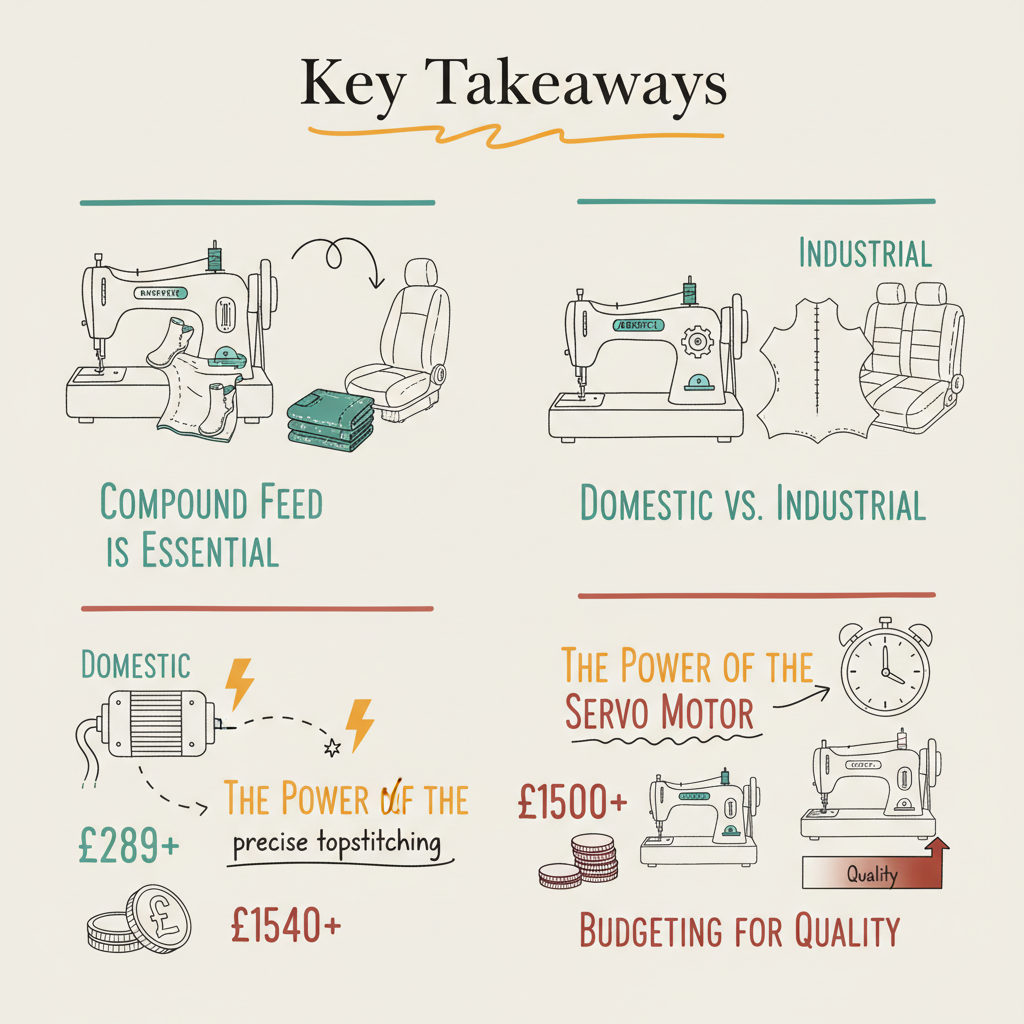
- Compound Feed is Essential: For auto upholstery and leather, a “walking foot” or compound feed machine ensures all layers move together without slipping.
- Domestic vs. Industrial: Domestic heavy-duty machines are “workshop portable” for thick denim and canvas, while industrials are stationary workhorses for high-volume leather work.
- The Power of the Servo Motor: Modern industrial machines use servo motors for incredible torque and stitch-by-stitch speed control, vital for precise topstitching.
- Budgeting for Quality: Prices range from £289 for a reliable domestic heavy-duty model to over £1,500 for a premium industrial walking foot setup.
Hello, dear craft lover . There is a certain thrill that comes with moving beyond delicate silks and cottons to work with the “tough stuff.” Whether you are dreaming of crafting a bespoke leather handbag, restoring a vintage car interior, or simply wanting to sew through eight layers of denim without a protest from your machine, you’ve arrived at an exciting crossroads in your creative journey.
At London Sewing Courses, we often see students who have mastered the basics and are now ready to tackle projects that require real muscle. Choosing a heavy-duty or industrial machine is a significant step—it’s about finding a partner that can handle the resistance of thick materials while maintaining the elegance and precision of your design. Let’s explore the world of high-torque motors and walking feet together.
What is a Heavy Duty Sewing Machine?
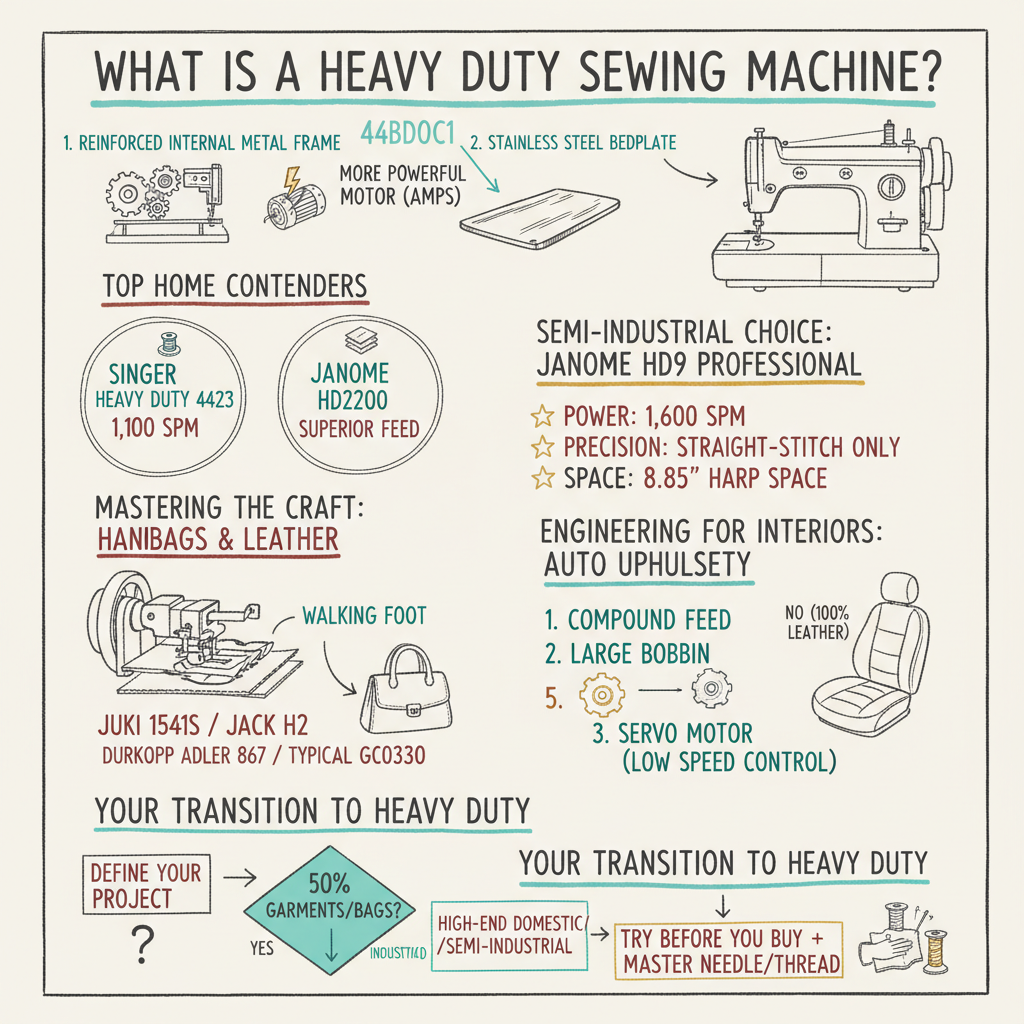
Before we look at specific models, it’s important to understand what makes a machine “heavy duty.” A true heavy duty sewing machine isn’t just a standard machine in a grey plastic shell. It features a reinforced internal metal frame, a more powerful motor (often measured in Amps), and a stainless steel bedplate to allow thick fabrics to glide smoothly.
If you are looking for the best heavy duty sewing machine to buy for home use, you want a machine that offers a high presser foot lift and adjustable foot pressure. This allows you to tuck those thick seams under the needle without “fighting” the machine.
The Top Home Contenders
- Singer Heavy Duty 4423: Often the first choice for sewing classes for beginners, this machine is a reliable starting point. It’s fast (1,100 stitches per minute) and can handle denim and canvas with ease.
- Janome HD2200: A sturdier, more refined option that is a favourite in our London sewing courses for adults. It features a superior feed system that handles various fabric thicknesses beautifully.
The Best Sewing Machine for Thick Fabrics: The Semi-Industrial Choice
Sometimes, a home machine isn’t quite enough, but a full industrial setup is too large for your flat. This is where the “semi-industrial” straight-stitch machines shine. These are the best sewing machines for thick fabrics when you need speed and power but also a bit of portability.
The Janome HD9 Professional
In the UK, the Janome HD9 is frequently cited as the “bag maker’s best friend”.
- Power: It features a high-torque motor capable of 1,600 stitches per minute.
- Precision: Because it is a straight-stitch-only machine, the needle bar is incredibly stable. There is no “vibration” or “needle deflection” when hitting a thick cross-seam.
- Space: It offers a generous 8.85 inches of “harp space” (the gap between the needle and the machine body), giving you room to manoeuvre bulky handbags.
Mastering the Craft: Best Sewing Machine for Making Handbags
When you move into serious bag making, especially with leather or heavy waxed canvas, the best sewing machine for making handbags is one that features a walking foot.
A standard sewing machine pulls the fabric only from the bottom. A walking foot machine (or compound feed) has an extra set of “teeth” on the top that move in unison with the needle and the bottom feed dogs. This prevents the top layer of leather from “creeping” or shifting, ensuring your seams are perfectly aligned from start to finish.
For professional bag making, the Juki 1541S or the Jack H2 are legendary choices. They are designed to sew through multiple layers of veg-tan leather without skipping a single stitch.
Engineering for Interiors: Best Sewing Machine for Auto Upholstery
Auto upholstery is perhaps the most demanding branch of sewing. You are dealing with heavy vinyl, automotive-grade leathers, and thick foam backing. The best sewing machine for auto upholstery must be an industrial walking foot machine with a high-clearance foot lift.
Essential Features for Upholstery:
- Compound Feed: Absolutely non-negotiable for vinyl and foam sandwiches.
- Large Bobbin: Upholstery requires thick thread (often M20 or M40). A “Large Barrel” shuttle or jumbo bobbin allows you to sew longer seams without stopping to refill.
- Servo Motor: This allows you to set the top speed very low. When you are sewing a complex curve on a car seat, you want the machine to move stitch-by-stitch with full power.
The Durkopp Adler 867 or the Typical GC0330 are the gold standards in this field. They offer the “climbing” properties needed to move over uneven thicknesses in a car’s interior.
Choosing an Industrial Workhorse: Best Industrial Sewing Machine to Buy
If you’ve decided to turn your passion into a business, you might be wondering which is the best industrial sewing machine to buy for your workshop.
| Machine Model | Best Used For | Key Feature |
| Jack F5 / F5H | General tailoring & heavy denim | Affordable, quiet direct-drive motor |
| Juki DDL-8700 | Professional dressmaking | The industry standard for speed and reliability |
| Jack H6 / H7 | Leather & Upholstery | Fully automatic walking foot with digital stitch control |
| Typical GC20606 | Extra heavy-duty tasks | Compound feed with two-needle options for parallel topstitching |
The Practicalities: What is the Price of an Industrial Sewing Machine?
Investing in your craft requires budgeting, and the price of an industrial sewing machine can vary based on features like automatic thread cutters and foot lifters.
- Entry-Level Industrial: A basic straight-stitch machine like the Jack F5 starts around £429 to £469.
- Mid-Range Walking Foot: A sturdy machine for handbags or light upholstery, such as the Jack H2, typically costs between £639 and £899.
- Premium / Fully Automatic: High-end machines with computerised stitch regulation and automatic “backtacking” can range from £1,000 to over £1,800.
Remember, industrial machines usually come “built-in” to a large heavy-duty table with the motor mounted underneath, so you must factor in the space in your home or studio.
Actionable Strategy: Your Transition to Heavy Duty
If you are feeling ready to make the leap, here is my advice as your tutor:
- Define Your Primary Project: Are you making 50% garments and 50% bags? Stick with a high-end domestic or semi-industrial. Are you 100% focused on leather? Go industrial.
- Try Before You Buy: Visit a showroom in North London. Take your thickest leather samples and see how the machine sounds. It should hum, not growl.
- Master the Needle and Thread: Even the best machine will fail if you use the wrong needle. For leather, always use a “cutting point” (LR or DI) needle and bonded nylon thread.
Frequently Asked Questions (FAQ)
Can I sew leather on a regular Singer Heavy Duty?
You can sew thin garment leather (like a skirt or light waistcoat) using a leather needle and Teflon foot. However, for thick handbag straps or belts, you will eventually strain the motor and timing of a domestic machine.
Do I need a special licence to own an industrial machine?
Not at all! You can own an industrial machine in your home. However, do be mindful of your neighbours; while modern servo motors are very quiet, the “thump” of the needle through thick leather can carry through floors.
What is the “walking foot” I keep hearing about?
It is a feeding mechanism where the presser foot actually “walks” over the fabric. It is the secret to sewing sticky materials like vinyl or slippery layers without them shifting.
Conclusion
Stepping into the world of heavy-duty and industrial sewing is a transformative experience for any maker. It removes the physical “struggle” from your projects, allowing you to focus entirely on the artistry of your design. Whether you choose a versatile Janome HD9 for your boutique handbag brand or a powerful Jack walking foot for your upholstery workshop, your tools should be an extension of your own skill and passion.
If you would like to explore these machines in person or need a hand mastering the techniques required for leather work, please do join us for a private sewing lesson. We can help you navigate the technical settings and build the confidence you need to create pieces that will last a lifetime. Happy sewing!
About the Author: Grace, Founder of London Sewing Courses
Grace is the heart and hands behind London Sewing Courses. A passionate and experienced sewing instructor, she founded the studio with a unique mission: to create a calm, friendly space for adults to learn and connect, while using the profits to fund free sewing classes for local children in need. Her personal expertise and commitment to community building are at the core of every class and every stitch.
Sources
- Heavy Duty Sewing Machines | Direct Sewing Machines UK
- Automatic Industrial Sewing Machines | Direct Sewing Machines
- Best Leather Sewing Machine in UK | Cowboy Sew
- Leather Goods | Solent Sewing Machines
- Best Heavy Duty Sewing Machines & Features | AppleGreen Cottage
- Best Sewing Machine 2024 | The Sewing Studio
- Industrial Sewing Machines for Automotive Upholstery | Prizzi
- Best Sewing Machine for Bag Making? | Country Cow Designs
- Which Sewing Machine for Bag Making | Bamber Sewing Machines
Watch this comprehensive guide to the best selling sewing machines to see a comparison of popular models that can handle various fabric weights.