
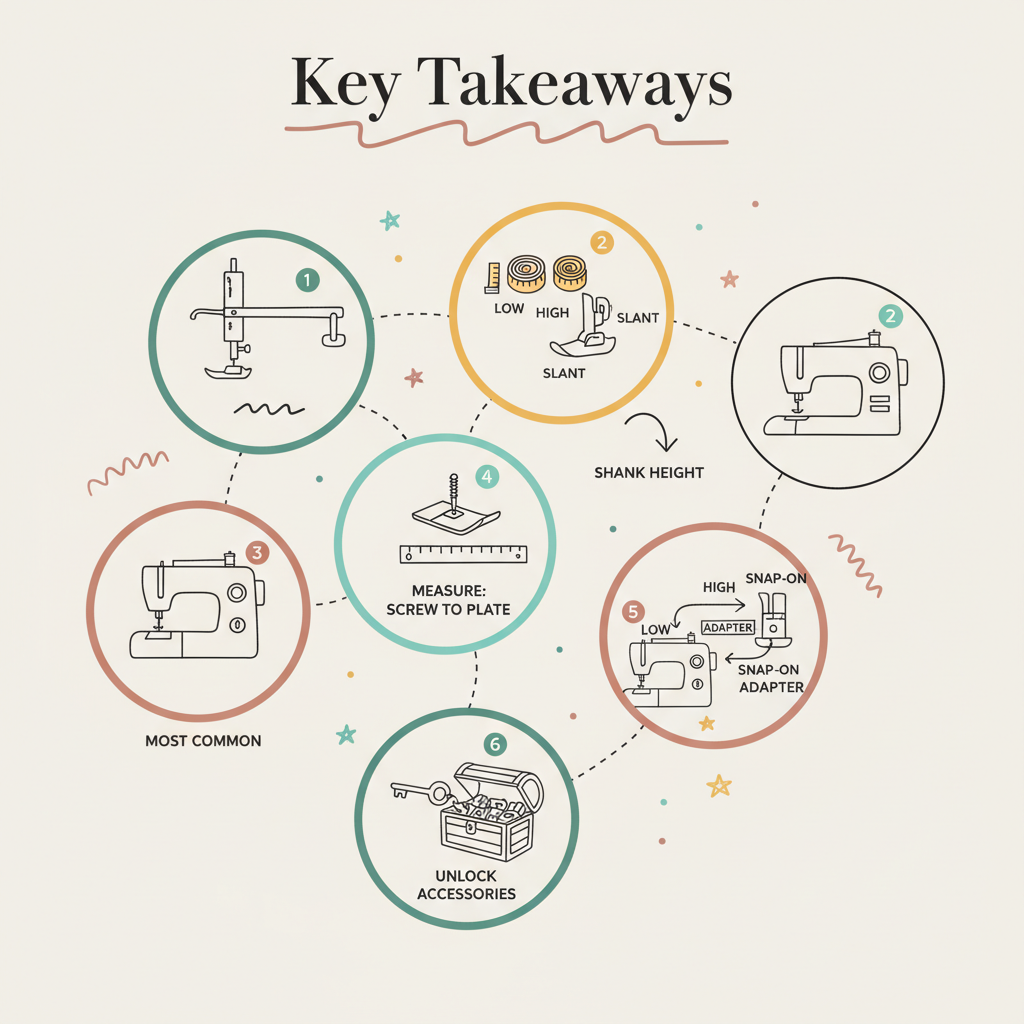
Key Takeaways
- The Shank’s Role: The shank is the metal bar on your sewing machine where the presser foot attaches1.
- Defining the Shank Height: Shank height determines which accessories—specifically presser feet—you can use2. The terms low shank, high shank, and slant shank refer to the length of this metal bar3.
- Low Shank is Standard: A low shank sewing machine is the most common type for modern domestic models4. Most general-purpose accessories are made to fit this size.
- The Measurement Test: To determine your machine’s shank height, measure the distance from the bottom of the presser foot screw to the needle plate (when the presser foot is removed)55.
- Adapter Solutions: If your machine is a low shank model, but you want to use a high shank foot, you will need a low shank adapter6. Conversely, if you have a high shank machine, you would need a high shank adapter for certain snap-on feet.
The world of sewing accessories is vast and exciting, but before you can unlock all the clever presser feet and specialised attachments, there’s one fundamental piece of knowledge you need: the height of your sewing machine’s shank.
As your skilled sewing tutor, I want to empower you to choose the right tools for your creative journey. The term “what is a low shank sewing machine” might sound technical, but it’s simply a measurement that dictates which feet your machine can effortlessly connect with. Understanding this small difference is the key to expanding your machine’s capabilities and ensuring your accessories fit perfectly every time.
🧵 What Does Low Shank Mean on a Sewing Machine?
The shank is the immovable metal piece that descends from the needle bar and holds the presser foot assembly. It is secured to the machine by a single, removable screw7.
The term low shank doesn’t mean the machine is short; it refers to the standard, shorter length of that metal bar compared to a “high shank” machine8.
Measuring Your Machine’s Shank Height
If you’re unsure what type of machine you have, you can easily find out with a ruler.
- Remove the Presser Foot: Unscrew and take off the existing presser foot and any attached adapter9.
- Lower the Shank: Drop the presser bar lever (the small metal lever behind the shank) so the shank is in its lowest position10.
- Measure the Distance: Measure the distance from the bottom of the screw hole (the hole where the foot screw goes) down to the needle plate (the flat metal plate below)1111.
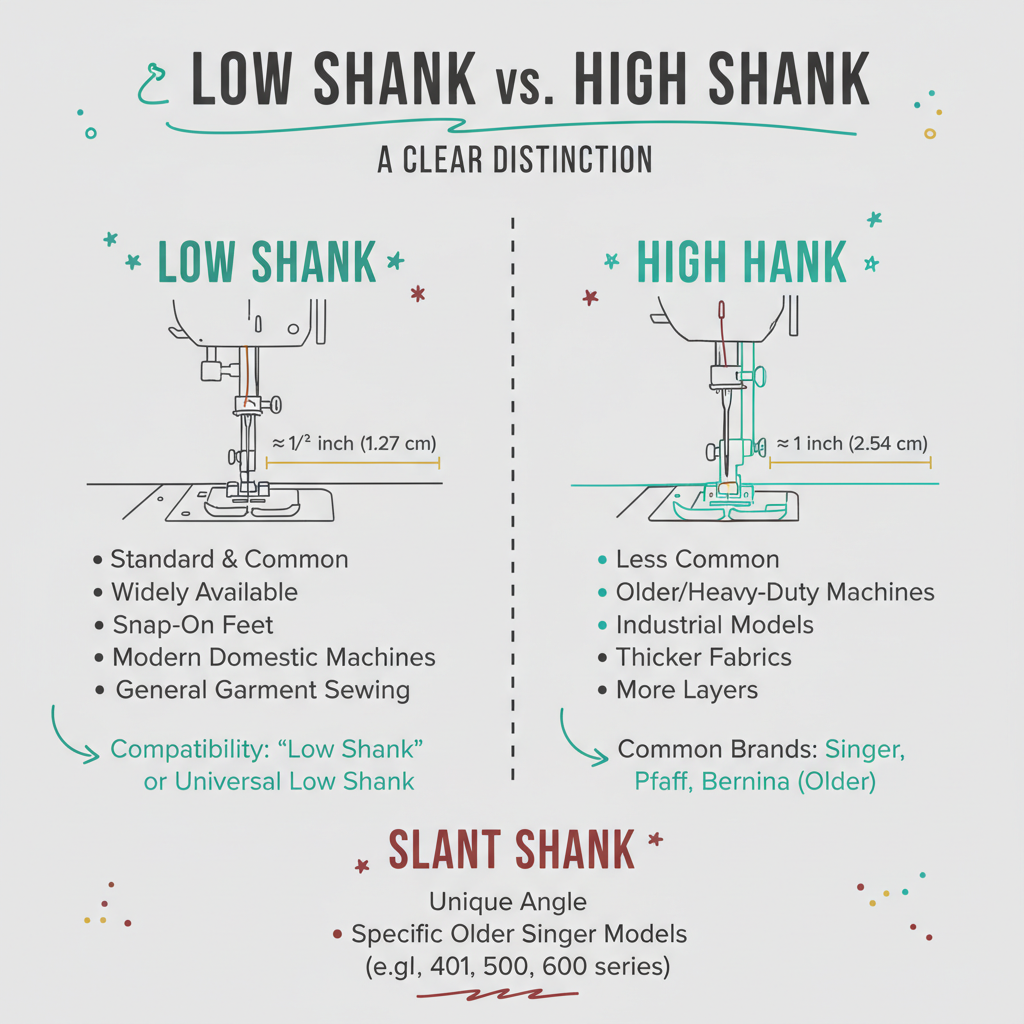
- Low Shank: This measurement is typically around 1/2 inch (1.27 cm)1212.
- High Shank: This measurement is typically around 1 inch (2.54 cm)1313.
Most modern domestic sewing machines, especially those bought in the last 20–30 years, are low shank sewing machines14.
📏 Low Shank vs. High Shank: A Clear Distinction
The difference between a low shank and a high shank sewing machine determines the vertical distance between the needle and the surface of your fabric. This distance is vital because the presser foot needs a specific amount of space to move the fabric correctly.
The Low Shank Presser Foot
A low shank presser foot is designed with a shorter neck or attachment point, positioning the working surface of the foot closer to the fabric feed dogs.
- The Standard: As the most common type, low shank feet are widely available and generally less expensive than high shank alternatives15.
- Compatibility: If you have a low shank machine, you should look for feet specifically labelled ‘low shank’ or ‘universal low shank’16. Many snap-on feet sold in generic accessory kits are designed for this low shank standard.
What is a High Shank Sewing Machine?
High shank sewing machines are less common in general domestic settings today but are often found on older, heavy-duty machines and professional, industrial, or semi-industrial models17.
- The Benefit: The increased distance allows for thicker fabrics, more layers of wadding, and heavy-duty tasks that require a greater clearance under the foot18.
- Common Brands: Older Singer, Pfaff, and Bernina models often feature high shanks. If you’ve inherited a vintage machine, it’s worth checking the shank height.
| Shank Type | Measurement (Screw Hole to Plate) | Typical Use Case |
| Low Shank | $\approx 1/2$ inch ($1.27$ cm) | Modern domestic machines, general garment sewing |
| High Shank | $\approx 1$ inch ($2.54$ cm) | Older, heavy-duty, or semi-industrial machines |
| Slant Shank | Unique Angle | Specific older Singer models (e.g., Singer 401, 500, 600 series) |
🛠️ Navigating Accessories: Adapters and Solutions
Once you know your machine is a low shank sewing machine, buying accessories becomes straightforward. However, sometimes you might find a fantastic foot that is designed for a different shank height. That’s where adapters come in!
What is a Low Shank Adapter?
A low shank adapter is a small attachment that allows a low shank machine to use high shank presser feet, or more commonly, to convert a machine to use a snap-on system19.
- Functionality: Many modern presser feet are designed to be “snap-on,” meaning they have a small bar that quickly snaps onto a single adapter piece20. This adapter piece is then permanently screwed onto the low shank.
- Low Shank to High Shank: Less commonly, if you have a low shank machine and wish to use a specific, specialised high shank foot, you may need a high shank conversion adapter to extend the reach of your low shank. Be cautious with this, as it can occasionally affect the needle alignment.
Why the Shank Height Matters for Sewing Success
Getting the shank height wrong can have immediate and frustrating consequences for your projects, especially if you are working through an Intermediate London Sewing Courses for Adults.
- Too Low (High Shank Foot on a Low Shank Machine): The foot will likely sit too low or drag on the fabric, preventing the feed dogs from advancing the material correctly. The foot may not even fit under the shank bar properly.
- Too High (Low Shank Foot on a High Shank Machine): The foot will hover too far above the fabric. It won’t hold the fabric down firmly, leading to skipped stitches, uneven feeding, and poor tension.
When selecting a foot—whether it’s a piping foot, a zipper foot, or a walking foot—always confirm it’s compatible with your low shank machine. This small check saves hours of frustration!
💡 Practical Advice for the Low Shank Sewist
If you have a low shank sewing machine (which is highly likely), here are a few practical tips for maintaining and expanding your accessory collection:
- Start with the Basics: Ensure you have the core low shank feet for all essential tasks: an all-purpose foot, a zipper foot, a blind hem foot, and a buttonhole foot.
- Snap-on Simplicity: The snap-on presser foot adapter is your best friend. It allows you to rapidly switch between the hundreds of available snap-on feet with ease. You’ll often find this adapter included with your machine.
- Check Before You Buy: When purchasing specialised feet online or in a shop, always read the description carefully to ensure it explicitly states ‘low shank’ compatibility. A simple search for “low shank presser foot” will filter your options effectively.
Understanding the difference between low shank and high shank machines gives you the confidence to truly master your equipment and explore all the creative possibilities offered by the vast array of sewing accessories21. Happy sewing!
About the Author: Grace, Founder of London Sewing Courses
Grace is the heart and hands behind London Sewing Courses. A passionate and experienced sewing instructor, she founded the studio with a unique mission: to create a calm, friendly space for adults to learn and connect, while using the profits to fund free sewing classes for local children in need. Her personal expertise and commitment to community building are at the core of every class and every stitch.
Sources
Is Your Sewing Machine Low or High Shank? (https://quiltadvice.com/blog/is-your-sewing-machine-low-or-high-shank/)
Sewing Machine Feet Guide (https://www.sewingbeefabrics.co.uk/sewing-machine-feet-guide/) What is a Low Shank Sewing Machine (https://www.linenbeauty.com/blog/what-is-a-low-shank-sewing-machine)
Explain Different Shank Lengths (https://www.singermachines.co.uk/faq/explain-different-shank-lenghts.html)