Key Takeaways
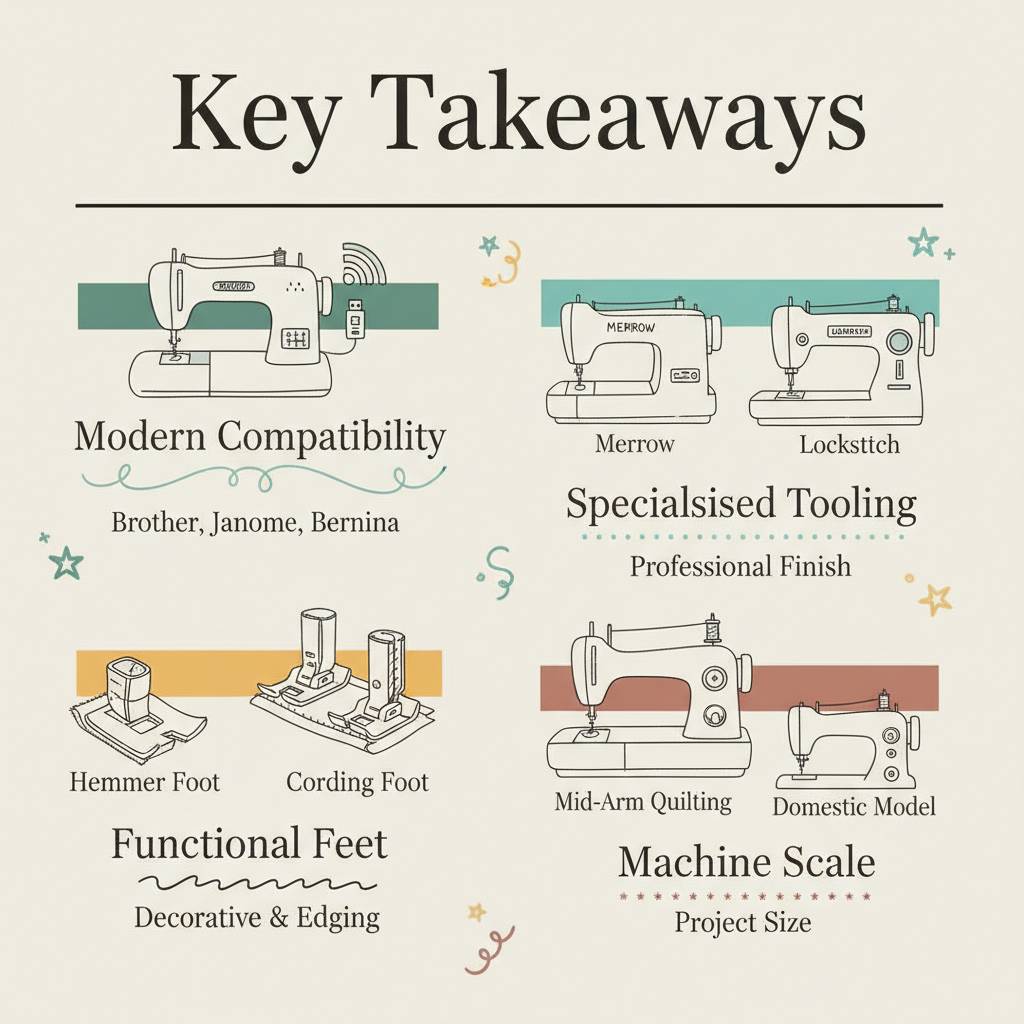
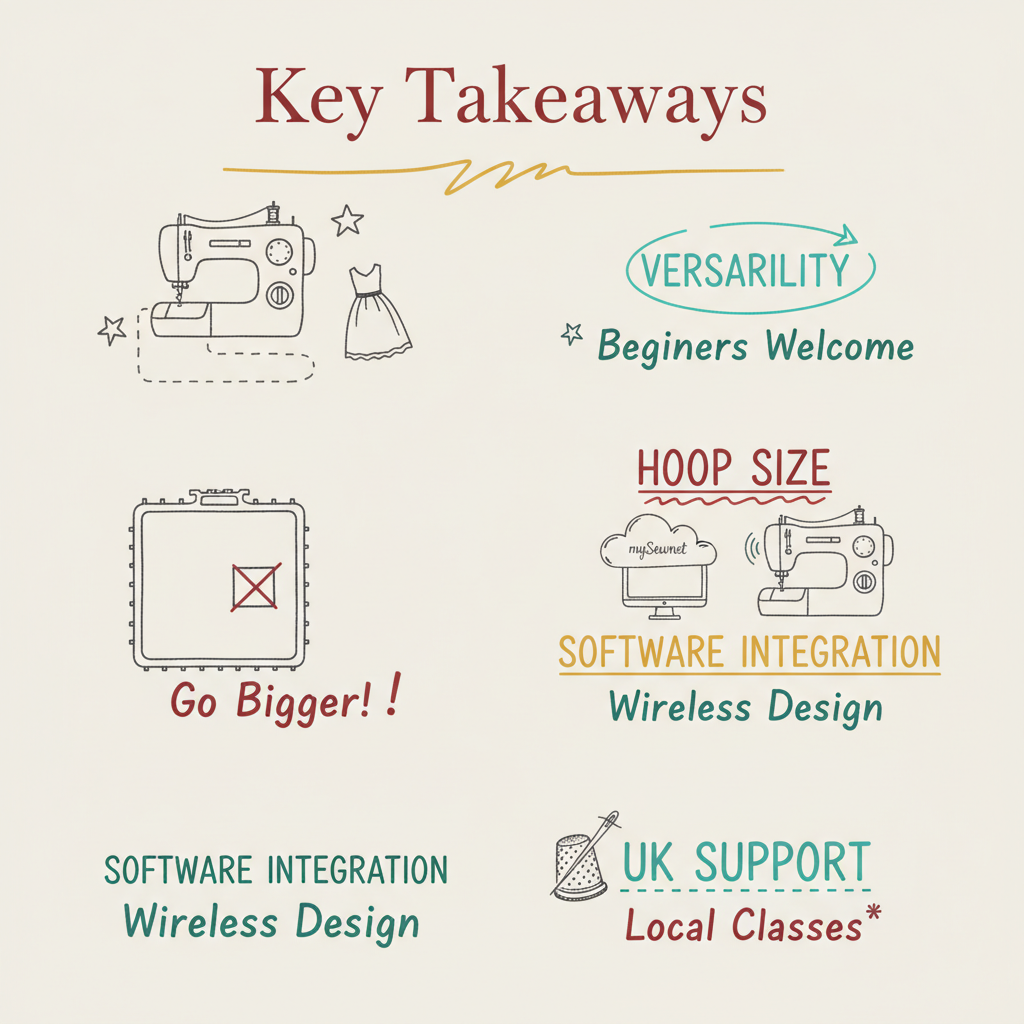
- Versatility over Specialisation: Combo machines are often the best sewing and embroidery machine for beginners as they handle both garment construction and decorative stitching in one footprint.
- Hoop Size Matters: Check the maximum embroidery area before buying; a 4×4 inch hoop is common for a cheap embroidery machine but can feel restrictive quickly.
- Software Integration: Modern systems like mySewnet allow for wireless design transfers, making the transition from computer screen to fabric seamless.
- UK Support: Choosing brands with strong UK presence ensures you can easily find local sewing classes north London for hands-on help.
Our Unique Insight: The “Growth Potential” Filter
When you first start, you might be tempted to look exclusively for the best affordable embroidery machine. However, in my years of teaching, I have seen many students “outgrow” their first machine within six months. The true “best” machine isn’t just the one that fits your current budget; it is the one that offers a path for your developing skills. Look for a machine that allows for “multi-hooping” or has a library of compatible presser feet. Investing 20% more today on a machine with a slightly larger screen or faster stitching speed can save you hundreds in trade-in costs next year.
Actionable Strategy: Your First 48 Hours with Embroidery
Once your machine arrives, follow this sequence to avoid the common “beginner’s overwhelm”:
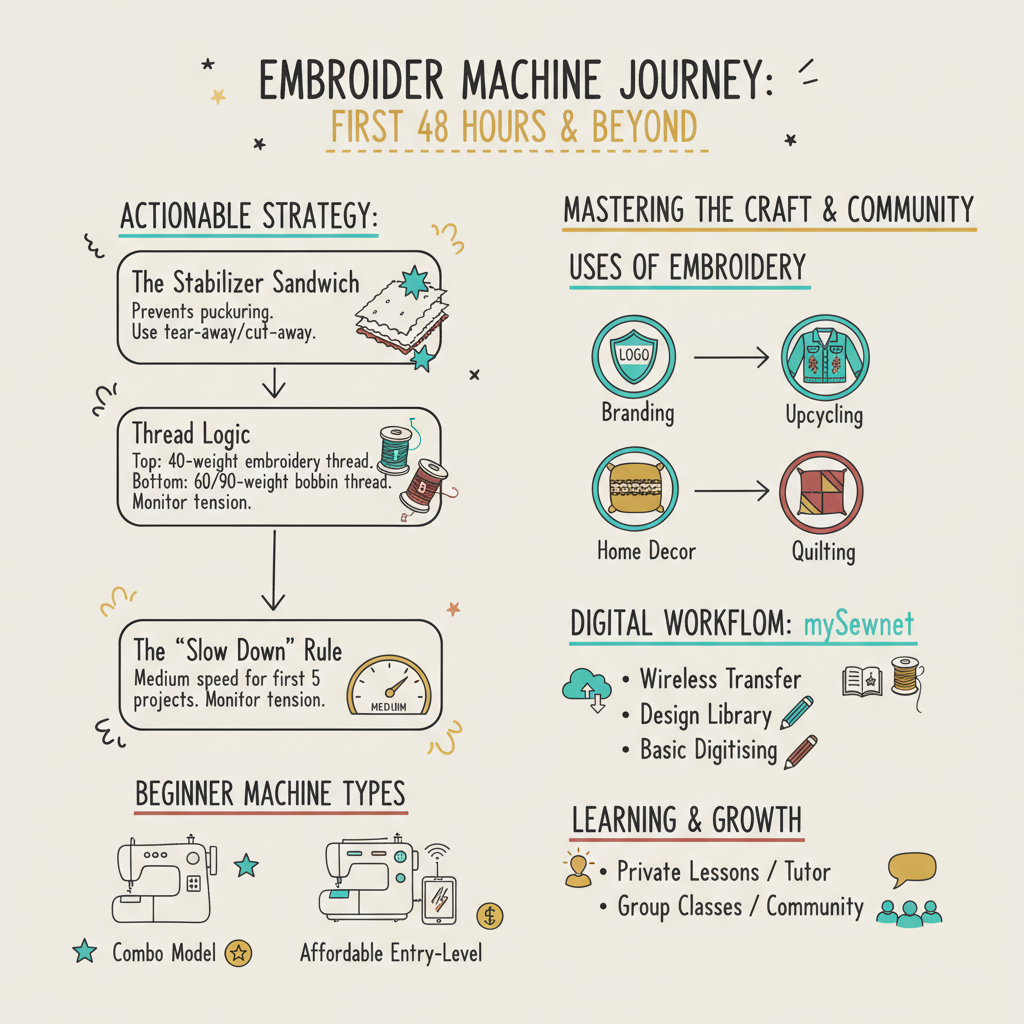
- The Stabilizer Sandwich: Don’t stitch on scrap fabric alone. Always use a tear-away or cut-away stabilizer. It is the secret to professional, pucker-free results.
- Thread Logic: Use specific 40-weight embroidery thread for the top and a dedicated bobbin thread (usually 60-weight or 90-weight) for the bottom.
- The “Slow Down” Rule: Even if your machine can stitch at 800 stitches per minute, keep it at a medium speed for your first five projects to monitor thread tension and avoid “bird’s nesting.”
The journey into machine embroidery is one of the most rewarding ways to build a creative career or hobby. It is an opportunity to nurture your artistic voice—to cultivate a plain piece of fabric from a “hesitant seed” into a strong, established masterpiece of personal expression.
Unlike traditional hand-stitching, a journey into machine embroidery starts with a single, crucial asset: your choice of technology. The UK market is currently robust, offering a range of machines that cater to those who have a deep passion for textiles and the desire to create high-impact, professional-looking designs.
What is the Best Sewing and Embroidery Machine for Beginners?
If you are searching for what is the best sewing and embroidery machine for beginners, you are likely looking for a “combination” or “combo” model. These clever machines function as a standard sewing machine for dressmaking and home decor but transform into an embroidery powerhouse when you attach the embroidery arm.
For many of my students at our London sewing courses, the Brother Innov-is M380D is a frequent favourite. It is widely considered one of the best sewing and embroidery machine for beginners because it balances a user-friendly interface with built-in Disney designs that make the learning process fun. It features a colour LCD screen that allows you to edit designs directly on the machine, which is a fantastic “filtering process” for those not yet ready to dive into complex computer software.
Finding the Best Affordable Embroidery Machine
Budget is a significant factor for many new hobbyists. When asking what is the best affordable embroidery machine, you must consider the “total cost of ownership,” including hoops, stabilizers, and thread.
The Singer SE9185 has recently gained traction as a strong contender for the best affordable embroidery machine in the UK. It offers a larger-than-average embroidery area for its price point and includes Wi-Fi connectivity. If you are looking for something even more entry-level, the Brother Skitch PP1 is often cited as the best cheap embroidery machine for those who primarily want to do small, quick customisations via a tablet or smartphone app.
What is the Use of Embroidery Machine Technology?
To truly master your craft, you must understand what is the use of embroidery machine features beyond the basics. These machines are essentially precision tools that allow you to “paint” with thread.
Typical uses include:
- Branding: Creating professional logos for small businesses or uniforms.
- Upcycling: Breathing new life into old denim jackets or tote bags with floral patterns.
- Home Decor: Personalising linens, napkins, and cushions with intricate lace or satin-stitch designs.
- Quilting: Using “in-the-hoop” quilting designs to join layers of fabric with perfect geometric patterns.
For those interested in professional development, mastering these machines can lead to a seamstress courses path where you can offer bespoke embroidery as a premium service.
What is Monogramming on a Sewing Machine?
A common point of confusion for novices is what is monogramming on a sewing machine. In the sewing world, “monogramming” can refer to two different things. Many high-end sewing machines have built-in “lettering” stitches. These are simple alphabets that the machine sews in a straight line using the standard feed dogs.
However, true “embroidery monogramming” is done in a hoop. This allows for much larger, decorative initials with borders and multi-colour fills. If you want your projects to have that high-end, professional feel, you will want a machine that offers hoop-based embroidery rather than just decorative lettering stitches.
Mastering the Digital Side: What is mySewnet?
As you progress, you will inevitably encounter the question: what is mySewnet? This is a sophisticated, cloud-based ecosystem designed specifically for modern embroidery enthusiasts.
Key benefits of mySewnet include:
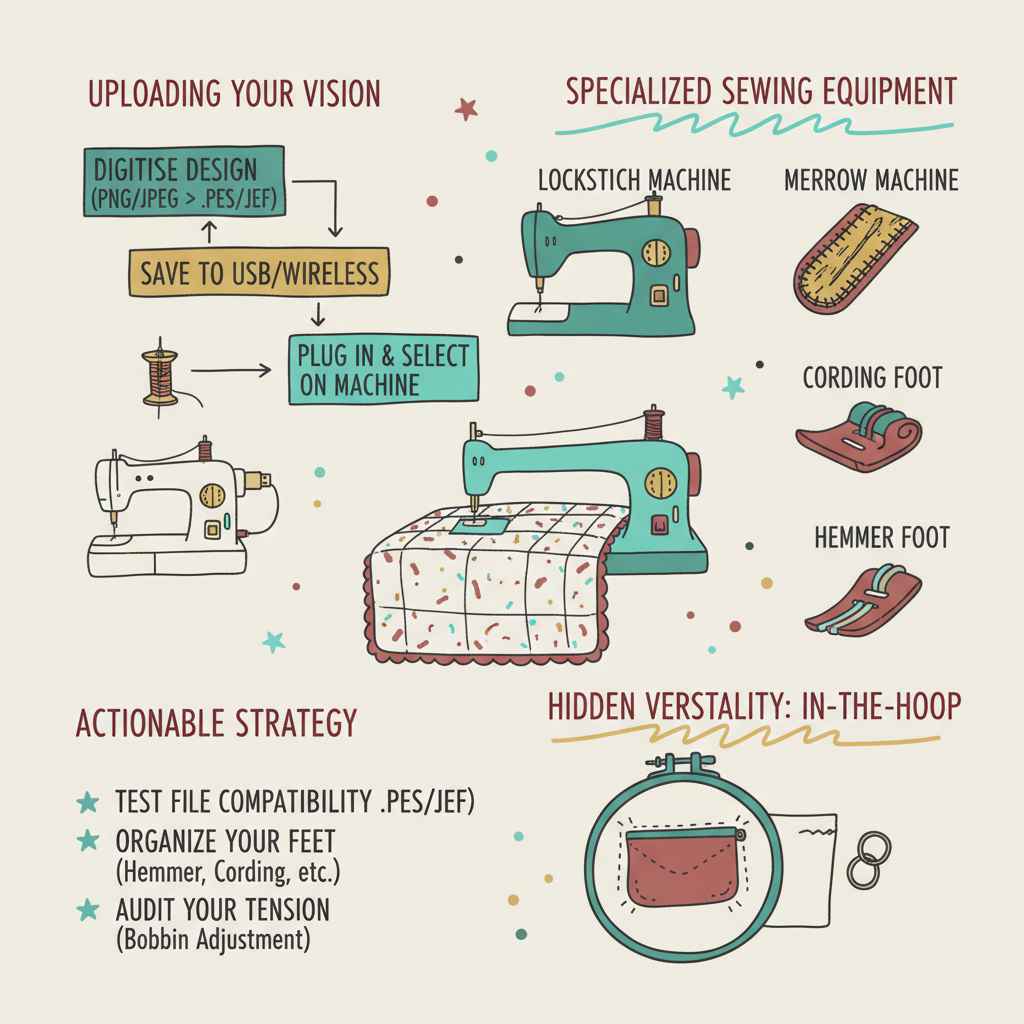
- Wireless Transfer: You can send designs from your computer or phone directly to your machine without needing a USB stick.
- Design Library: Access thousands of high-quality, pre-made designs.
- Basic Digitising: Some versions allow you to turn your own drawings or photos into embroidery files.
Using mySewnet is like having a digital mentor. It helps you manage your projects and ensures that your machine’s firmware is always up-to-date, which is crucial for maintaining “safeguarding” against technical glitches during a long stitch-out.
What is the New Husqvarna Viking Sewing Machine?
For those looking for the latest innovations, what is the new Husqvarna Viking sewing machine for this season? The brand has recently launched the Onyx series, including the Onyx 25. While the Onyx is a mechanical sewing machine perfect for those who want to learn to use a sewing machine with tactile controls, their “Designer” line remains the gold standard for embroidery.
The Husqvarna Viking Designer Sapphire 85 is a top-tier choice for beginners who want to “buy their second machine first.” It features the “JoyOS Advisor,” which acts like a built-in tutor, showing you exactly how to set up for different fabric types and techniques.
How to Find Your Style: Tutoring and Classes
Even with the best machine, the learning curve can be steep. Many people find that private sewing lessons london are the most direct way to build confidence. A dedicated tutor can show you the “hidden” tricks of the trade, from choosing the right needle for metallic threads to troubleshooting tension issues that the manual doesn’t cover.
If you prefer a group environment, searching for sewing classes London for beginners will connect you with a community of like-minded creators. Seeing how others use their machines is often the best way to spark your own “Unique Insight” for future projects.
Frequently Asked Questions (FAQ)
Can I turn my own drawings into embroidery?
Yes, but you will need digitising software to do this effectively. While some machines have basic “auto-digitising” features, professional results usually require software like mySewnet or PE-Design. This process involves “mapping” your drawing into specific stitch types (like satin or fill stitches) that the machine can understand. It is a vocational skill that is highly valued in the custom garment industry.
What is the difference between a 4×4 and a 5×7 hoop?
The numbers refer to the maximum embroidery area in inches. A 4×4 (approx. 100mm x 100mm) hoop is standard for a cheap embroidery machine and is perfect for pocket logos or small monograms. A 5×7 (approx. 130mm x 180mm) hoop allows for much larger designs, such as those you might see on the back of a jacket or a large cushion cover.
Is an online tutorial as effective as an in-person class?
Online tutorials are excellent for quick fixes or learning a specific software feature. However, for hands-on tasks like how to sew or learning machine threading and tension, in-person sewing classes north London are often more effective. An instructor can see exactly what your hands are doing and correct minor errors in real-time before they become bad habits.
Do I need special thread for my embroidery machine?
Yes. You should always use dedicated embroidery thread, which is usually a 40-weight polyester or rayon. Regular sewing thread is too thick and has a different twist, which can cause bird’s nesting or break the delicate needles used in embroidery. Using the correct “trust signals”—like high-quality thread and the right stabilizer—is the secret to a professional finish.
Conclusion
Choosing the best sewing and embroidery machine for beginners is about finding a balance between current ease of use and future creative freedom. Whether you start with a budget-friendly model or invest in a high-tech system like a Husqvarna Viking with mySewnet, the goal is to make the technology work for you. By focusing on your passion and seeking out expert guidance—perhaps through sewing classes London for adults—you can ensure your embroidery journey is both successful and deeply satisfying.
About the Author
This article was written by Grace Barrett, the founder of London Sewing Courses. Grace is a passionate advocate for textile arts and has spent years teaching students of all levels, from absolute beginners to professional seamstresses. Her approach is rooted in clear, patient communication and a genuine desire to see every student’s creativity “take root and flourish.” When she isn’t teaching, Grace can be found experimenting with the latest embroidery software or designing bespoke garments in her North London studio.