
Key Takeaways
- Throat Space is King: The distance between the needle and the machine body (the throat) is the most critical feature for managing large quilts.
- Stitch Regulation Matters: For beautiful free-motion work, a stitch regulator ensures your stitches stay a consistent length regardless of how fast you move the fabric.
- Specialist Brands Lead the Way: Bernina and Janome offer dedicated “Quilters Edition” models with superior tension and stability.
- Evolution of Equipment: Beginners can start on domestic machines, but serious makers often progress to sit-down or stand-up long-arm machines for ultimate control.

Hello there, lovely maker. If you’ve ever found yourself wrestling with a heavy quilt sandwich under a tiny sewing machine arm, you know that quilting is as much about the tools as it is about the talent. Whether you are dreaming of intricate free-motion swirls or simply want a machine that won’t protest at three layers of batting, choosing the right partner for your creative journey is a big step.
At London Sewing Courses, we often see students transition from basic dressmaking to the expansive world of quilting. It is a joyful shift, but one that requires a bit more “breathing room” from your equipment. Let’s walk through the wonderful options available to you, with the patience and care your projects deserve.
What is Quilting in Sewing?
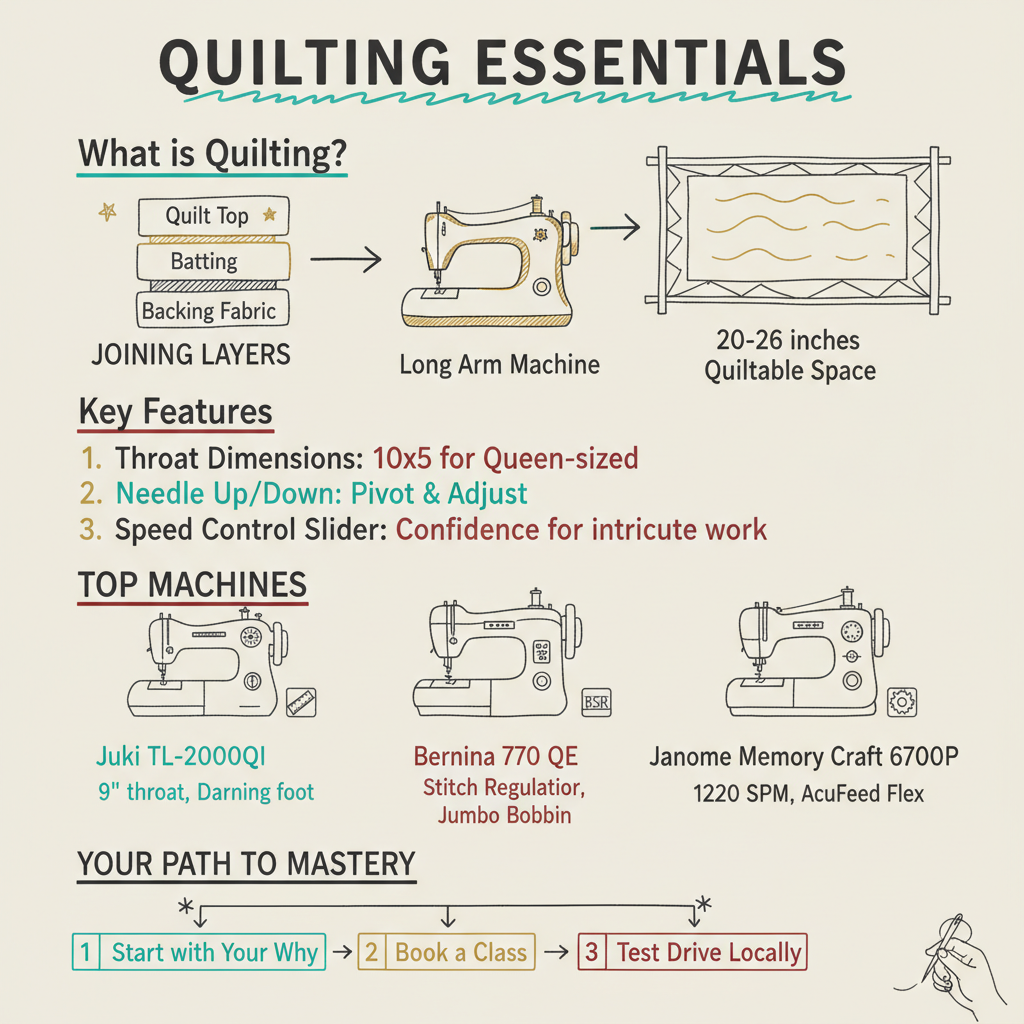
Before we dive into the technicalities, let’s settle a common question: what is quilting in sewing? At its simplest, quilting is the process of joining three layers together—the quilt top (the pretty part!), the batting (the fluffy middle), and the backing fabric.
A quilting sewing machine is specifically designed to handle this “sandwich”. While a standard machine focuses on precision for single or double layers, a quilting machine prioritises power, speed, and, most importantly, space.
The Secret to Success: What is a Long Arm Sewing Machine?
In your research, you will likely come across the term “long-arm.” But what is a long arm sewing machine exactly? In the world of domestic sewing, it refers to a machine with an extended throat—usually 8 to 12 inches.
For professional-grade work, a true long-arm is a specialist machine where the head moves over the fabric on a frame, rather than you moving the fabric under the needle. This provides a “quiltable space” of 20 to 26 inches, allowing you to finish king-sized masterpieces without ever having to “scrunch” your fabric.
Best Sewing Machine for Free Motion Quilting
Free-motion quilting (FMQ) is where you drop the feed dogs (those little metal teeth) and guide the fabric yourself in any direction. It’s like drawing with thread!
The best sewing machine for free motion quilting must offer two things: visibility and a smooth “glide”.
- Juki TL-2000Qi: Often cited as a “straight-stitch workhorse,” this machine offers a generous 9-inch throat and a dedicated darning foot for FMQ.
- Brother HC1850: A wonderful all-rounder for those starting out, offering easy-to-use free-motion options at a more accessible price point.
- Baby Lock Radiance: A premium choice that includes built-in sensors to track your fabric movement, making the learning curve much gentler for beginners.
The Elegance of Engineering: Best Bernina Sewing Machine for Quilting
Bernina machines are often considered the “heirloom” choice for quilters. They are robust, quiet, and offer some of the most innovative technology in the industry.
The Bernina 770 QE (Quilters Edition)
This is widely regarded as the best Bernina sewing machine for quilting.
- Bernina Stitch Regulator (BSR): This is the magic ingredient. The BSR foot communicates with the machine to keep every stitch perfectly even, no matter how much your hands speed up or slow down.
- Extended Free Arm: It provides 10 inches of space to the right of the needle, which is a luxury for managing bulky projects.
- Jumbo Bobbin: It holds 70% more thread than a standard bobbin, meaning fewer interruptions during those long quilting sessions.
For those looking for a dedicated sit-down experience, the Bernina Q16 or Q24 long-arm machines offer professional-level digital tension and a sturdy frame that won’t vibrate as you work.
Reliability and Reach: Best Janome Sewing Machine for Quilting
Janome is a favourite in our sewing classes for adults because of its intuitive design and exceptional value.
The Janome Memory Craft 6700P
For many, this is the best Janome sewing machine for quilting.
- Industrial Speed: With speeds up to 1,200 stitches per minute, you can finish quilt tops at an alarming rate.
- Wide Throat Space: It offers one of the largest workspaces in its class, perfect for “shoving and pulling” your quilts during free-motion work.
- AcuFeed Flex: This dual-feed system ensures that all layers of your quilt sandwich move together perfectly, preventing the dreaded “puckering” on the back.
If you are just starting your journey, the Janome 3160 QDC is a fantastic beginner seamstress choice. It comes with a wide extension table and essential quilting feet included in the box.
Going Big: The Best Long Arm Sewing Machine
If you have the space and the passion to turn your hobby into a craft business, a frame-mounted long-arm is the ultimate investment.
- HandiQuilter Amara: An excellent choice for “serious beginners” and professionals alike. It offers 20 to 24 inches of throat space and a 7-inch touch screen that makes toggling between precision and cruise modes effortless.
- Bernina Q24: Known for its “digital tension,” which takes the guesswork out of getting the perfect stitch on both sides of your quilt. Its hydraulic lift frame also means you can adjust the height to protect your back during long sessions.
Features to Look For: A Tutor’s Checklist
When you visit a shop to “test drive” a machine (which I highly recommend!), keep these features in your mind:
- Throat Dimensions: Measure the height and width. A 10″ x 5″ throat is a dream for queen-sized projects.
- Needle Up/Down: A must-have for quilting. It allows you to stop with the needle in the fabric, so you can pivot or adjust your quilt without losing your place.
- Speed Control Slider: Especially for beginners, being able to limit the top speed gives you much more confidence during intricate work.
- Extension Table: This supports the weight of your quilt, preventing it from pulling on the needle and distorting your stitches.
Actionable Strategy: Your Path to Quilting Mastery
If you are feeling overwhelmed by the choices, remember that every master was once a beginner. Here is how I suggest you proceed:
- Start with your “Why”: Are you making small wall hangings or king-sized bedspreads? This dictates how much throat space you truly need.
- Book a Class: Before investing thousands, join us for intermediate sewing courses to try different feet and techniques.
- Test Drive Locally: Visit a dealer in North London. Sit at the machine, thread it yourself, and listen to the motor. You want a partner that feels “solid” and quiet.
Frequently Asked Questions (FAQ)
Can I quilt on a regular sewing machine?
Yes, you absolutely can!. However, you will need a walking foot and a bit of patience for rolling up the fabric to fit through the smaller throat. For more tips, check our guide on how to use a sewing machine.
Is a long-arm machine worth the investment?
If you find yourself quilting several large tops a year, a long-arm will save your back and shoulders significant strain. It also allows for much more fluid and professional-looking free-motion designs.
What is the best budget machine for a beginner quilter?
The Janome 3160 QDC or the Brother CS7000X are excellent budget-friendly options that include the necessary quilting feet and a wide table to get you started without a massive investment.
Conclusion
Finding the “perfect” machine is a personal journey. Whether you choose the precision of a Bernina, the speed of a Janome, or the freedom of a long-arm, the most important thing is that it makes you want to sew.
If you’re still unsure where to begin, why not visit us for a private sewing lesson? We can sit down together, look at your goals, and help you find the machine that will best support your creative dreams. The world of quilting is wide and wonderful—I can’t wait to see what you create.
About the Author: Grace, Founder of London Sewing Courses
Grace is the heart and hands behind London Sewing Courses. A passionate and experienced sewing instructor, she founded the studio with a unique mission: to create a calm, friendly space for adults to learn and connect, while using the profits to fund free sewing classes for local children in need. Her personal expertise and commitment to community building are at the core of every class and every stitch.
Sources
- The Best Sewing Machines of 2025 | Tested & Rated – Tech Gear Lab
- Quilting Sewing Machines: Which One Is Best For You & Your Budget? – Suzy Quilts
- Bernina 770 QE Sewing and Quilting Machine Review 2022 – Mary Janes & Galoshes
- “It’s a joy to sew with” – Read our review of the Bernina 770QE Plus – Gathered
- Best JANOME Sewing Machine for Quilting – Janome 1600p – Leah Day
- Choosing a Sewing Machine for Quilting at Home – Madam Sew
- The Features That Set Quilting Sewing Machines Apart – Authorized Vac & Sew
- Stitch Regulation Explained: Finding Your Quilting Rhythm – Quilted Joy