Category: Sewing Classes & Lessons

  • Step-by-Step Stitching Lessons for Beginners

    Step-by-Step Stitching Lessons for Beginners

    What is Stitching?

    At its heart, stitching refers to the craft of fastening textiles using a needle and thread, or yarn. For thousands of years, all sewing was performed by hand. The invention of the sewing machine in the 19th century revolutionised textile production, shifting it from homes to mills, and later, computerisation in the 20th century further streamlined mass production. Despite these advancements, hand sewing remains a cherished practice worldwide, particularly valued in high-quality tailoring, haute couture fashion, and custom dressmaking, and is pursued by textile artists and hobbyists as a means of creative expression.

    The earliest forms of sewing date back to the Palaeolithic Era, where it was used to stitch animal hides for clothing and shelter. Cultures across the globe developed diverse sewing techniques; for instance, the Inuit used caribou sinew for thread and bone needles, while indigenous peoples of the American Plains and Canadian Prairies employed sophisticated methods for constructing tipi shelters. In Africa, sewing was combined with plant leaf weaving to create items like baskets. The weaving of cloth from natural fibres emerged in the Middle East around 4000 BC, and the practice of sewing cloth evolved alongside this development.

    By the Middle Ages, those who could afford it in Europe would employ seamstresses and tailors. Sewing was predominantly a woman’s occupation, and before the 19th century, most of it was practical, focusing on mending and extending the life of expensive clothing. Worn or torn clothing would be repurposed into new items or quilts. Decorative needlework, such as embroidery, was also a highly valued skill. The stitches used in embroidery spread globally via trade routes like the Silk Road, bringing Chinese techniques to Western Asia and Eastern Europe, and Middle Eastern techniques to Southern and Western Europe. European colonial settlements further disseminated Western sewing and clothing styles, although traditional methods persist and are being shared through modern online learning platforms.

    Today, stitching encompasses various disciplines, including hand sewing, machine sewing, embroidery, and cross stitch. Each has its unique characteristics and applications. Hand stitches are the single loops or turns of thread that form the fundamental elements of sewing. They are named based on the needle’s position and sewing direction (e.g., running stitch, backstitch), the stitch’s form (e.g., chain stitch), or its purpose (e.g., hem stitch). Machine stitches, while often mimicking hand stitches, are classified by their structure, such as chain stitch, lockstitch, overlock, and coverstitch.

    Importance of Learning to Sew

    Learning to sew is more than just acquiring a technical skill; it’s an investment in a versatile hobby that can enrich your life in numerous ways. It can fundamentally change your perspective on the world, your body, and the items you purchase.

    Practical Benefits

    The practical advantages of knowing how to sew are immense. You can mend ripped seams on clothing, hem trousers or curtains, or simply fix a button on a shirt. This ability to repair not only extends the longevity of your wardrobe, saving you money, but also contributes to a more sustainable lifestyle by reducing textile waste often associated with “fast fashion”. Beyond repairs, learning to sew empowers you to create custom items that perfectly fit your needs and desires. Imagine crafting your own unique clothing, home décor pieces like cushions and placemats, or even functional items like tote bags and knapsacks. This capability to produce handmade items allows for a level of customisation and quality often unattainable with mass-produced goods.

    Creative Outlet

    Sewing serves as a powerful creative outlet, enabling you to express your individuality and design unique pieces. From selecting fabrics and threads to choosing patterns and adding decorative embellishments like embroidery or appliqué, every step of the sewing process offers an opportunity for self-expression. It’s a rewarding experience to bring your vision to life, transforming raw materials into tangible creations that reflect your personal style and creativity.

    Mindfulness and Well-being

    In an increasingly fast-paced world, stitching offers a mindful activity that can significantly boost your well-being. The focused, repetitive movements involved in sewing can reduce stress and anxiety, promoting a sense of calm and concentration. Completing a project, no matter how small, provides a deep sense of accomplishment and pride. This tangible result of your efforts reinforces your capabilities and boosts self-esteem.

    Community and Connection

    Sewing doesn’t have to be a solitary activity. It can be a wonderful way to connect with others who share your passion. Joining stitching groups, participating in online forums, or taking classes can foster a sense of community. Sharing skills, exchanging DIY stitching ideas, and working on projects together can make the learning process even more enjoyable and provide a supportive network. Many local fabric and craft shops offer lessons and formal classes, where you can meet fellow sewists and get expert guidance. Online communities and social media platforms also provide vast resources and inspiration. Ultimately, whether your motivation is practical, creative, or a desire for well-being and connection, learning to sew is a skill that can truly change your life in unexpected ways. It’s a fun, useful craft that you can be proud of doing.

    Sewing Basics for Beginners

    For anyone venturing into the world of textiles, mastering the sewing basics for beginners is your foundation. This involves setting up an efficient workspace, understanding safety protocols, familiarising yourself with key terminology, learning fundamental hand stitches, assembling essential tools, and getting to grips with the basic operation of a sewing machine.

    Setting Up Your Workspace

    An organised and uncluttered workspace is crucial for an enjoyable and efficient sewing experience. While bolts of fabric and cutting boards can be bulky, investing in specialised sewing furniture can significantly enhance your space. A sizeable sewing table and cabinet can neatly hold your sewing machine and notions. A solid cutting surface, often a specialised cutting table, provides ample room for large fabric pieces and can also offer integrated storage for notions and fabrics. Finally, designating specific storage for fabric scraps, fat quarters, and longer bolts of fabric will keep your space tidy, perhaps using bins, baskets, or dedicated fabric organisers. Good lighting and comfortable seating are also important for maintaining focus and preventing strain.

    Safety First

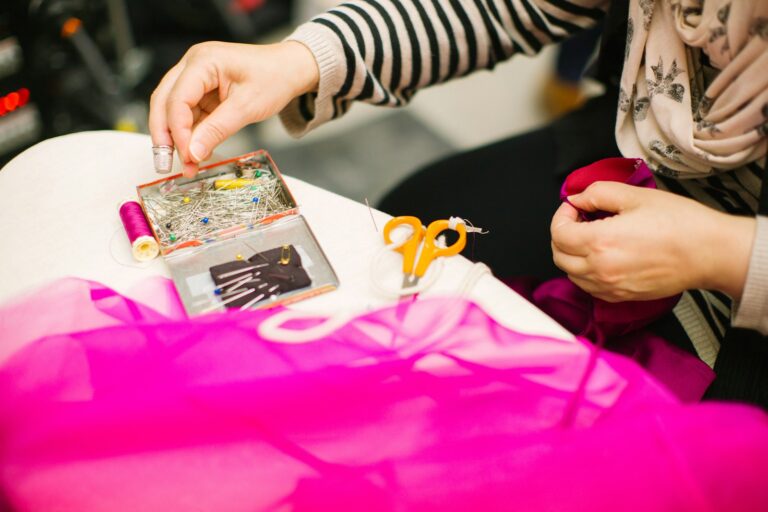
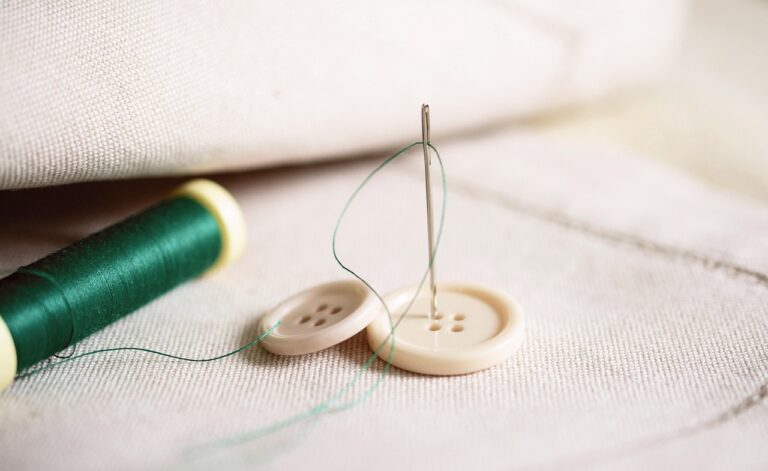
    Safety is paramount when handling sewing tools. Always exercise care with needles, pins, and scissors. Designate a good pair of fabric shears solely for cutting fabric to maintain their sharpness. Avoid using them on paper, heavy string, or cardboard, as this will dull the blades. Smaller embroidery scissors are useful for snipping threads. Keep your cutting tools clean and sharp, periodically applying a drop of sewing machine oil to the inside of the blades and wiping off lint. A thimble, made from various materials like metal, leather, or wood, is essential for protecting your fingers from pricks and soreness when hand sewing.

    Understanding Sewing Terminology

    Familiarising yourself with common sewing terms will make following patterns and tutorials much easier.

    • Warp: The lengthwise threads of the fabric, also known as the lengthwise grain. Fabric is usually purchased by yardage measured along this grain.
    • Weft: The crosswise threads, running across the width of the fabric.
    • Selvage: The narrow, tightly woven strip along the long edge of the fabric that prevents it from unravelling.
    • Raw Edge: The end of the fabric where it has been cut or torn, prone to fraying.
    • Seam Allowance: The extra fabric length added to the edge of a garment or pattern piece to allow for the stitching line, ensuring the project finishes at the correct size.
    • Right Side/Wrong Side: The “right side” is the visible, pretty side of the fabric with the design or desired finish, which typically faces outwards on a garment. The “wrong side” is the inner, less finished side.
    • Grainline: An arrow on a pattern piece that indicates how the pattern should align with the lengthwise grain of the fabric, crucial for proper drape and fit.
    • Bias: The diagonal direction across the fabric, which offers the most stretch or give.
    • Hem: The finished edge of a garment, usually double-folded and sewn in place to prevent fraying and create a clean finish.
    • Darts: Techniques used to shape a garment, commonly found around the waist and bust.
    • Interfacing: An additional layer of fabric added to select inner sections of a garment to provide support, prevent transparency, or create a cleaner edge.
    • Lining: An extra layer of material typically attached to the entire inside of a garment for added warmth or opacity.
    • Basting: Temporary stitches, usually longer than permanent ones, used to hold two pieces of fabric together for fitting, appliqué, or before machine stitching, making them easy to remove later.
    • Topstitching: A line of stitching on the right side of the fabric, used to keep layers flat, reinforce seams, or for decorative purposes.
    • Pivot: A technique used when machine sewing around corners, by leaving the needle in the fabric, raising the presser foot, turning the fabric, and continuing to sew.

    Basic Hand Stitches Explained

    Hand stitching is a valuable skill for intricate details, repairs, or when a machine isn’t suitable. It’s a core component of stitching lessons for beginners.

    • Running Stitch: This is widely considered the easiest stitch and an excellent starting point for children and beginners. It involves weaving the needle in and out of the fabric in a straight line. The running stitch is effective for making items like lavender bags and heart ornaments, or for gathering fabric for pinwheels and flower brooches. It’s the quickest stitch for joining two fabric pieces, particularly in areas that won’t experience significant wear. Longer running stitches are ideal for basting, which is temporary stitching easily removed later. The running stitch should look the same on both sides of the fabric.
    • Overstitch/Overcast Stitch: Often recommended as the “next stitch” to teach after the running stitch, the overstitch is relatively easy but requires neatness as unevenness will show. It involves making slanted stitches over the edge of the fabric, about 21​ apart. This stitch is excellent for creating a varied edge or for neatly sewing together fraying fabric to contain the fraying, useful for projects like pincushion dolls and bunny brooches. It is used to enclose a raw or unfinished seam or edge. You can use it to join two halves of a pincushion.
    • Backstitch: Described as a strong and secure stitch, the backstitch is frequently used when seams should not be visible, especially for projects that will be turned “inside out”. It produces results similar to machine sewing, making it ideal for keeping stuffing in place. It is performed by taking a stitch forward, then bringing the needle up a stitch length away, and going back into the hole where the previous stitch ended. This method creates a continuous, secure line of stitching. It’s also simple to keep straight.
    • Blanket Stitch: This is a “super pretty” stitch, often used for felt projects and to connect two pieces of fabric or as edging on a single piece. It involves pulling the thread through to the front near the edge, placing the needle diagonally, and bringing it through a loop to form a 90-degree angle. It’s a versatile stitch, used for items like a nature bag or Christmas pudding ornaments.
    • French Knot: While not a “must-know” stitch, the French Knot is valued for adding “quirky” decorative detail to projects. It’s used for elements such as “raisins” on Christmas pudding ornaments or “beady” eyes on juggling chooks. It can be a “little fiddly” at first but becomes easier with practice.
    • Slip Stitch: This stitch is prized for being invisible from either side of the stitched piece, making it excellent for finishing projects flawlessly. It involves picking up a few threads from a fold, slipping the needle along the fold horizontally inside the fabric, and pulling the thread tight so the stitches are hidden. It’s often used for invisibly closing openings, such as after stuffing a pillow or stuffed animal.
    • Whipstitch: A simple stitch for protecting edges. It involves folding fabric, inserting the needle, and taking it through the back to the front, level with the first stitch, continuing along the edge. It creates a distinct angled look on the front with tiny stitches that blend in with matching thread.

    Essential Tools and Materials

    Having the right tools is fundamental for successful stitching lessons for beginners.

    • Needles: You’ll need both hand-sewing and machine needles. For hand sewing, “sharps” are good for basic use, “betweens” for fine work, “crewel” for darning or embroidery (with larger eyes), and “darning needles” for repairing holes. Needles come in sizes, typically from 1 (coarse) to 10 (fine); a number seven sharp is often recommended for beginners. Machine needles also vary by size (e.g., size 9 for delicate fabrics to 18 for heavy ones) and type (e.g., ball-point for knits to prevent snagging).
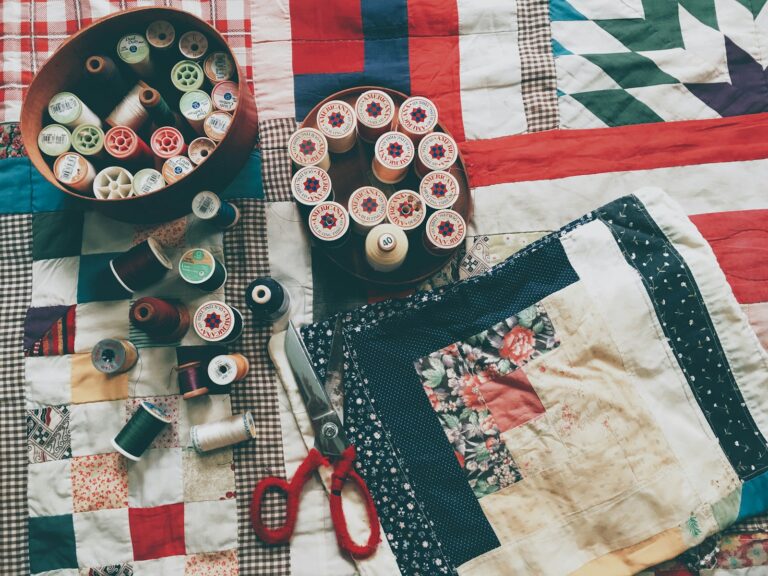
    • Threads: All-purpose polyester thread with a mercerised cotton cover is widely used and comes in many colours. The thread colour should match or be slightly darker than your fabric. Keeping large spools of white, black, grey, and beige is practical as they blend with most projects. Embroidery floss is thicker, often used for decorative purposes. Beeswax is useful for coating hand-sewing thread to prevent tangling and strengthen it.
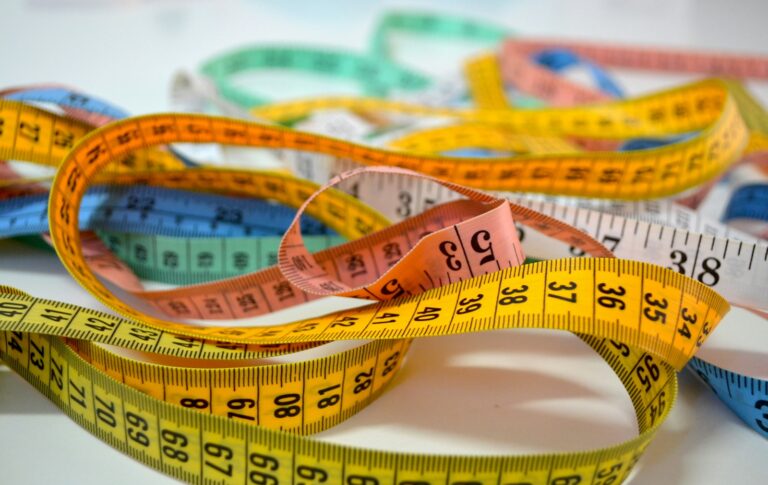
    • Measuring Tools: A good quality 60-inch fabric or plastic-coated tape measure that won’t stretch is essential. A 6-inch ruler or small measuring gauge is also handy.
    • Cutting Tools: Sharp fabric shears (dressmaking shears) are a must for cutting fabric. Smaller embroidery scissors are good for threads. Pinking shears have triangular teeth that cut fabric to reduce unravelling, and rotary cutters (with a cutting mat) are also options for cutting fabric.
    • Marking Tools: Tailor’s chalk is excellent for marking thin lines on dark fabrics that brush off easily. Water-soluble fabric markers (usually blue) disappear with water. A dressmaker’s tracing wheel can transfer pattern markings to fabric, used with tracing paper.
    • Pressing Tools: An iron (dry or steam) and a well-padded ironing board are crucial. A press cloth (muslin or cheesecloth) can dampen fabric during pressing. Pressing, as opposed to ironing, involves lifting and placing the iron rather than sliding, which helps to set seams and darts without distorting the fabric. Darts are typically pressed towards the centre, and seams are pressed open and flat. Always test iron temperature on a fabric scrap.
    • Other Notions: Pins, preferably with large plastic or glass heads for visibility and smooth, pointed tips to slide easily into fabric, are used to hold fabric pieces together. A pincushion keeps pins tidy. A seam ripper is an indispensable tool for correcting mistakes. A sewing needle booklet can keep your needles organised.

    Sewing Machine Basics (Introduction)

    While hand sewing is fundamental, understanding a sewing machine opens up many more possibilities for stitching lessons for beginners.

    Anatomy of a Sewing Machine

    Key parts include the needle, presser foot, and bobbin. Most machines also have a designated thread holder, tension dials, and a side lever to move the needle and presser foot.

    Basic Threading and Bobbin Winding

    Threading a machine involves winding the bobbin first. The thread goes onto a designated holder, through a bobbin hole, and is wound onto the bobbin by placing it on a spindle and activating the machine to spin. The bobbin should be filled to about three-quarters full. For the main thread, it typically involves guiding it through various hooks, holes, and tension disks, then finally through the needle eye, leaving several inches of excess thread. Trimming the thread end cleanly and, if necessary, wetting it can make threading easier. If you have difficulty, a needle threader can be very helpful.

    Joining Top and Bottom Threads

    After threading the top, the bobbin is placed in its holder in the machine. The top thread is then used to pick up the bobbin thread, usually by turning the side lever to lower and raise the needle, bringing the bobbin thread to the surface. Both threads should then be guided to the back of the machine.

    Straight Stitch and Zigzag Stitch

    These are the most basic and versatile machine stitches. To begin sewing a straight line, lift the presser foot, slide the fabric underneath, align the fabric edge with the desired seam allowance (marked by lines on the machine bed), and lower the presser foot to hold the fabric in place.

    Backstitching

    Crucial for securing stitches, you should always backstitch at the beginning and end of a seam to prevent it from unravelling. This involves sewing a short distance, then reversing the stitch over the same part, and then continuing forward.

    Troubleshooting Common Machine Issues

    Issues like poor stitch tension or thread breakage can be frustrating, especially for beginners. Sometimes, the machine itself might be the problem, particularly older models. Practising sewing straight lines on scrap fabric helps to develop a steady hand and achieve even seam allowances. Do not push or pull the fabric under the needle; simply guide it. Don’t be afraid to experiment with your machine’s features on fabric scraps.

    Understanding Fabrics

    Choosing the right fabric is a key part of stitching lessons for beginners, as different fabrics behave differently and are suited for various projects.

    Natural Fibres

    • Cotton: Often considered the simplest fabric for beginner sewers, especially plain-weave cotton used by quilters. It’s easy to handle, allowing you to focus on developing basic sewing skills without intricate fabric-wrangling techniques.
    • Linen, Wool, Silk: While beautiful, these might be more challenging for absolute beginners due to their unique properties and care requirements.

    Synthetic Fibres

    • Polyester, Nylon, Rayon: These fibres offer different properties. For instance, T-shirt jersey (often a knit blend) or denim can be handled by a confident beginner.

    Fabric Weights and Drapes

    Fabrics come in light, medium, and heavy weights, which affect how they drape and their suitability for different projects. For a durable item like a frequently worn skirt, choose a sturdy, washable fabric. For home décor items like pillows, durability is key, but washing instructions might be less critical. For specific projects like cosplay, the range of materials is vast, sometimes requiring consultation with experienced sewists.

    Fabric Grains

    Understanding the grain is vital for proper garment construction. The lengthwise threads are the “lengthwise grain,” and fabric is bought by yardage along this direction. The crosswise threads run across the width. The “bias” runs diagonally and has the most stretch. Woven fabrics should have lengthwise and crosswise threads meeting at right angles; if not, the fabric is “off-grain”. Minor off-grain issues (under an inch) can sometimes be corrected by pulling diagonally or steam pressing.

    Pre-washing Fabrics

    It is essential to pre-wash your fabric before cutting to eliminate shrinkage and most colour bleeding. Always follow the manufacturer’s care instructions, usually found on a label on the fabric bolt. These labels also provide information on fibre content, fabric width, and dye fastness. Be aware that some fabrics with special finishes (e.g., crease-resistant) cannot be straightened if off-grain, so check before buying. When shopping for fabric, especially in person, touch and handle it. If it’s very stretchy or slippery, it might not be the best choice for learning to sew.

    Beginner Sewing Patterns

    For anyone beginning their journey in stitching lessons for beginners, patterns serve as your roadmap. They provide detailed instructions on how to cut fabric and assemble pieces to create your desired item.

    Reading a Sewing Pattern

    Understanding a sewing pattern might initially feel like translating an ancient document. However, with practice, it becomes intuitive.

    Pattern Envelope Information

    The pattern envelope provides crucial details such as sizing, required fabric yardage, and a list of notions (additional items like buttons, zips, or elastic).

    Pattern Pieces and Markings

    The tissue paper pattern pieces will have various markings:

    • Grainlines: Arrows indicating how to align the pattern piece with the fabric’s lengthwise grain. Ensure the distance from the selvage or folded edge to the grainline arrow remains consistent along its entire length before pinning and cutting.
    • Darts: Markings that indicate folds sewn into the fabric to give shape to a garment.
    • Notches: Small marks on the edges of pattern pieces used for matching seams accurately.
    • Lengthen/Shorten Lines: Indicate where a pattern can be adjusted for height.

    Cutting Layouts and Instructions

    Patterns typically include diagrams showing how to lay out the pattern pieces on your fabric efficiently to minimise waste. Always spread your fabric smoothly and cleanly before laying out patterns. It’s usually folded in half lengthwise with right sides together.

    Choosing Your First Pattern

    Start with simple patterns designed specifically for beginners. Patterns with fewer pieces and straightforward construction are generally easier. Look for pattern series labelled “Fast & Easy,” “Super Simple,” or “How to Sew,” which often explain one or two new skills at a time.

    • Some great beginner sewing patterns include:
      • Pillows
      • Tote bags
      • Simple tops or skirts
      • Pincushions
      • Stuffed toys or bean bags
      • Potholders
      • Scarves
      • Aprons
      • Knapsacks

    Reading through all instructions carefully before you begin is always a good practice. If you find the information overwhelming, simply take it one step at a time, starting with the overview. Watching “sew-alongs” on platforms like YouTube can also be helpful for visual learners following a specific pattern.

    Sizing and Fit

    Accurate measurements are crucial for a good fit. For dresses, shirts, or tops, focus on bust or chest measurements. For skirts or pants, go by hip measurements, as the waistline and length are easier to adjust. Remember that size ranges are approximations, and perfect fits might require minor adjustments. Simple adjustments like lengthening or shortening can be made on the pattern. It’s advisable to record any changes you make to a pattern for future reference.

    Easy Stitch Patterns

    Mastering easy stitch patterns is fundamental for stitching lessons for beginners. These patterns are characterised by repetitive, simple movements and clear instructions, making them approachable for new sewists. They form the backbone of both hand sewing and machine sewing projects.

    Examples of Easy Hand Stitch Patterns

    Several hand stitches are perfect for beginners due to their straightforward nature and versatility:

    • Running Stitch Variations: As previously mentioned, the running stitch is perhaps the most basic hand stitch, involving simple in-and-out movements of the needle. It’s ideal for quickly joining fabric pieces or for gathering fabric to create decorative effects like ruffles or pinwheels. Variations might include altering stitch length for basting (longer stitches for temporary holds) or decorative purposes. The running stitch is a fundamental skill for many small simple stitching projects such as lavender bags or pincushions.
    • Basic Backstitch for Outlining: The backstitch is a strong and secure hand stitch that creates a solid line, closely resembling a machine stitch. For beginners, practising it for outlining designs is an excellent way to gain precision and control. It involves bringing the needle up, taking a stitch backward, and then bringing the needle up again a stitch length forward from the previous entry point, effectively creating a continuous line of stitches on the right side of the fabric. This stitch is perfect for outlining embroidered designs or for creating strong, inconspicuous seams that will not show.
    • Stem Stitch: While not explicitly detailed in all sources provided, the concept of a “stem stitch” (from the SEO brief) typically involves creating a continuous line that looks like a twisted rope, often used for stems in embroidery or outlining. It’s an incremental step from basic line stitches.
    • Chain Stitch (simple version): The chain stitch forms a series of connected loops, resembling a chain. It can be used for both seams and decoration. For beginners, a simple version involves bringing the needle up, looping the thread, and re-inserting the needle very close to where it came out, bringing it up inside the loop to form the next loop. This creates a textured, decorative line ideal for embroidery for beginners.

    Examples of Easy Machine Stitch Patterns

    For those ready to introduce a machine into their stitching lessons for beginners, two primary stitches are key:

    • Straight Stitch Applications (Hemming, Seams): The straight stitch is the most basic machine stitch, creating a simple, continuous line. It’s fundamental for sewing seams, which are the lines where two pieces of fabric are joined. To sew a straight seam, you align the fabric edge with the desired seam allowance guide on your machine, lower the presser foot, and guide the fabric evenly while stitching. This stitch is also widely used for hemming garments, where the fabric edge is folded over and stitched down to create a clean, finished edge that prevents fraying.
    • Basic Zigzag for Finishing Edges: The zigzag stitch creates a stitch pattern that moves from side to side, forming a “Z” shape. This stitch is excellent for finishing raw edges of fabric to prevent fraying, especially if you don’t have an overlocker machine. It can also be used for appliqué or decorative purposes. When finishing edges, you’d sew the zigzag stitch close to the raw edge of the fabric.
    • Reinforcement Stitches: While not a distinct stitch type, reinforcement is crucial. This often involves backstitching at the beginning and end of straight seams to secure them and prevent them from coming undone.

    Types of Stitch Patterns (Beyond the Basics)

    As your skills develop, you’ll naturally explore more complex and specialised stitches:

    Decorative Hand Stitches

    • Satin Stitch: A smooth, dense stitch used to fill in designs, where stitches are placed close together without overlapping to create a solid, glossy surface. It’s a key part of embroidery for beginners.
    • French Knot: As discussed, a quirky little knot used for small, textured details.
    • Lazy Daisy Stitch (or Detached Chain Stitch): Creates a single, petal-like loop, often used for floral designs.
    • Feather Stitch: An open, looped stitch used for borders or decorative lines, resembling feathers.

    Functional Hand Stitches

    • Buttonhole Stitch: A strong, protective stitch used to reinforce cut fabric around buttonholes and prevent unravelling.
    • Darning: A technique for repairing holes or worn areas in fabric by weaving new threads over the damaged section.

    Machine Stitch Functions

    Modern sewing machines offer a variety of built-in functions.

    • Buttonholes: Many machines have automated or semi-automated buttonhole functions, making it easier to create neat buttonholes.
    • Zipper Insertion: Specific presser feet and stitch settings assist in sewing zippers cleanly.
    • Overcasting: Machine overcast stitches provide a clean finish to raw edges, similar to what a serger would do.

    Introduction to Appliqué and Patchwork

    These are simple techniques for adding visual interest.

    • Appliqué: Involves attaching pieces of fabric onto a larger piece to create a design, often secured with zigzag or satin stitches.
    • Patchwork: Joins small pieces of fabric to create a larger design, commonly seen in quilting.

    These diverse stitches offer both practical solutions for garment construction and endless possibilities for creative embellishment, making the journey of stitching lessons for beginners continuously exciting.

    Tutorials for Easy Stitch Patterns

    To truly grasp the sewing basics for beginners, hands-on practice with detailed instructions is invaluable. Here, we delve into specific easy stitch patterns with step-by-step guidance.

    How to Sew a Straight Seam

    Sewing a straight seam is a fundamental skill that underpins most sewing projects.

    1. Prepare Fabric: Place your two pieces of fabric “right sides together”. The “right side” is the side with the design or print. If there’s no distinct right side (e.g., plain cotton), either side is fine.
    2. Mark Seam Line (Optional but Recommended for Beginners): For precision, you can mark your seam line. A common seam allowance is ½ inch (1.27 cm) or ⅝ inch (1.59 cm) in from the edge. You can use a fabric marking pen or chalk.
    3. Pin Fabric: To prevent slipping, pin the fabric pieces together, placing pins perpendicular to the edge.
    4. Thread Machine: Ensure your machine is correctly threaded with a top thread and a wound bobbin. Ideally, the thread colour should match your fabric, but for practice, a contrasting colour allows you to see your stitches.
    5. Position Fabric: Lift the presser foot and slide the fabric under it, aligning the fabric edge with the desired seam allowance line on your machine’s needle plate. Lower the presser foot to hold the fabric in place.
    6. Start Stitching: Gently press the foot pedal to start sewing.
    7. Backstitch to Secure: Sew about 1 cm forward, then engage your machine’s backstitch function (usually a switch or button) and stitch backwards to your starting point. This secures the seam.
    8. Continue Sewing Straight: Maintain an even seam allowance by keeping the fabric edge aligned with the guide line on your machine. Guide the fabric gently without pushing or pulling too hard, as this can cause puckering.
    9. Finish with Backstitch: When you reach the end of your seam, perform another backstitch to secure the stitches.
    10. Remove Fabric: Lift the presser foot, ensure the needle is up and out of the fabric by turning the side lever, and cut the threads, leaving a few inches of tail.
    11. Press Seam: Take the sewn seam to an ironing board. Press the seam open by lifting and replacing the iron along the seam, avoiding sliding. This makes a huge difference to the finished appearance.

    How to Hem a Garment

    Hemming gives a polished finish to your projects.

    • Machine-Sewn Hem:
      1. Prepare Edge: For a clean finish, you might first zigzag stitch or overlock the raw edge to prevent fraying.
      2. First Fold: Fold the raw edge of the fabric up by about ¼ inch (0.6 cm) to 1 cm (0.4 inch) to the wrong side and press it flat with an iron. This hides the raw edge.
      3. Second Fold: Fold the fabric up a second time, determining your desired hem width (e.g., another ½ inch to 4 inches, depending on the project). Press and pin in place.
      4. Stitch: Machine stitch along the top folded edge, making sure to use a thread that matches your fabric for an inconspicuous finish. Remember to backstitch at the beginning and end.
    • Hand-Sewn Hem: For an invisible hem, a blind stitch is ideal.

    How to Repair a Simple Tear: Darning vs. Patching

    Repairing tears is a practical skill to learn in stitching lessons for beginners, saving you money and extending clothing life.

    • Darning: This method is for repairing holes or worn areas by weaving new threads across the damaged area to fill the gap. It’s best for small holes or thin areas. You would typically use a darning needle and thread that matches the fabric.
    • Patching: For larger tears or holes, patching involves covering the damaged area with a piece of fabric, either sewn over or under the tear. This can be done with a straight stitch on a machine or by hand with a slip stitch or running stitch for a more discreet repair.

    Basic Embroidery Stitches Tutorial

    Embroidery for beginners allows for personal touches and decoration.

    • Running Stitch: As above, a simple in-and-out stitch for outlines or filling.
    • Hoops/Frames: An embroidery hoop or frame helps to keep the fabric taut, making your stitches more even and preventing fabric distortion.

    Understanding Cross Stitch Charts

    Cross stitch patterns are presented as charts, which are grids filled with symbols and colours.

    • Symbols and Colours: Each symbol on the chart corresponds to a specific colour of embroidery floss. A key is provided to match the symbols to the corresponding DMC or other brand colour numbers.
    • Grid: The chart is usually divided into 10×10 squares with darker lines, mirroring the weave of your Aida fabric. This helps you count stitches and locate your position on the fabric accurately. You will typically find the centre of your fabric and chart and work outwards from there to ensure your design is centred.

    Stamped Cross Stitch Lessons for Beginners

    For those who are just starting out with needlework or prefer a less count-intensive method, stamped cross stitch lessons for beginners offer a fantastic entry point into the craft. This method significantly simplifies the process, allowing absolute beginners to enjoy immediate success.

    • What is Stamped Cross Stitch? The primary difference between traditional cross stitch and stamped cross stitch lies in how the pattern is applied to the fabric. In traditional cross stitch, you work from a chart and count squares on a blank fabric (like Aida) to determine where to place each stitch. With stamped cross stitch, the design is already pre-printed directly onto the fabric. Each square that needs to be stitched is marked with a specific colour. After washing and drying, you can frame your piece, turn it into a cushion, or use it for other DIY stitching ideas. Stamped cross stitch provides a comforting and enjoyable path into the world of stitching, allowing you to build confidence in the physical act of stitching before tackling more complex patterns or design methods.

    Cross Stitch for Absolute Beginners

    Moving beyond just learning the basic stitch, cross stitch for absolute beginners involves developing good habits and understanding common pitfalls to ensure a satisfying crafting experience. This section builds on the foundational knowledge, offering tips for maintaining quality and successfully completing your first projects.

    • Choosing Your First Cross Stitch Kit: For absolute beginners, choosing the right kit is crucial for a positive experience. Look for kits explicitly labelled for beginners. These often feature simpler designs with fewer colours and larger fabric counts (e.g., 11-count or 14-count).
    • Distorted Fabric/Puckering:
      1. Solution: Do not pull your stitches too tightly. Ensure your fabric is taut in the hoop but not overly stretched. Press your work periodically during the process and at the end.
    • Washing and Finishing Your Cross Stitch Project: Once your cross stitch masterpiece is complete, a final wash and finish will make it shine.
      1. Washing: Hand wash your finished piece gently in cool or lukewarm water with a mild, pH-neutral soap (like dish soap or a dedicated fabric wash). Rinse thoroughly until the water runs clear. This removes any hand oils, dirt, or fabric markings.
      2. Drying: Gently roll your piece in a clean towel to absorb excess water, avoiding wringing. Then, lay it flat on a clean, dry towel or hang it to air dry, away from direct sunlight.
      3. Ironing: Once damp-dry, press your piece face down on a clean towel using a low to medium heat setting, with or without steam, appropriate for your fabric. This helps to flatten the stitches and even out the fabric.

    Beginner Projects and DIY Ideas

    Embarking on your first sewing project is an exciting milestone. The key is to start with simple, manageable projects that allow you to practice basic skills and build confidence.

    Practical Everyday Items

    These projects are not only fun to make but also highly useful, such as small pouches, or custom face masks.

    Home Décor Projects

    Bring a handmade touch to your living space with various home décor items.

    • Cushions/Pillows: A classic beginner sewing project, cushions are ideal for practising straight seams and turning fabric right-side out. You can experiment with different fabrics, colours, and decorative stitches to match your home’s aesthetic.
    • Placemats: Simple rectangles of fabric, placemats are excellent for honing hemming and straight stitching skills. They can be personalised with embroidery or patchwork.
    • Wall Hangings: Small fabric art pieces or cross stitch designs can be turned into charming wall hangings. This allows you to showcase your decorative stitching skills.
    • Curtains/Blinds: Learning to hem is invaluable for customising curtains or blinds to fit your windows perfectly.

    Fashion Accessories

    Create unique accessories that complement your wardrobe.

    Project 1: Fabric Pincushion

    This is a straightforward project to use up fabric scraps and practise the running stitch.

    • Materials:
      1. Wool felt or other non-fraying fabric scraps
      2. Two cardboard circles
      3. Wool filler
      4. Needle, scissors, and matching thread
      5. Optional: elastic or ribbon for a wrist pincushion
    • Steps:
      1. Cut Fabric: Cut one 5” diameter circle and one 3 ½” diameter circle from your wool scraps.
      2. Prepare Larger Circle: Double-thread your needle. Sew a running stitch around the outside of the larger 5” wool circle, about ⅜” from the edge.
      3. Gather and Stuff: Gently pull the thread to gather the fabric, forming a cup shape. Push the fabric back along the thread as you pull. Stuff this cup with wool filler.
      4. Close Larger Circle: Place one cardboard circle over the filler. Pull the gathered edge of the wool as close together over the cardboard as possible. Pull the thread tight and close the opening with long zigzag stitches or overcast stitches.
      5. Prepare Smaller Circle: Cover the other cardboard circle with the smaller 3 ½” wool piece. Sew a running stitch around the wool, gather the edge with the cardboard in the centre, and close the opening with zigzag stitches.
      6. Attach Elastic: Fasten one end of the elastic piece to the bottom edge of the pincushion.

    Project 2: Simple Knapsack

    This project is perfect for practising straight seams and creating a functional item.

    • Steps:
      1. Insert Drawstring: Cut the cording in half. Use a large safety pin attached to one end of a cord piece to help pull it through each casing. Knot the ends of the cording together to finish.

    Project 3: Easy Embroidered Dish Towel

    This project introduces basic embroidery stitches and the concept of transferring a design. It’s a great example of embroidery for beginners.

    • Materials:
      1. A plain cotton or linen dish towel
      2. Embroidery floss in desired colours
      3. Embroidery needle
      4. Fabric marking pen or tailor’s chalk
      5. Small embroidery hoop (optional but recommended)
    • Steps:
      1. Choose Design: Select a simple, small design (e.g., a simple floral motif, an initial, or a small quote).
      2. Transfer Design: Use a fabric marking pen or tailor’s chalk to lightly draw your design onto the dish towel. For more intricate designs, you could use tracing paper and a tracing wheel.
      3. Prepare for Stitching: Place the area to be embroidered into an embroidery hoop.

    Project 4: Cross Stitch Coaster

    This project is an ideal introduction to cross stitch for beginners, focusing on fabric preparation and thread management.

    • Steps:
      1. Choose Pattern: Select a very simple cross stitch pattern, perhaps a geometric shape or a small icon. You can find many free easy stitch patterns online, or use a pre-printed (stamped) Aida fabric.
      2. Prepare Fabric: Find the centre of your Aida fabric. Place it in a hoop if using.
      3. Start Stitching: Using 2 strands of floss, begin stitching from the centre of your pattern. Use the loop method or waste knot to start your thread without a knot on the back.
      4. Make ‘X’ Stitches: Follow your chosen pattern, making neat ‘X’ stitches. Ensure the top leg of each ‘X’ consistently slants in the same direction.
      5. Finish Threads: When a thread runs out or a colour section is complete, weave the tail under several completed stitches on the back to secure it.
      6. Wash and Press: Once stitching is complete, gently hand wash your Aida fabric to remove any oils or marks. Press it dry face down on a towel.
      7. Finish as Coaster: Trim your finished cross stitch.

    Project 5: Mending a Torn Seam

    This quick project is for practising the practical skill of mending a torn seam.

    • Steps:
      1. Prepare: Trim any frayed threads around the torn seam.
      2. Align: Align the two raw edges of the fabric at the seam.
      3. Stitch: Using a backstitch for hand sewing or a straight stitch on a machine, sew to reinforce the repair. Sew directly over the original stitch line if possible.
      4. Press: Once the seam is mended, press it open and flat to blend it with the rest of the garment.

    Inspiration from Beginner Projects

    These simple stitching projects provide practical experience and a sense of accomplishment, laying a strong foundation for your continued learning to sew. Having explored the fundamentals and embarked on some simple stitching projects, it’s natural to seek further inspiration for your creative journey. The world of sewing is vast and constantly evolving, with a vibrant community eager to share ideas and celebrate achievements. Remember that every stitch you make, especially as a beginner, is a step forward. What you can achieve, even with just the sewing basics for beginners, is truly impressive. From practical mends to unique handmade gifts, the act of creating something with your own hands brings immense satisfaction.

    Conclusion

    As we draw our comprehensive guide to stitching lessons for beginners to a close, we hope you feel empowered and excited to embark on your creative journey. We’ve explored the fundamental aspects of sewing, from its rich history and diverse disciplines like hand sewing, machine sewing, embroidery, and cross stitch, to the tangible benefits it offers for well-being and self-expression. We’ve delved into the sewing basics for beginners, covering everything from setting up your workspace and understanding essential terminology to mastering foundational hand stitches like the running stitch, backstitch, slip stitch, and whipstitch. You now have a clearer picture of the indispensable tools and materials that form a good sewing kit, including various needles, threads, and cutting tools.

    About the Author: Grace, Founder of London Sewing Courses

    Grace is the heart and hands behind London Sewing Courses. A passionate and experienced sewing instructor, she founded the studio with a unique mission: to create a calm, friendly space for adults to learn and connect, while using the profits to fund free sewing classes for local children in need. Her personal expertise and commitment to community building are at the core of every class and every stitch.

  • Custom Private Sewing Lessons London

    Custom Private Sewing Lessons London

    Welcome, fellow makers and aspiring sewists, to a journey that promises not just to teach you a skill but to transform your creative outlook and boost your confidence.

    In a world increasingly dominated by mass-produced items and fleeting trends, there’s a profound joy and empowerment in creating something with your own hands. Sewing, a craft with ancient roots stretching back to the Paleolithic era when early humans stitched animal hides with bone needles and sinew, has seen a magnificent resurgence. Today, it’s not just about practicality; it’s a powerful means of creative expression and self-development.

    Here in London, a city brimming with history, innovation, and a vibrant arts scene, the appeal of bespoke crafting is stronger than ever. While group classes offer a wonderful sense of community and shared learning, there’s a unique value proposition in opting for private sewing lessons London. Imagine a learning environment where every moment is dedicated solely to you, your goals, and your pace. This isn’t merely about convenience; it’s about unlocking your full potential, addressing your specific challenges, and guiding you towards mastery with undivided attention. Whether you’re an absolute beginner eager to learn the very basics, a seasoned sewist looking to refine specific techniques, or someone dreaming of a career in fashion design, private sewing lessons London offer an unparalleled path to success. We believe that focused, one-on-one instruction sets the stage for rapid progress and profound personal growth, allowing you to truly immerse yourself in the art of needlework and discover the boundless possibilities of fabric.

    Benefits of Private Sewing Lessons

    Choosing private sewing lessons London over a group setting offers a multitude of distinct advantages, ensuring your learning journey is as effective and enjoyable as possible. It’s about more than just mastering stitches; it’s about building confidence, nurturing your unique style, and gaining a deep appreciation for the creative process itself.

    Personalised Learning Experience: Your Pace, Your Progress

    One of the most significant benefits of one-on-one instruction is the ability to dive deep into techniques at your own pace, receiving real-time feedback and full attention on your specific goals. In a group class, instructors often have to juggle multiple students, each with varying skill levels and questions. This can sometimes mean that individual needs might not be fully met, or that you might feel rushed if you need more time on a particular step, or conversely, held back if you grasp concepts quickly. With private sewing lessons London, you are the sole focus. This means your instructor can immediately address any weaknesses you might have and build directly on your strengths. For instance, if you’re struggling with threading the machine, your tutor can spend as much time as needed to ensure you feel completely comfortable. If you’re a quick learner, you can move ahead to more complex techniques without waiting for others. This focused attention leads to quicker mastery of techniques. David, in his journey to becoming a “sewing husband,” found that even by editing sewing videos, he absorbed wisdom and understood terminology like “wrong sides together” and “backstitch” by osmosis, but actual hands-on application, with troubleshooting help, was key to truly learning. Imagine having that direct guidance at every step!

    Furthermore, a private setting provides a safe space for questions and mistakes, fostering confidence. We all make mistakes – even sewists who have been crafting for decades. As Johanna Schram wisely notes, there are days when you might spend more time unpicking seams than actually sewing, but it’s an essential part of the process. In a one-on-one session, there’s no pressure to keep up with peers, and you can freely ask “silly” questions or request to repeat a step without feeling self-conscious. This nurturing environment helps you to overcome learning hurdles and truly embed the skills. You’ll find that by eliminating those bad habits we often develop when self-teaching, you become more efficient, saving fabric and time, and avoiding a huge amount of frustration and unpicking. This alone is a significant boost to your confidence and helps kick-start your journey in the right direction.

    Tailored Lesson Plans: Designed Around Your Aspirations

    One of the most appealing aspects of private sewing lessons London is the complete customisation of your learning journey. Whether you’re a complete beginner or looking to advance your skills, the curriculum is perfectly suited to your current skill level and future goals.

    From Beginner to Advanced: A Custom Journey

    If you’ve never touched a sewing machine, your instructor will patiently walk you through the absolute basics: how to thread the machine, how to sew a straight line, and how to troubleshoot common issues. This solid foundation is crucial. For those with some experience but seeking confidence, a private tutor can offer friendly guidance to build skills and overcome past challenges. Have you tried sewing before but hit a wall with a particular technique, like inserting a zipper or creating buttonholes? A private session can home in on these specific areas of interest. Advanced sewists can delve into more intricate topics, such as pattern-making classes, tailoring, or complex fitting adjustments. The School of Sewing & Upcycling mentions covering a wide array of advanced topics, including pattern making and fitting, costuming, homewares, bag making, working with stretch fabrics, and overlocker skills. This demonstrates the breadth of what can be covered in tailored one-on-one sessions.

    Incorporating Personal Projects

    Another remarkable advantage is the ability to work on your own desired projects under expert guidance, making learning far more engaging and relevant. Perhaps you have a specific garment in mind that you’ve always dreamed of making, or a beloved item of clothing you wish to replicate. As the Reddit thread discussing pricing private lessons highlighted, many tutors are willing to work on a project-by-project basis, helping students bring their specific visions to life. One student mentioned wanting help with their first fully lined coat or blazer, needing to slow down and enjoy each step. This tailored approach means your learning is immediately applicable and deeply rewarding. It’s about not just making something, but making what you truly want to make.

    Focus on Specific Techniques

    Private sewing lessons London allow you to dedicate time to particular areas where you need the most support or have the most curiosity. This could involve mastering the elusive zipper insertion, perfecting various types of buttonholes, or refining specific seam finishes. For example, The Avid Seamstress offers 1-2-1 workshops specifically for learning to use an overlocking machine or understanding and reading a sewing pattern of your choice. Katya, the founder of Sew Pretty, highlights her love for fabrics and creating personalised designs, eager to share her passion for dressmaking and sewing to inspire others to learn this wonderful skill. This focused approach ensures that every minute of your lesson is productive and directly contributes to your unique skill development.

    Flexible Scheduling: Sewing Around Your London Life

    London is a bustling city, and we understand that our lives are often packed with commitments. Private sewing lessons London are specifically designed to cater to demanding schedules, offering unparalleled convenience for busy individuals. Unlike fixed-schedule group classes that might clash with your work or family responsibilities, private lessons offer options for evenings, weekends, or specific weekdays, tailored to your availability. Sew Fabulous, for instance, explicitly states “Flexible dates and times” for their private sewing classes. BeeSilva also emphasises that lessons are designed around your schedule, including weekday, evening, or weekend options, and that they are happy to work together to arrange a suitable time. This adaptability means you don’t have to put your creative aspirations on hold; you can seamlessly integrate sewing into your lifestyle. The ease of adjusting lesson times to accommodate unforeseen commitments is another major benefit. Life happens, and sometimes appointments need to be rescheduled. With private tuition, it’s typically much simpler to work with your instructor to find a new slot, as opposed to losing out on a group session. While cancellation policies vary (e.g., 24-hour notice for BeeSilva to avoid the full lesson fee), the flexibility is generally much greater. Whether the lessons are conducted at a studio or potentially in your home (though many studios prefer on-site lessons), the focus remains on making the learning experience as convenient as possible for you. This level of flexibility ensures that learning to sew becomes a joy, not a logistical challenge, allowing you to focus on the creative process without added stress.

    Overview of Available Classes and Specialisations

    Private sewing lessons London offer a diverse range of specialisations, moving far beyond basic stitching to encompass complex creative and technical skills. This tailored approach allows you to explore specific areas of interest in depth, guided by an expert.

    Pattern Making Classes: Unlocking Creative Design

    For those who dream of designing their own garments or adapting existing styles to perfection, pattern-making classes are an invaluable investment. These lessons delve into the core principles of garment construction, giving you the power to translate your creative vision into tangible patterns. You’ll begin by exploring the fundamentals of pattern drafting, understanding how basic blocks, darts, and seams form the foundation of any garment. This foundational knowledge is essential for truly understanding how clothes are shaped and fit the body. Gus, a long-term sewist, shared that his breakthrough in appreciating the process came when he decided to learn pattern drafting, which made him more careful and appreciative of every bit of the process from concept to seam finish. This highlights how understanding the underlying structure of a pattern can deepen your entire sewing practice.

    Beyond the basics, pattern-making classes teach various pattern manipulation techniques, allowing you to adapt existing patterns for different sizes, styles, or even fabric types. This is particularly useful as commercial patterns often don’t match standard clothing sizes, requiring adjustments for a perfect fit. You might also touch upon an introduction to draping, where fabrics are shaped directly on a mannequin, offering a more sculptural approach to design. Some courses may even briefly mention software for pattern design, showing you how digital tools can aid in the modern pattern-making process. The School of Sewing & Upcycling explicitly lists “pattern making and fitting” as topics covered in their private lessons. Mastering pattern making gives you true creative freedom, enabling you to create garments that are uniquely yours and perfectly suited to your body proportions and personal style.

    Fabric Design Classes: From Concept to Creation

    Beyond the cut and construction, the choice and understanding of fabric itself are paramount to successful sewing. Fabric design classes offer an immersive experience into the world of textiles, allowing you to appreciate the material that brings your creations to life. These lessons begin with understanding fabric properties, delving into different fabric types, such as natural versus synthetic fibres, and various weaves and knits. You’ll learn about their unique characteristics and suitability for various projects. For instance, some fabrics drape beautifully, while others hold a more structured shape. Tania Sutherland, in her YouTube video, highlights the importance of selecting fabric that you absolutely enjoy wearing and knowing how to sew with different materials. This deeper understanding, gained from fabric design classes, will empower you to make informed choices that elevate your garments.

    You might also explore textile embellishment techniques, which can include embroidery, appliqué, various printing methods (such as block printing or screen printing), and dyeing.

    These techniques allow you to personalise your fabric, turning it into a unique canvas for your designs. Betty, a sewist for over 50 years, expressed how sewing unleashes her creativity and has given her a deeper appreciation of all the arts, recognizing problem-solving in the creative process. This creativity can be profoundly enhanced by understanding and manipulating fabric itself. Finally, a brief section on sustainable fabric choices may be included, highlighting eco-friendly options and their growing importance in the world of fashion and crafting. Learning about these aspects means you can make more mindful and environmentally conscious decisions in your sewing practice, contributing to a more sustainable lifestyle. The ability to choose colours and fabrics that suit you, and to create a wardrobe that reflects your personality, is a direct outcome of this knowledge.

    Hand Sewing Skills Development: The Art of Detail

    While sewing machines have revolutionised garment production since their invention in the 19th century, fine hand sewing remains a characteristic of high-quality tailoring, haute couture fashion, and custom dressmaking. Developing strong hand sewing skills is an art that adds a level of precision, finish, and personal touch that machines often cannot replicate. These lessons will cover essential hand stitches, such as running stitch, backstitch, and slip stitch, and teach you their various applications. You’ll learn how these foundational stitches can be used for everything from delicate seams to invisible closures.

    Melanie, who found peace in her sewing room after dealing with a miscarriage, mentioned that she now enjoys the process rather than working at a factory pace, suggesting an appreciation for the slower, more meditative aspects that often include hand finishing. Beyond the basics, you’ll delve into fine finishing techniques, including hand-sewn hems, closures, and decorative elements. These are the details that elevate a garment from handmade to truly bespoke, often seen in custom dressmaking and high-end fashion. Knowing the different types of terminology around sewing, such as what “facing” is or “edge stitching,” will also enhance your understanding and allow you to identify techniques when looking at patterns or watching online tutorials. Crucially, developing hand sewing skills also emphasises the practical value of hand sewing for garment care and sustainability through mending and repair. Instead of discarding clothes, you gain the ability to extend their longevity, making your wardrobe more sustainable.

    Jane shared a heartwarming story about an eleven-year-old boy who fixed his teddy bear because he remembered the sewing she showed him, illustrating the lasting impact and practical application of these skills. David’s experience of learning to sew in order to create a custom tunic for his wife also underscores the personal value of creating and repairing items for loved ones. This is an invaluable skill for anyone looking to embrace a more mindful and eco-conscious approach to fashion.

    Advanced Sewing Projects: Pushing Your Craft Further

    Once you’ve mastered the foundational and intermediate techniques, private sewing lessons London can guide you through advanced sewing projects, pushing the boundaries of your craft and helping you achieve truly complex and ambitious goals. These projects often involve complex garment construction, such as tailoring jackets, coats, and intricate dresses.

    These garments require a deeper understanding of structure, fit, and specialised techniques to achieve a professional finish. Laura, reflecting on what sewing has given her, highlights a “sense of capability that can’t be shaken” and the knowledge that she “can overcome a broad or ambitious goal” through sewing. This aligns perfectly with the challenge and reward of tackling advanced sewing projects. You’ll also learn techniques for working with challenging fabrics, such as silks, chiffons, leather, and stretch fabrics. Each of these materials has unique properties that require specific handling and stitching methods to ensure a successful outcome. The sources mention learning to sew with different materials as a key step towards having a wardrobe that truly reflects your style and preferences. For the truly ambitious, lessons might even introduce elements of haute couture construction, like underlining, interlining, and bespoke finishes. These are the highly specialised techniques that define high fashion and offer an unparalleled level of craftsmanship. The joy of creating complex pieces that fit perfectly, using fabrics and colours that suit you, leads to immense inner confidence and self-achievement.

    Transitioning to Advanced Techniques: The Journey of Mastery

    The journey to mastery in sewing is continuous, and private lessons provide the ideal framework for this progression. It’s about setting advanced goals and systematically acquiring the knowledge and skills to achieve them. This might involve learning about specialised tools beyond the basics, such as advanced sewing machines (like sergers for finishing raw edges or computerized machines for embroidery) and various pressing tools and notions. Ultimately, the goal is to develop a “sewing eye”—an acute attention to detail, precision, and a deep understanding of fabric drape and how it interacts with the body. This discerning eye, honed through dedicated practice and expert guidance, is what truly differentiates a competent sewist from a master crafter. It’s about becoming more refined in your approach, leading to garments that look like they’ve been custom-made for you, making you feel more elegant and confident.

    Importance of Practice in Sewing

    While private sewing lessons London provide invaluable guidance and accelerated learning, the path to true mastery and confidence in sewing, much like any skill, hinges on consistent practice. Lessons lay the foundation, but regular engagement with your craft is crucial for solidifying your abilities and developing your independent problem-solving skills. Consistent effort leads to skill retention and the development of muscle memory. As you repeatedly perform actions like threading a machine, cutting fabric along the grain line, or sewing a straight seam, your movements become more fluid and intuitive. Haley, reflecting on her own sewing journey, noted that getting to an intermediate to advanced level, which involved consistent practice, definitely made her more comfortable and confident, allowing her to enjoy the process more.

    An essential part of this practice involves troubleshooting and problem-solving independently. Mistakes are not just inevitable; they are powerful learning opportunities. As Johanna Schram articulates, “making mistakes is part of the process and failure isn’t the end”. David, the “sewing husband,” recounts his “epic mistake” of sewing neck openings to arm openings on his first muslin, which taught him two important lessons: “your seam ripper is your friend, and, enjoy the things you haven’t messed up”. These moments of independent problem-solving, even if frustrating in the moment, build resilience and deepen your understanding of the craft. You learn to “feel the fear and try the things I want to try anyway,” as Johanna puts it. The joy of independent creation is perhaps the most profound reward of consistent practice. The satisfaction of completing projects outside of lesson time, knowing that you navigated challenges and brought a vision to life entirely on your own, is immensely fulfilling. It transforms sewing from a guided activity into a true hobby that you can engage with productively in your spare time, perhaps instead of watching TV.

    This self-achievement fosters inner confidence that extends far beyond your sewing level, uplifting your self-confidence and worthiness, opening up more creative doors in your life, and even giving you “more of a bounce in your step“.

    Additional Resources in London for Sewing Enthusiasts

    London’s vibrant textile and craft scene offers a wealth of additional resources that can complement your private sewing lessons London, allowing you to further expand your network, explore niche skills, and find inspiration.

    Sewing Workshops London: Expanding Your Network and Skills

    While private sewing lessons London provide unparalleled individual attention, sewing workshops London can serve as an excellent supplement, offering a different kind of learning experience. Group workshops, as acknowledged in the SEO brief, can offer community and exposure to different instructors or niche skills. Exploring different venues for these workshops is key. London boasts a variety of places offering workshops, including independent studios, community centres, and fabric shops. For instance, The Avid Seamstress offers longer “Sewing Workshop Events” ranging from two to four days, where you can work on specific patterns with guidance from multiple teachers. Sew Pretty in Wimbledon offers small, informal, and affordable sewing classes for adults and children of all levels. ClassBento lists a wide array of sewing and embroidery classes across London, from basic cushion or tote bag making to intensive sewing classes and specialised embroidery workshops. These workshops provide fantastic networking opportunities, allowing you to connect with other sewing enthusiasts who share your passion. The sewing community is often described as supportive and “tightly knit”, where people connect and help each other across generations. Sarai and Haley from the Seamwork Radio podcast extensively discuss how sewing fostered community and connection, allowing them to find their “people” and learn from others, regardless of age. Engaging in sewing workshops London can introduce you to new techniques, different teaching styles, and potential sewing buddies, enriching your overall experience.

    Tailoring Courses in London: A Path to Professionalism

    For those with aspirations beyond hobby sewing, particularly if you’re interested in a professional path in fashion, tailoring courses in London offer a distinct and specialized area of study. It’s important to understand the distinction between general sewing and tailoring. Tailoring often involves more structured garment construction, precise fit, and classic techniques, particularly for items like suits, coats, and bespoke dresses. These courses can be a significant stepping stone for aspiring professionals interested in fashion design, bespoke clothing, or alterations as a career. London, as a global fashion capital, hosts specialized institutions that focus specifically on tailoring, offering comprehensive programmes that can equip you with the skills needed for a career in professional theatre, opera, bridal wear, or even running your own Etsy store, as exemplified by Jane’s incredible career journey. While private sewing lessons London can cover advanced garment construction and fitting, dedicated tailoring courses in London delve much deeper into the historical and technical aspects that define this precise craft. They teach the meticulous attention to detail and precision required to create garments that are not just sewn, but impeccably “tailored”. This path is about more than just making clothes; it’s about mastering an artisan craft that has been valued for centuries, allowing you to contribute to the rich legacy of bespoke garment creation.

    London’s Rich Textile and Craft Scene

    Beyond formal classes and workshops, London itself is a treasure trove for sewing enthusiasts, offering a rich textile and craft scene that can inspire and supply your creative endeavours. Exploring fabric stores and notions shops is an adventure in itself. London boasts notable shops where you can source a wide variety of materials, from luxurious silks and linens to sustainable fabrics and unique prints. The availability of such a “rich palette of materials” is a significant part of why sewing is so amazing for self-expression, offering endless possibilities in colour, texture, and pattern. David, the “sewing husband,” described fabric feeling like “a new state of matter, between solid and liquid,” highlighting the tactile joy of working with materials. Beyond shopping, textile museums and exhibitions across London offer cultural outings that can inspire and educate you about the history and artistry of textiles. From historical garments to contemporary textile art, these institutions provide context and new perspectives that can fuel your creativity. For instance, the history of sewing itself spans millennia, from Stone Age needles to the Industrial Revolution’s sewing machines and modern digital design software. Understanding this rich heritage can deepen your appreciation for the craft you are learning. Finally, joining sewing communities and meet-ups, both online forums and local groups, fosters invaluable connections. As Kelly beautifully articulated, sewing “connects all the dots to my past, to the people and places I have known and been,” creating a sense of connection across generations. These communities provide a supportive network where you can share ideas, seek advice, and celebrate achievements, making your sewing journey even more rewarding.

    The Enduring Value of Sewing

    Learning to sew is much more than acquiring a hobby; it’s an investment in lifelong skills that foster confidence, individuality, and a more mindful approach to fashion and daily life. The benefits extend far beyond the sewing machine, influencing how you approach challenges, express yourself, and connect with the world around you.

    Fostering Creativity and Problem-Solving

    Sewing inherently unleashes creativity. It provides a dedicated “creative outlet” for your brain, offering a place to focus restless or spinning energy. Whether you’re selecting patterns that suit your personality and body shape or choosing colours and fabrics you love, you are actively creating your own style and a wardrobe that suits your lifestyle. As Betty, a sewist for over 50 years, discovered, “much of the art of sewing is problem-solving.” She initially thought problem-solving was confined to the corporate world, but sewing proved her wrong, giving her a deeper appreciation of all arts. From adjusting patterns to fit unique body proportions to troubleshooting a machine dilemma, every sewing project is an exercise in practical problem-solving. This teaches you to think critically, adapt, and find solutions, skills that are invaluable in all areas of life.

    Cultivating Patience and Presence

    In our fast-paced world, sewing offers a unique opportunity to slow down and be present. Melanie, nearing 60, shared her profound realisation that she has “FINALLY learned to enjoy the process instead of acting like I work on piece rate in a factory”. For her, sewing became a form of self-care, a path to peace that she preferred over a massage or mani-pedi. Gus, another long-term sewist, now focuses “more on the art and less on making or wearing a new shirt or skirt,” sometimes even feeling “disappointed it’s finished”. This shift towards appreciating the journey, mastering techniques, and finding joy in the moment is a powerful lesson that sewing imparts. David, the “sewing husband,” found sewing became his “meditative space” at night, a creative outlet instead of watching TV. It teaches you to accept that perfection is often unobtainable, and that “progress and ‘good enough’ outcomes/products are better than never achieving anything for fear it won’t be perfect”. This grace with oneself is a vital life lesson learned stitch by stitch.

    Building Independence and Self-Reliance

    The act of making something yourself, from scratch, instils a profound sense of independence and capability. Jane, who turned sewing into a career, moving from making school clothes to professional theatre costuming, powerfully states, “Sewing kept a roof over my head, kept me occupied during lonely times, gave me independence”. Laura similarly expressed that sewing gave her “a sense of capability that can’t be shaken,” knowing she can “overcome a broad or ambitious goal”. Kate succinctly put it: “Sewing gave me independence. I could do this myself. I can contribute”. This ability to create, mend, and adapt your own clothing, or even turn it into a source of income, cultivates a deep sense of self-reliance and achievement. It’s about empowering yourself to be less dependent on fast fashion and consumerism, embracing a more sustainable and personal style.

    Forging Connections

    Sewing, whether through shared classes, online communities, or intergenerational teaching, is a powerful connector. As Kelly beautifully puts it, sewing “connects all the dots to my past, to the people and places I have known and been”. It allows for connections across generations, as seen in stories of grandmothers teaching their grandchildren, or the communal aspect of quilting. Haley, who didn’t learn from relatives, found a “chosen family in sewing,” connecting with people much older than herself, which was “really formative” for her. This ability to “connect with other sewers” is not age-dependent; “we just connect and help each other”. These connections create a supportive village, combating isolation and fostering shared passion.

    Embracing Sustainable Style

    In an age of fast fashion and disposable clothing, learning to sew is a revolutionary act of sustainability. When you know how to sew, you’re no longer limited by what’s available in stores; you can repurpose old clothes, repair worn items, and build new pieces from scratch, significantly reducing waste. This empowers you to make fashion personal and sustainable, expressing yourself creatively while making environmentally conscious choices. As Tania Sutherland mentions, you are “saving fabric” by doing things correctly. This mindful approach to fashion, valuing longevity and personal expression over fleeting trends, gives what you make lasting meaning and true reflection of yourself.

    The London Sewing Courses Difference

    At London Sewing Courses, we are dedicated to providing an unparalleled learning experience that goes beyond mere instruction. We believe that learning to sew should be an inspiring and empowering journey, and our private sewing lessons London are crafted to ensure just that. Our approach is built on the philosophy of enjoyment and comprehensive learning, from preparing fabric and cutting to the final stitches. We aim to teach you essential skills, tips, and tricks, ensuring you have a great time along the way, just as Lisa Falconer, the founder of The Avid Seamstress, guides her students to “enjoy the whole journey”. We understand that investing in your creative development is important. While pricing for private sewing lessons London can vary (ranging from approximately £30-£70 per hour for one-to-one, with some offering packages or a higher initial hour to cover travel/setup), we believe the value you gain in accelerated learning, tailored content, and confidence building is immeasurable. Our competitive pricing reflects the expert guidance and personalised attention you receive. Our instructors are not just skilled sewists; they are patient, encouraging tutors who are passionate about sharing their expertise. They are experienced designers who guide your creativity and provide structure to your ideas without stifling your unique vision. Whether you’re learning machine basics, pattern drafting, or tackling advanced sewing projects, our tutors will meet you where you are and take your skills further, faster. Our studio is designed to be a welcoming and inspiring creative space. You’ll work in a calm, well-equipped environment where you can experiment freely, ask questions comfortably, and immerse yourself fully in the creative process. It’s a place to reconnect with your creativity, unplug from the rush of daily life, and make something truly yours.

    Conclusion

    Choosing private sewing lessons London is more than just booking a class; it’s making a significant investment in your personal development and creative expression. The unmatched value lies in the profound personalisation, the inherent flexibility to fit your busy London life, and the accelerated learning that comes from dedicated one-on-one instruction. Imagine the joy and confidence of wearing a garment you’ve made yourself, perfectly fitted and in your favourite colours, knowing you possess the skills to create a wardrobe that truly reflects you.

    From mastering the basics of machine operation to delving into complex pattern-making classes or advanced sewing projects, the journey is tailored entirely to your aspirations. You’ll gain not only technical proficiency in hand sewing skills and working with various fabrics in fabric design classes, but also invaluable life lessons in patience, problem-solving, and self-reliance. London, with its rich history in textiles and fashion, and its vibrant contemporary craft scene, provides the perfect backdrop for your sewing adventure. Whether you wish to complement your private tuition with community-focused sewing workshops London or explore professional tailoring courses in London, the city offers abundant resources to nurture your passion.

    We invite you to embark on this rewarding journey with us. Unleash your inner creativity, build unshakeable confidence, and discover the profound satisfaction of making it yourself. Private sewing lessons London are truly the ultimate creative investment, empowering you to stitch at your own speed and transform your creative world. We look forward to guiding you every step of the way.

    About the Author: Grace, Founder of London Sewing Courses

    Grace is the heart and hands behind London Sewing Courses. A passionate and experienced sewing instructor, she founded the studio with a unique mission: to create a calm, friendly space for adults to learn and connect, while using the profits to fund free sewing classes for local children in need. Her personal expertise and commitment to community building are at the core of every class and every stitch.