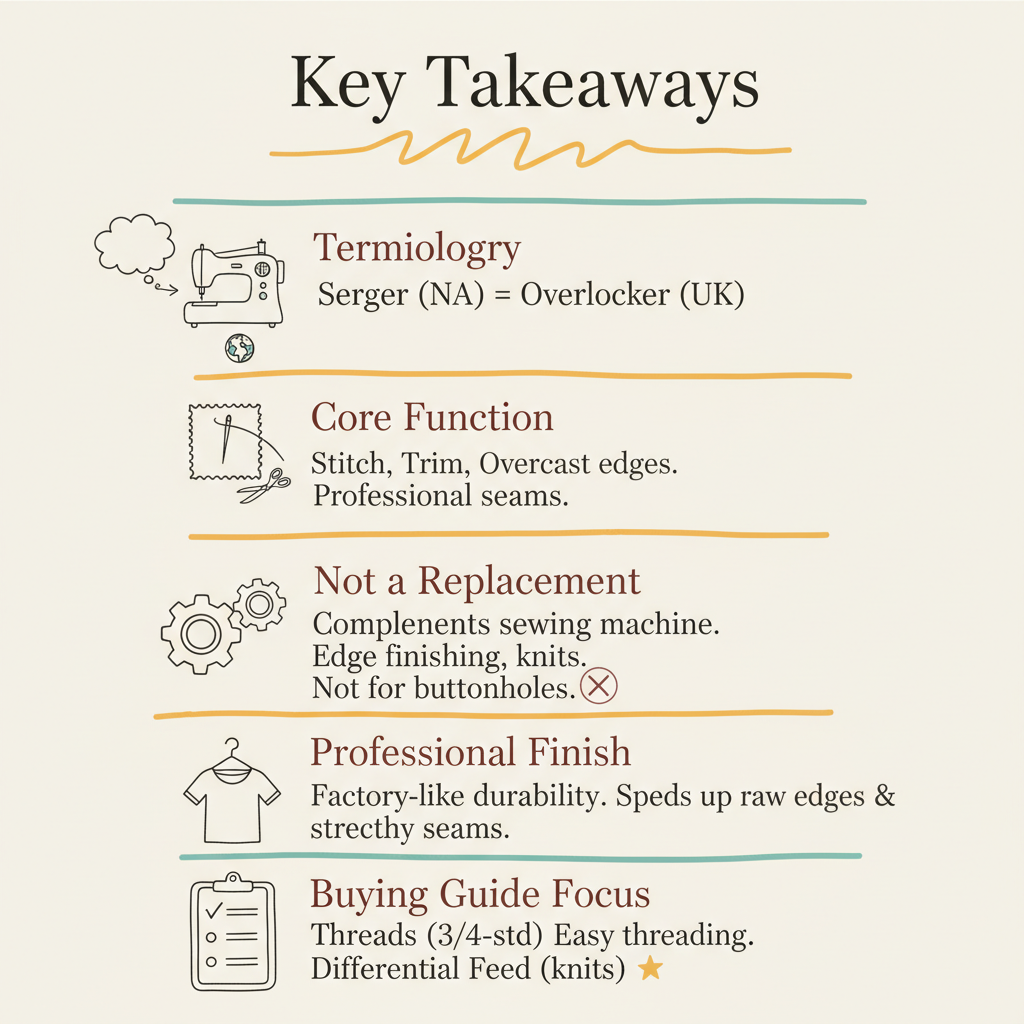
Terminology: A serger is simply the North American term for an overlocker machine. In the UK, we almost exclusively use the term overlocker.
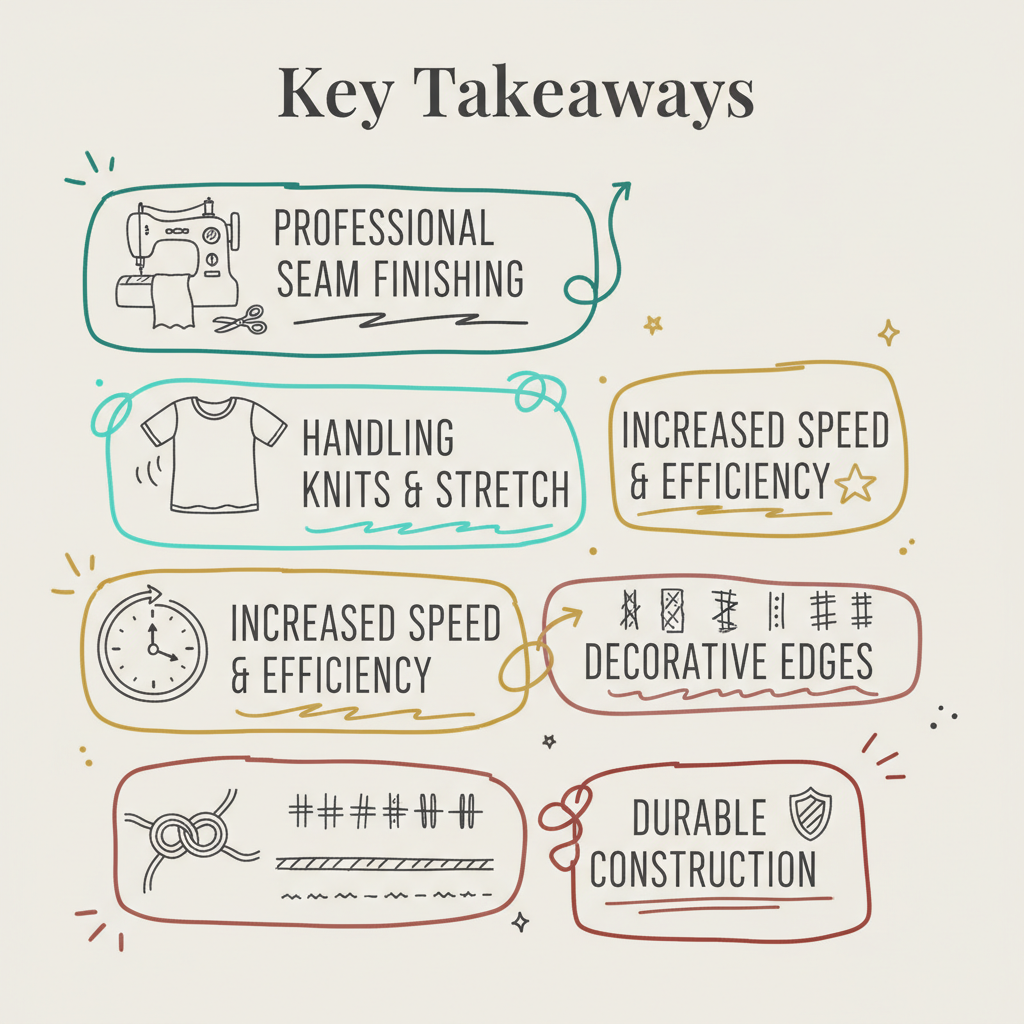
Core Function: The primary role of a serger is to simultaneously stitch, trim, and overcast the edge of fabric, creating professional, non-fraying seams quickly and efficiently.
Not a Replacement: An overlocker does not replace a standard sewing machine; it complements it. It excels at finishing edges and constructing knit garments but cannot perform tasks like buttonholes or topstitching.
Professional Finish: Using an overlocker is the fastest way to achieve the durable, factory-like finish seen on high-street clothing, especially for securing raw edges and creating stretchy seams.
Buying Guide Focus: When deciding what serger should I buy?, focus on the number of threads (3/4-thread is standard), ease of threading, and the presence of differential feed for working with knit and stretchy fabrics.
The Next Step: what is a serger sewing machine?
You’ve mastered your standard sewing machine, and now you’ve encountered a mysterious new tool: the serger. You might hear it called a serger, an overlocker, or even a serger sewing machine, but rest assured, they all refer to the same brilliant piece of kit. It’s the machine that transforms a home-sewn garment from ‘homemade’ to ‘professionally finished,’ and it’s essential for anyone serious about their craft.
Overlocker vs. Serger: Clearing Up the Confusion
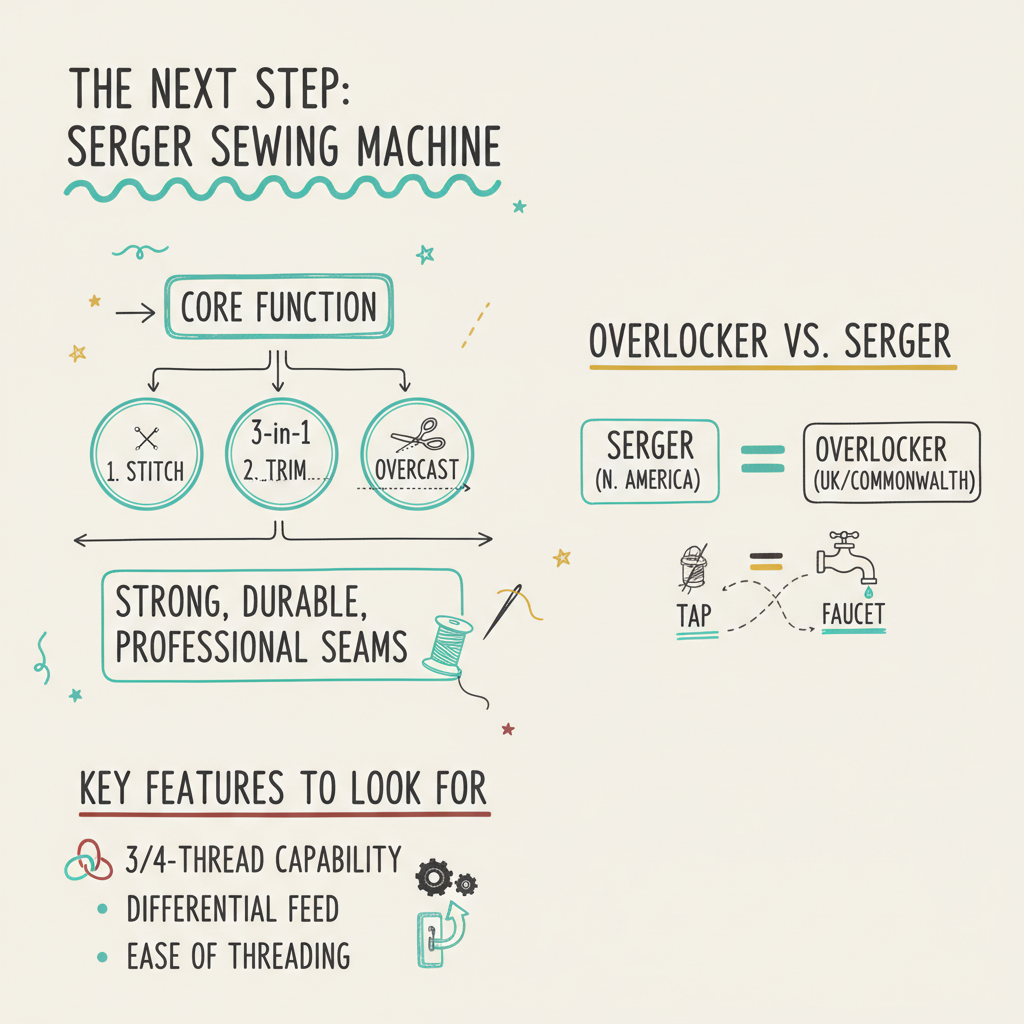
Let’s tackle the most common point of confusion first. What is a serger? In short, it’s the name used predominantly in North America. Here in the UK and in most Commonwealth countries, we call it an overlocker. They are exactly the same machine, performing the same function.
Think of it like calling a tap a faucet—different words for the same thing. Since our classes and articles use British English, we will primarily refer to it as an overlocker from here on, but know that any machine labelled a serger is its twin.
The Core Function: what does an overlocker do?
The overlocker’s function is unique and distinct from a regular sewing machine. A standard machine uses two threads (top and bobbin) to create one line of stitching. An overlocker, or serger, uses three, four, or even five threads that interlock around the raw edge of the fabric.
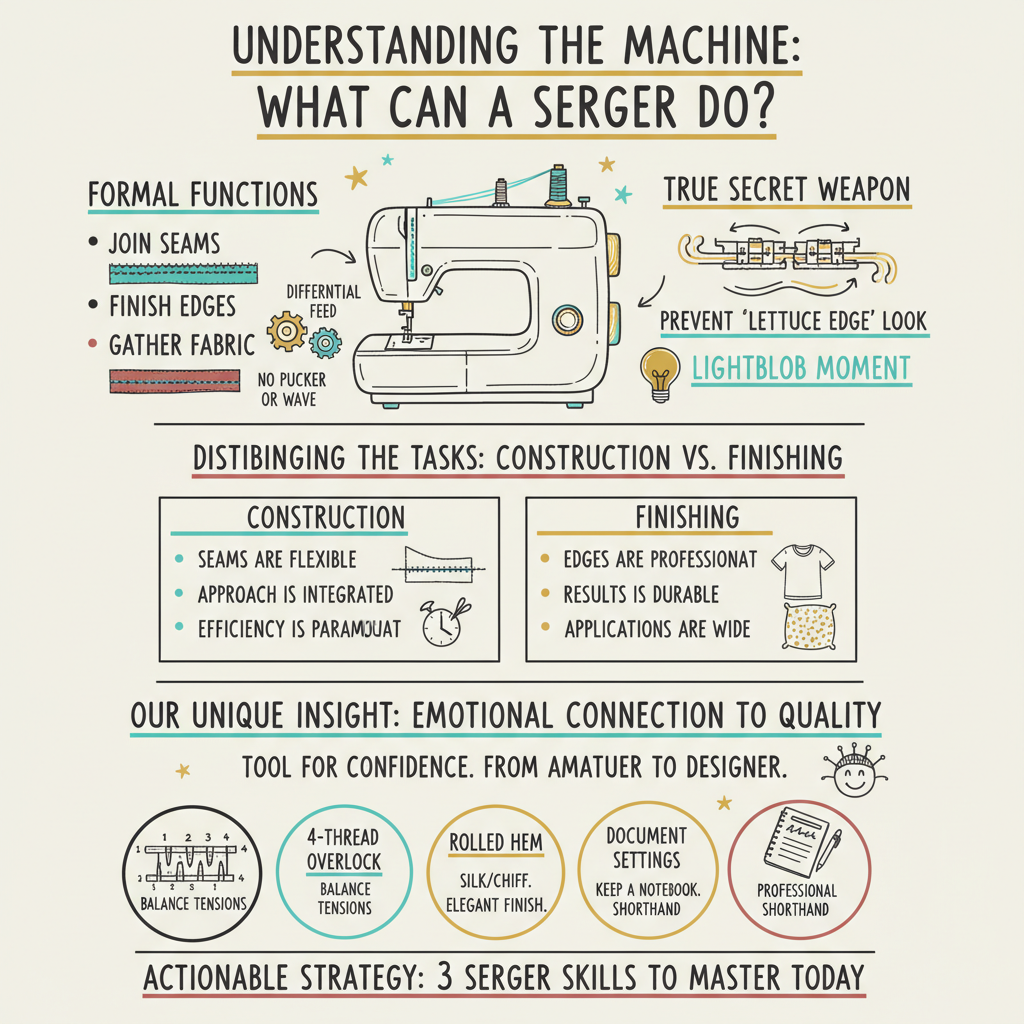
Critically, the machine includes a built-in blade that trims the fabric edge just before the threads wrap around it. This process achieves three things simultaneously:
Stitch: It joins two or more pieces of fabric together.
Trim: It neatly cuts the raw edge of the fabric.
Overcast: It wraps the thread securely around that newly cut edge, preventing fraying forever.
This speed and efficiency are the answers to the question, what does an overlocker do? It creates strong, durable, and highly professional-looking seams in a single, fluid pass.
Our Unique Insight: The Critical Difference a Serger Makes
When we teach our students about garment construction, we always highlight that the durability and longevity of a piece of clothing often come down to the quality of the seam finish. This is the critical difference a serger makes.
Imagine sewing a T-shirt. You sew the side seam on your regular machine. The seam allowances inside are left raw. Over time, in the washing machine and through wear, those raw cotton or knit edges will begin to shed fibres and fray, weakening the seam.
If you use an overlocker instead, the moment the fabric is trimmed, those edges are encased in a cage of thread. This not only stops fraying but also provides incredible stretch and flexibility, which is non-negotiable when working with modern knit fabrics. This capacity for speed, strength, and elasticity is why every piece of clothing you buy off the rack has been touched by a serger. If you are learning to sew and alter clothes, an overlocker is your express lane to achieving professional results.
Understanding what do overlockers do is about appreciating their versatility beyond a simple seam finish. While the 4-thread overlock stitch is its most common function, these machines are powerhouses with several specialty stitches that can elevate your projects.
Beyond the Seam: Decorative and Specialty Stitches
The overlocker’s true magic lies in its ability to create specialist finishes that are impossible on a regular machine:
3-Thread Overlock: Ideal for finishing the edge of non-fraying woven fabrics, such as fine wool or gabardine, or for decorative edges.
Rolled Hem: This stitch is a game-changer for finishing lightweight or delicate fabrics like chiffon and silk. The overlocker rolls the fabric edge tightly into itself and encases it with dense stitching, producing the neat, fine edge you see on scarves and professional eveningwear.
Flatlock Stitch: A strong, flat seam often used for sportswear or creating decorative texture. This stitch is designed to be comfortable against the skin, making it perfect for activewear construction.
Differential Feed: This is an essential feature that allows you to control how quickly the front and back feed dogs move. This prevents stretchy knit fabrics from puckering or woven fabrics from stretching out of shape as they pass through the machine. Learning how to use this machine effectively is a core part of our intermediate courses.
When to Use an Overlocker for a Professional Finish
You should reach for your overlocker whenever you are:
Working with Knits: Constructing tops, dresses, or any garment made from a stretch fabric. The overlock stitch has the necessary ‘give’.
Finishing Raw Edges: Sealing the seams inside a jacket, a pair of trousers, or any woven item to ensure they survive regular washing.
Doing Fine Detail Work: Creating delicate edges on ruffles, napkins, or shirt collars with the rolled hem feature.
Batch Sewing: When you need speed and efficiency, the overlocker cuts down on the time spent finishing seams.
The Purchase Decision: what serger should i buy?
Now that you know the answer to what is a serger and understand the value of an overlocker, the next logical question is: what serger should i buy? The market can seem overwhelming, filled with three-thread, four-thread, and even five-thread models. As your patient tutor, I want to guide you through the features that genuinely matter, ensuring your investment enhances, rather than complicates, your creative journey.
Essential Features: What to Look for in a Beginner Overlocker
Choosing your first overlocker isn’t about finding the most expensive model; it’s about finding a reliable workhorse with the right foundations. When shopping, focus on these three critical features:
3/4-Thread Capability: For almost all home sewing, a machine that can perform both a 3-thread and 4-thread stitch is perfect. The 4-thread stitch is your go-to for strong, construction seams on knits, and the 3-thread is ideal for finishing woven fabric edges and performing rolled hems. Anything more complex, like a 5-thread coverstitch, is usually only necessary for professional tailoring or commercial volumes.
Differential Feed: As we mentioned before, this is non-negotiable. If you plan to sew stretchy fabrics—the very thing an overlocker excels at—you need the differential feed to prevent wavy, stretched-out seams or puckering. Ensure the machine has clearly labelled, easily adjustable dials for this function.
Ease of Threading: Overlockers have a reputation for being tricky to thread, but modern machines have vastly improved this process. Look for machines with colour-coded guides inside the looper covers. Better yet, some premium models now offer air-threading, where you simply push the thread into a port and the machine blasts it into place. If you are learning Sewing Classes North London, we often recommend a model with good threading support to reduce frustration.
Addressing the Buying Anxiety: what is the best serger to buy?
The question what is the best serger to buy? is personal, but we can offer some clear direction. The “best” machine is the one you will actually use. For beginners and those moving to Intermediate London Sewing Courses for Adults, we recommend models from established, reliable brands (often Janome, Brother, or Juki).
Instead of focusing on a specific model number, look for the features above, and read reviews that focus specifically on:
Noise Level: Some cheaper overlockers are extremely loud, which can make long sewing sessions unpleasant.
Stitch Quality: Ensure the machine produces even, balanced stitches across a range of fabric thicknesses.
Customer Support: A good brand will have videos and manuals readily available to help you master re-threading and tension adjustments.
Our expert advice is to invest in the best quality machine you can comfortably afford, focusing on the core 3/4-thread capability and a good differential feed.
Actionable Strategy: Troubleshooting Common Serger Issues
While overlockers are fantastic, they can occasionally present challenges. Knowing how to quickly troubleshoot common issues will keep your machine running smoothly:
Skipped Stitches: This is almost always a sign that your needles are blunt or incorrectly inserted. Solution: Replace the needles (use high-quality serger needles) and ensure the flat side of the needle shank is facing the correct direction, usually toward the back of the machine.
Wavy Seams (Puckering or Stretching): Solution: Adjust the differential feed. If the fabric is stretching and getting wavy, increase the differential feed setting (e.g., from 1 to 1.5). If the fabric is bunching up or puckering, decrease the setting (e.g., from 1 to 0.7).
Tension Tangles: If your stitches are messy or loops are forming on the underside, your tension is wrong. Solution: Reset all four dials back to their factory standard setting (usually marked around 4 or 5). Adjust only one dial at a time, usually the needle tension, to see what impact it has before adjusting the loopers.
A serger typically needs either three or four threads for general home sewing. A 3-thread stitch is used for finishing the edges of woven fabrics and creating rolled hems. A 4-thread stitch is the most common for constructing strong, professional, and stretchy seams on knits. While 2-thread machines exist, and 5-thread machines are available, the 3/4-thread model offers the best balance of versatility and ease of use for the home sewist.
Is a serger hard to re-thread?
The process of re-threading a serger can be daunting at first glance due to the multiple threads. However, if you follow the colour-coded paths precisely and use a pair of long-nosed tweezers, it becomes quite manageable. Many experienced sewists use the “tie-on” method: cutting the old threads, tying the new thread ends to the old ones, and simply pulling them through the machine. This bypasses the need to thread the loopers manually altogether.
Can I use a serger without a regular sewing machine?
You can certainly use an overlocker machine independently, but you cannot replace a regular sewing machine with it. The overlocker is fantastic for creating strong seams and finishing edges, but it cannot perform essential tasks such as topstitching, creating buttonholes, sewing zips, or detailed decorative stitches. The two machines work in tandem, with the overlocker focusing on bulk construction and seam finishing, and the regular machine handling closures and flat stitching.
Conclusion
The overlocker, or serger, is the indispensable companion to your standard sewing machine. It is the tool that closes the gap between the garments you sew at home and the clothes you buy in the shops. By understanding what is a serger and embracing its unique ability to stitch, trim, and overcast simultaneously, you unlock a new level of speed, durability, and professionalism in your projects.
We hope this guide has demystified the overlocker and given you the confidence to consider adding one to your creative toolkit. Whether you’re interested in Custom Private Sewing Lessons London or have a specific question about an overlocker model, we are here to support your journey. Please feel free to visit our Contact page to ask a question or book your next class with us.
About the Author: Grace, Founder of London Sewing Courses
Grace is the heart and hands behind London Sewing Courses. A passionate and experienced sewing instructor, she founded the studio with a unique mission: to create a calm, friendly space for adults to learn and connect, while using the profits to fund free sewing classes for local children in need. Her personal expertise and commitment to community building are at the core of every class and every stitch.
Prep is Everything: Trimming the thread end cleanly at an angle and wetting or stiffening the tip are the most effective ways to prevent fraying and make threading easier.
Needle Still, Thread Moves: For the traditional hand method, holding the needle still and pushing the thread eye-first through is more successful than trying to guide a tiny, floppy piece of thread.
Know Your Tools: Basic wire loop threaders are perfect for small hand-sewing needles, while automatic threaders are a fantastic aid on most modern sewing machines.
Specialist Help: Self-threading or ‘calyx eye’ needles are a simple solution for those with dexterity challenges or poor eyesight, allowing you to slip the thread through a notch at the top.
The Next Step: Once you master how to thread a needle, the next crucial skill is securing a perfect knot to ensure your stitches hold firm.
The Foundation: Why Learning how to thread a needle is Your First Step
Welcome, dear student. If you’ve ever felt a pang of frustration trying to coax a delicate strand of thread through the minuscule eye of a needle, know that you are in good company. This tiny, seemingly simple step is where every great sewing journey truly begins. Mastering how to thread a needle isn’t just about getting the job done; it’s about building the patience, precision, and confidence that underpin all skilled tailoring. Think of it as your foundation—the quiet moment of preparation before the beautiful, creative work begins.
We often see students falter here, feeling defeated before their project even starts. But we believe that with the right guidance, this can become a quick, stress-free part of your process. This comprehensive guide, written by our expert tutors, will patiently walk you through every method, from the classic hand-sewing technique to using specialist tools. When you master this foundational skill, you build the confidence to continue your journey and one day, maybe even join us to start their creative journey here in London.
The Traditional Method: How to Thread a Sewing Needle by Hand
To truly become a confident seamstress or tailor, you must first master the classic method: how do you thread a sewing needle using only your hands. This skill is vital for mending, hand finishing, and all the essential details that give your creations a professional polish. The key is to prepare both the thread and the needle properly.
Preparing the Thread and Needle
Before you even attempt to put thread in a needle, you need to set yourself up for success. This preparation process is the secret many overlook. First, cut a manageable length of thread—around 45 to 60 centimetres is ideal. A longer piece will twist, tangle, and fray much faster, leading to headaches later.
Next, you must sharpen and stiffen the end of your thread. Use a sharp pair of scissors to cut the thread at a crisp, diagonal angle. This creates a fine point, significantly smaller than the blunt end a dull pair of shears might leave. Then, dampen the thread end with a tiny bit of moisture, or, better yet, apply a small amount of thread wax or clear nail polish to the last few millimetres. This simple act will stop the thread from fraying and help you develop your fundamental skills for all your future projects. Finally, ensure you are in a well-lit area where you can clearly see the eye of the needle.
Essential Hand-Threading Techniques
Once your thread is perfectly prepped, it is time to tackle the actual threading. Forget trying to poke the thread through while holding the needle in mid-air—that is a common mistake that leads to frustration. Instead, follow this simple, two-step process:
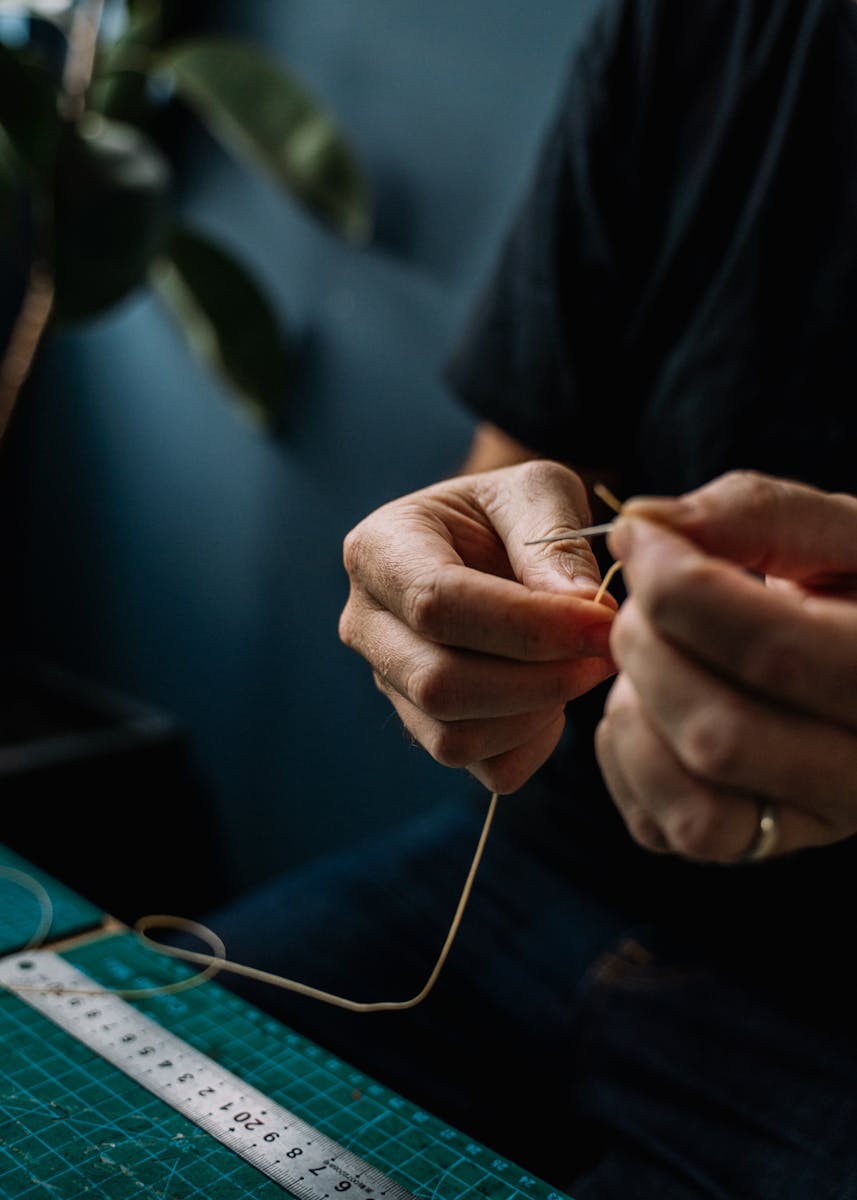
Hold the Needle Still: Place the needle horizontally on a flat, light surface, or simply pinch the shaft firmly between the thumb and forefinger of your non-dominant hand. Hold it close to the eye. The needle must not move.
Push the Thread In: Hold the prepared thread end with your other hand. Bring the thread up to the needle eye and push it through. By keeping the needle perfectly still and focusing on moving the stiff, tiny thread tip, you increase your chances of success dramatically. This technique is easier than trying to align a moving needle with a wobbly thread. If you find yourself needing more guided instruction in a supportive environment, consider one of our beginner courses.
Our Unique Insight: Overcoming the Fraying Frustration
The most common point of failure when you try to put thread in a needle is fraying. You cut the thread, you aim for the eye, and the end seems to instantly bloom into a cotton fluffball, making the task impossible. This is where a change of technique, rather than sheer luck, saves the day.
We teach our students a unique tip: hold the thread end right next to the needle’s eye, then press the thread against the needle with your thumb, effectively folding the thread over the needle shaft. When you pull the needle away, you leave behind a sharp, tiny loop of thread that is already oriented in the direction you need. Then, you simply pinch the loop firmly between your fingers and push it straight through. This trick allows you to present a more substantial and less-frayed point to the needle’s eye.
If you struggle with hand strength or have difficulty keeping the thread perfectly stiff, remember that practice is the master key. This small hurdle is worth overcoming, especially as you move onto more complex garments that require fine finishing work.
Effortless Threading: How to Use a Threader to Thread a Needle
While mastering the hand-threading technique is a mark of a skilled seamstress, there is absolutely no shame in turning to modern aids! Sometimes the needle eye is simply too small, the thread too thick, or the light is just not quite right. Using a needle threader is a practical, clever way to conserve your eyesight and your patience. If you’ve ever wondered how do you use a threader to thread a needle, you’ll be pleased to know it’s incredibly simple.
The Simple Wire Threader
The most common tool is the inexpensive, diamond-shaped piece of metal or plastic with a tiny, delicate wire loop attached. This is often found in basic sewing kits and is perfect for hand-sewing needles.
Insert the Wire: Push the fine wire loop through the eye of the needle, going from the side you want the thread to come out of. The wire is much thinner and stiffer than the thread, making this step easy.
Thread the Loop: Once the wire is through, pass your main sewing thread through the large, accommodating opening of the wire loop.
Pull Back: Gently hold the needle in one hand and pull the threader back out of the needle eye. As the wire comes through, it drags a loop of your thread cleanly and seamlessly with it.
Moving from hand-sewing to a machine brings its own set of challenges, especially for beginners learning how to thread a needle on a new model. Most modern sewing machines come equipped with a built-in automatic needle threader, often a tiny lever or mechanism next to the needle bar.
While the exact steps vary by machine brand, the principle is the same: the mechanism uses a tiny hook or pin to draw the thread through the machine needle eye. You typically hook the thread around a small guide and lower the lever, which performs the fiddly work for you. Always consult your machine’s manual, but embracing this feature can dramatically speed up the setting-up process. If you’re struggling with machine basics, our London sewing courses for adults include dedicated lessons on machine setup and use.
Specialist Needles: how do you thread a self threading needle
For many years, some students assumed that if you couldn’t easily thread a traditional needle, your sewing days were limited. Thankfully, technology has given us a superb alternative: the self-threading needle. These needles, sometimes called calyx-eye or easy-thread needles, are brilliant if you struggle with fine motor skills or have visual impairment.
So, how do you thread a self threading needle? It couldn’t be simpler:
Find the Groove: Look closely at the top of the needle eye. You will see a small ‘V’ shaped groove or slot that opens into the eye.
Slip the Thread: Take your prepared thread and press it down and across this groove. You don’t push it through the traditional way; you just press it into the channel.
The Click: With gentle pressure, the thread will snap or ‘click’ into the needle eye, held securely by the pressure of the metal.
This instantaneous method is a fantastic way to keep your focus on the creative work of sewing rather than the preparatory steps, making it perfect for quick repairs or for those getting started in beginner seamstress courses.
The Next Step: how do you sew with a needle and thread
Once your thread is secured in the needle, you’re ready for the exhilarating part: creating! Knowing how do you sew with a needle and thread shifts the focus from preparation to technique. Every stitch you take relies on that strong connection between the needle and the thread, so it’s essential to secure it first.
Securing the Thread: The Perfect Knot
A perfect knot is a stitch’s anchor; without it, all your beautiful work will simply pull out. We recommend the simple, yet reliable, “wrap and roll” knot method:
The Wrap: Hold the needle between your thumb and forefinger. Lay the end of the thread against the needle shaft, and use your other hand to wrap the thread end around the needle two or three times.
The Roll and Pull: Pinch the wrapped thread tightly against the needle and slide your thumb and forefinger down the needle, rolling the wraps off the end of the needle.
The Tighten: Pull the thread taut as the loop slides off the tip. The wraps will gather into a neat, firm knot at the very end of the thread. Trim any long tail close to the knot.
Getting Started on Your Project
With the knot secured, you can begin the stitching process. For hand-sewing, you’ll typically start your first stitch by pushing the needle into the fabric from the back (or ‘wrong side’) to the front (or ‘right side’). The knot will catch on the back, anchoring your work. Whether you are doing a running stitch, a backstitch, or a simple hem, that perfectly threaded needle is now your artistic tool. If you are learning how to sew and alter clothes, this simple act of anchoring your thread is the difference between a secure garment and a loose seam.
Actionable Strategy: Three Tricks to Try Today
Here are three simple, low-effort tricks you can implement right now to make your threading experience better and faster:
The Hairspray Hack: If you don’t have thread wax, a tiny spritz of cheap hairspray on the last centimetre of the thread will stiffen it instantly. Let it dry for two seconds, and you’ll have a sharp, durable point.
Use Contrast: If you’re using dark thread, place a piece of white paper or a light-coloured mat underneath your needle. If you’re using light thread, use a dark surface. The increased contrast makes the needle eye far easier to see.
Invest in a Good Thimble: A thimble might seem unrelated, but it’s part of the process. If your fingers are struggling to push the needle through thick fabric, they’ll quickly tire, and your precision for threading will suffer. A thimble helps you maintain control and accuracy throughout your sewing session.
Frequently Asked Questions (FAQ)
How long should I cut my thread?
For hand-sewing, aim for a length between 45 to 60 centimetres, or approximately the length from your hand to your elbow. A shorter length is much less likely to twist, tangle, or knot prematurely while you are stitching, which saves time and prevents frustrating snarls. If you are working on a very long seam, it is always better to re-thread the needle a few times than struggle with an unwieldy, overly long piece of thread.
What should I do if my thread keeps falling out?
The most likely culprit is that you have not pulled enough thread through the needle eye after threading it. When you thread the needle, pull at least 10 to 15 centimetres through to the other side. This longer tail prevents the thread from slipping back out as you start your first few stitches. Alternatively, try a small overhand knot around the eye of the needle shaft itself to temporarily secure the thread for extra thick or slippery fabrics.
Can I thread a needle with two strands?
Absolutely, and it is common practice, particularly for buttons, upholstery, or any stitching that requires extra strength and durability. To do this, simply thread your needle with a single strand, but instead of knotting the tail, bring both ends of the thread together and knot them. This creates two working strands, resulting in a much stronger line of stitching. Just ensure the needle eye is large enough to accommodate the doubled thickness of your thread without difficulty.
Conclusion
The simple act of learning how to thread a needle is the gatekeeper skill for all other forms of sewing, mending, and creative work. Whether you are using the traditional hand-sewing technique, employing the clever mechanism of a threader, or utilising the convenience of a self-threading needle, the principles of preparation and patience remain your greatest assets.
We hope this detailed guide has given you the confidence to conquer this essential first step. Remember, every master tailor, seamstress, and crafter started exactly where you are today. With practice, threading will become a quick, automatic action that allows you to move swiftly onto the satisfying, rewarding work of stitching itself.
If you have any questions about the techniques we have discussed, or if you feel ready to take the next step and learn how to learn to use a sewing machine or learn advanced skills, we are here to help. Please feel free to visit our Contact page to ask a question or book your next class with us.
About the Author: Grace, Founder of London Sewing Courses
Grace is the heart and hands behind London Sewing Courses. A passionate and experienced sewing instructor, she founded the studio with a unique mission: to create a calm, friendly space for adults to learn and connect, while using the profits to fund free sewing classes for local children in need. Her personal expertise and commitment to community building are at the core of every class and every stitch.
The Function: A walking foot is an essential presser foot that works with your machine’s feed dogs to feed fabric from both the top and bottom simultaneously.
The Result: This dual-feed action completely eliminates fabric shifting, bunching, puckering, and misalignments when stitching.
The Use: It is critical for successfully sewing challenging materials like slippery silks, thick fleece, stretchy knitwear, and multiple layers, such as those found in quilting.
The Look: A walking foot is easily recognisable by its larger, often mechanical frame and a fork-like arm that sits over the needle screw.
The Alternative: While the walking foot solves one major problem, specialty feet like the zipper foot solve others by allowing you to sew right up to a raised edge.
Guide to Perfect Sewing
Welcome to the wonderful world of presser feet! As a sewing tutor, I often see students struggling with fabric that just won’t behave—it stretches, it puckers, or the layers shift away from each other. If you’ve ever found yourself asking what does a walking foot do on a sewing machine, you’re about to discover the solution to these common frustrations. This accessory isn’t just a nice-to-have; it’s an absolute game-changer for mastering tricky fabrics and complex projects. It represents one of the most significant upgrades you can make to your machine’s capabilities.
The Simple Answer: Understanding the Walking Foot’s Magic
In the simplest terms, what does a sewing machine walking foot do? It makes your machine feed the top layer of fabric at exactly the same rate as the bottom layer.
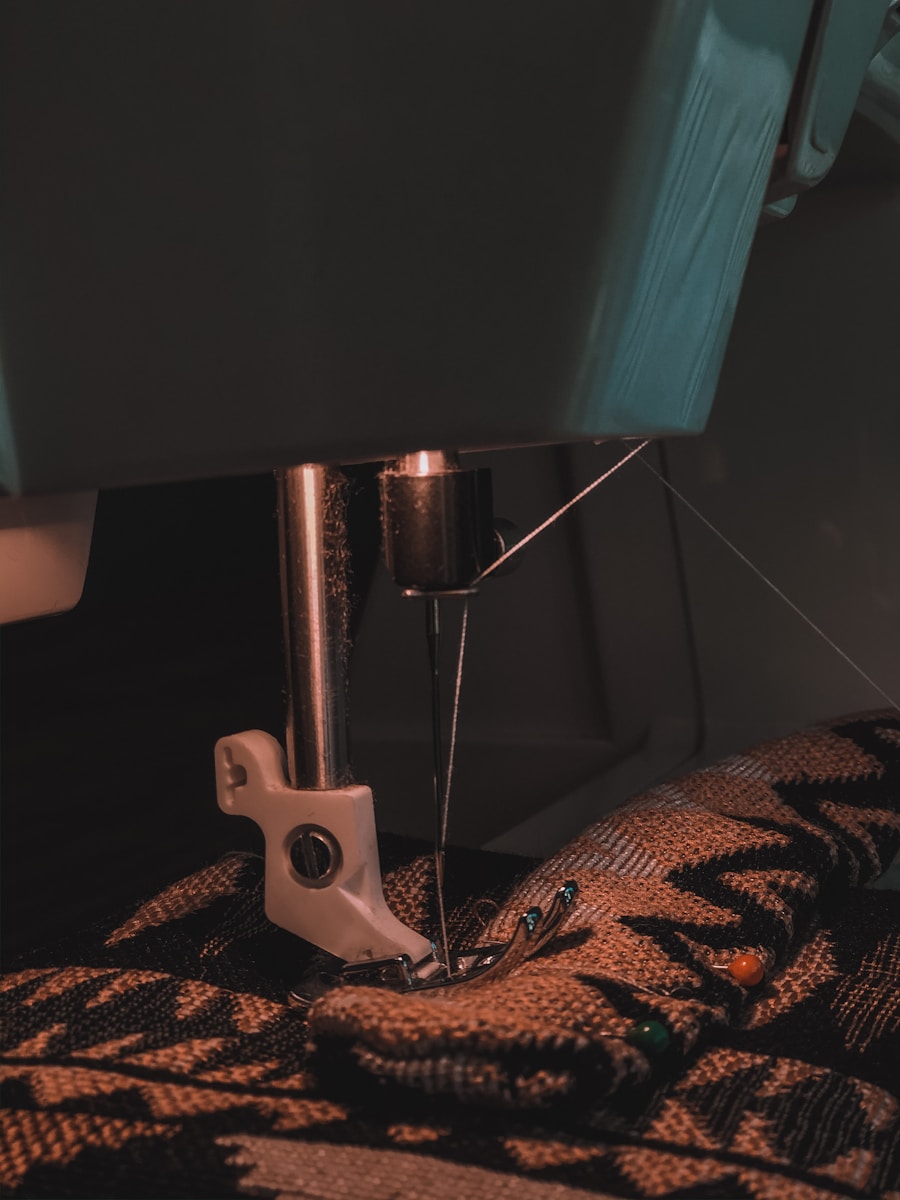
Normally, your sewing machine relies on small, jagged metal teeth, called feed dogs, which grab the bottom layer of fabric and pull it under the needle. The presser foot holds the top layer down. However, on slippery or very thick materials, this one-sided action is insufficient. The bottom layer moves perfectly, but the top layer drags slightly, resulting in an uneven seam, or “puckering,” especially near the end of the seam line.
The walking foot acts as a secondary set of feed dogs working from above. It has its own mechanism that literally “walks” the top fabric layer forward in perfect sync with the feed dogs below. This means the two layers meet the needle at precisely the same moment, ensuring an impeccable, professional-quality stitch every time.
What Do You Use a Walking Foot For? Taming Tricky Fabrics
Understanding what do you use a walking foot for opens up a whole new range of projects you can tackle with confidence. It is designed to solve any problem where uneven feeding or shifting layers are a concern.
How the Dual Feed System Works: A Closer Look
When you attach the walking foot, you’ll notice a small, C-shaped arm that sits right over the screw that holds the needle bar. This arm is the key. As the needle bar moves up and down during stitching, it activates the walking foot’s internal mechanism, causing the foot’s sole to lift and move the fabric forward. This continuous, rhythmic movement—the “walk”—ensures an even journey for both fabric layers.
If you are learning to use a sewing machine, getting comfortable with the machine involves understanding how each foot interacts with your materials, and the walking foot is often the first essential accessory we introduce to students.
Taming Multiple Layers: Quilting and Binding
Perhaps the most famous application for the walking foot is in quilting. A standard quilt sandwich consists of three layers: the top fabric, the batting (wadding), and the backing fabric. Without a walking foot, stitching through this thickness is almost guaranteed to result in a wrinkled or bunched backing layer.
The walking foot keeps those thick, heavy layers aligned perfectly, allowing you to quilt smoothly and accurately, whether you’re stitching in the ditch or using decorative lines. For those taking your skills further, this foot is indispensable for garment construction that involves bulk, such as installing linings or working with heavy coat fabrics.
Working with Slippery and Stretchy Fabrics
Beyond bulk, the walking foot is a hero for materials that slip and slide, or stretch out of shape. Think of working with luxurious but tricky fabrics like velvet, organza, or silk charmeuse—the walking foot ensures the top layer doesn’t glide away from the bottom.
Likewise, when sewing elastic knit fabrics, such as jersey or spandex, the walking foot prevents the machine from stretching the fabric as it feeds, eliminating those frustrating wavy or lettuce-leaf edges. To truly master understanding how to sew and alter clothes, you must first master the right tools for the job.
Our Unique Insight: What a Sewing Machine Walking Foot Does for Garment Construction
The utility of a walking foot, or what does a walking foot do on sewing machine, extends far beyond quilting. For those of you on a dedicated seamstress courses journey, the walking foot is a silent partner in achieving professional finishes on tailored garments.
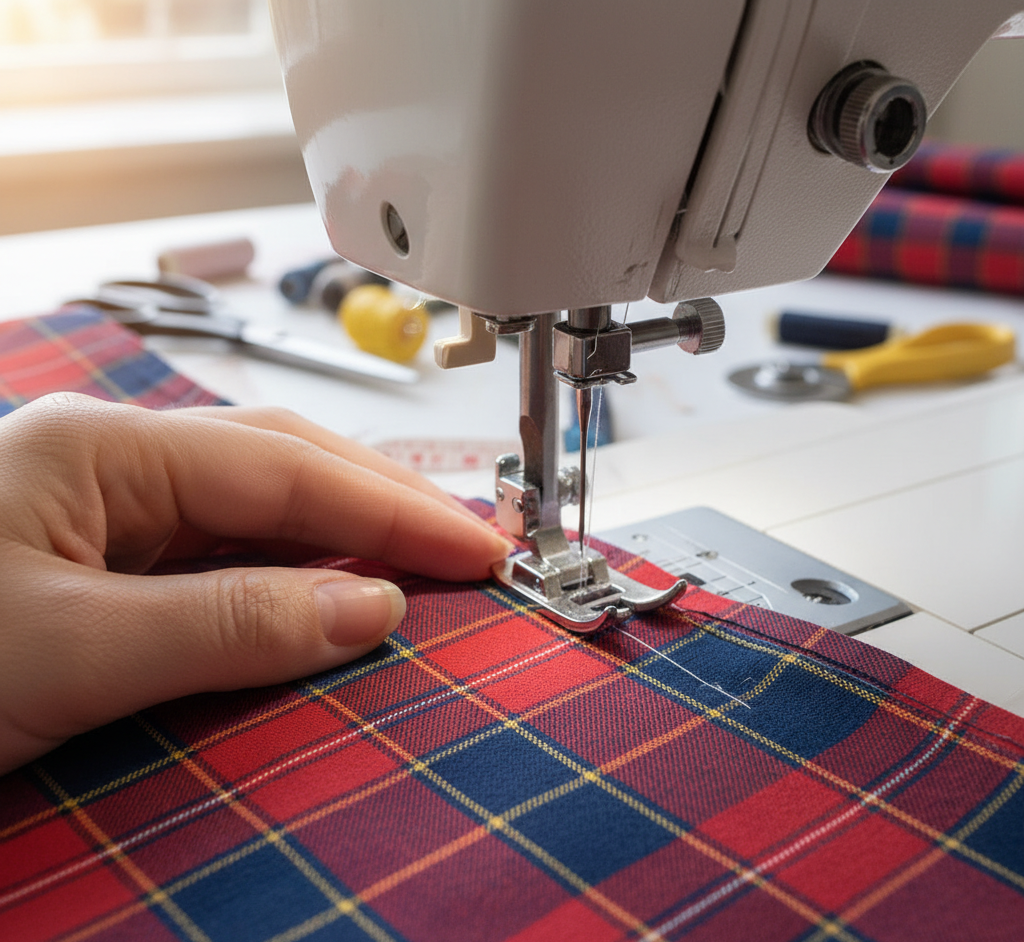
Consider projects that require matching patterns, like checks or stripes. Even the slightest shift between the pieces will ruin the entire look. By locking the layers in place, the walking foot allows you to precisely align your prints, ensuring seamless transitions across collars, cuffs, and pockets. It’s an invaluable tool for ensuring that meticulous alignment you see in high-end ready-to-wear clothing. For those seeking private sewing lessons London tailored just for you, mastering pattern matching with this foot is often a core lesson.
What Does a Zipper Foot Do and When to Use It?
While the walking foot solves the problem of fabric shifting, it’s only one of many specialist feet that belong in your toolkit. To truly advance your skills, you need to understand what do different sewing feet do, starting with the second most common specialist foot: the zipper foot.
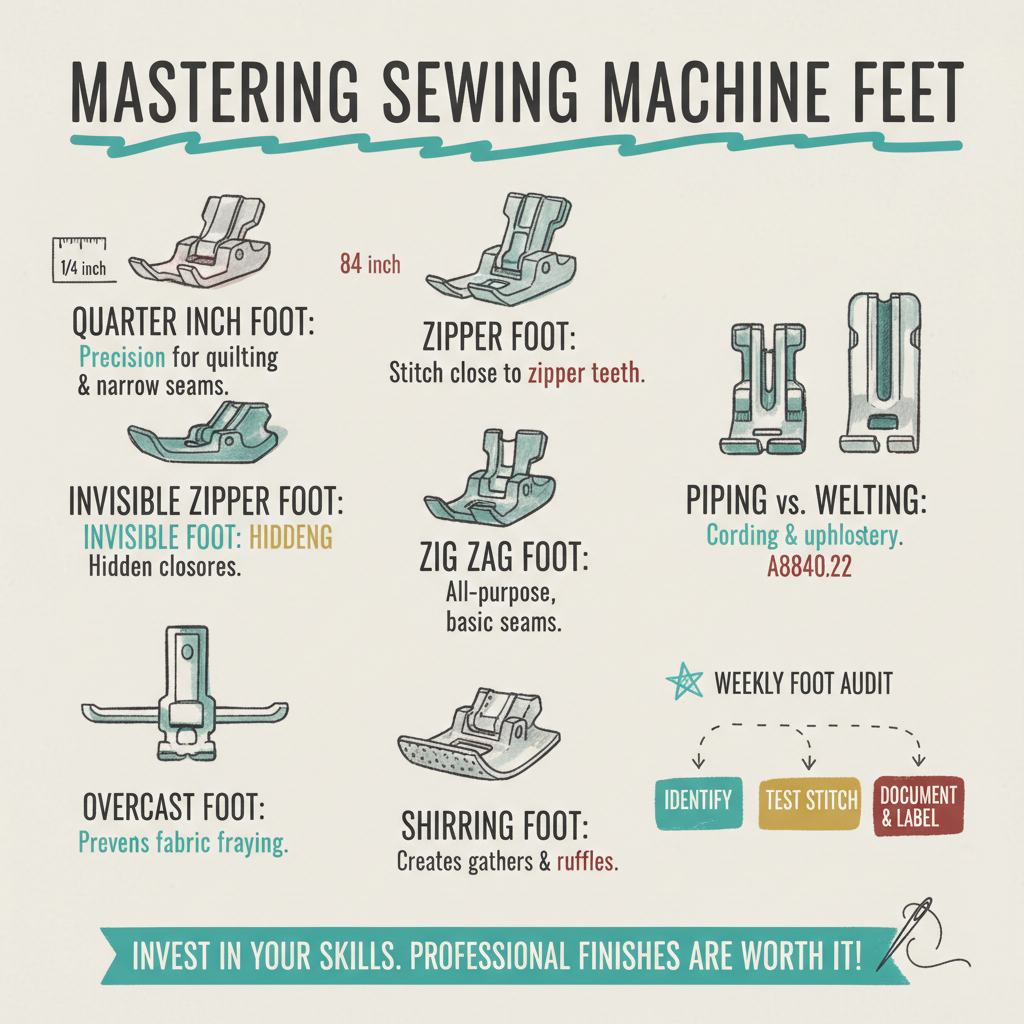
Unlike the all-purpose standard foot, the zipper foot is designed with a narrow profile that allows you to stitch right next to a raised edge, whether that’s the teeth of a zipper, the cording of piping, or a bead-encrusted trim.
The key feature of a zipper foot is its adjustability; you can snap it on so that the needle passes to the left or the right of the foot itself. This adjustability means you can stitch close to the zipper teeth without accidentally sewing over them, which would break your needle. It is absolutely essential for achieving the neat, professional finish seen in high-quality garments.
The Essential Role of the Standard Foot
It is important not to forget your trusty standard foot. This is the all-rounder, the one you use for basic straight stitching and zigzag seams on medium-weight, stable woven fabrics. It provides a balanced hold that works well with the feed dogs for everyday sewing.
However, as you progress, you’ll discover that the standard foot struggles with the very challenges the walking foot is designed to overcome. Recognising when to switch from your basic tool to a specialised one is a fundamental skill taught in all quality sewing classes London for adults. Knowing when a basic tool is sufficient and when you need a specialist one is a key takeaway from our intermediate London sewing courses for adults.
Actionable Strategy: A Quick-Guide to What Do Different Sewing Feet Do
Mastering your machine is not just about threading the needle; it’s about choosing the correct accessory for the task at hand. Here is a quick, actionable guide to help you decide which foot to use today.
Mastering Presser Feet: Walking, Zipper, and Beyond
Foot Type
Primary Purpose
When to Use It
Look and Key Feature
Walking Foot
Eliminates shifting and puckering.
Quilting, working with knits, velvet, or vinyl.
A large, mechanical foot with an active upper feed system.
Zipper Foot
Sewing close to a raised edge.
Installing zippers, adding piping or cording.
A narrow, often asymmetrical foot that attaches to the left or right of the needle.
When to Change Your Foot: A Fabric-by-Fabric Guide
If you’re unsure if a foot is needed, simply look at your fabric. If it’s slippery, very thick (more than two layers of denim), stretchy, or if you are deliberately stitching near a bulky edge (like a cord), swap out your standard foot immediately for a specialist.
The walking foot (or twin-feed foot, as it’s sometimes called) is arguably the most valuable purchase you can make after the machine itself because of how many challenging materials it instantly renders manageable. It’s a game-changer for avoiding the frustration of fabric bunching up at the end of a seam.
A walking foot is easily identifiable because it looks more complicated and mechanical than your standard presser foot. It is generally larger and bulkier, featuring its own set of feed dogs on the underside of the foot itself. The most defining visual feature is a fork-like arm or lever at the top of the foot. This arm must sit over the needle clamp screw, allowing the needle movement to drive the foot’s unique ‘walking’ action.
Is a walking foot only for quilting?
No, while the walking foot is highly prized by quilters for managing the three layers of a quilt sandwich, its use extends far beyond that. It is the best tool for any material where the top layer might drag or shift unevenly compared to the bottom. This includes sewing highly stretchy knits like jersey, slippery fabrics such as silk or sheer organza, and any project that involves matching complex patterns like plaids or stripes.
Can I use a walking foot with my regular sewing machine?
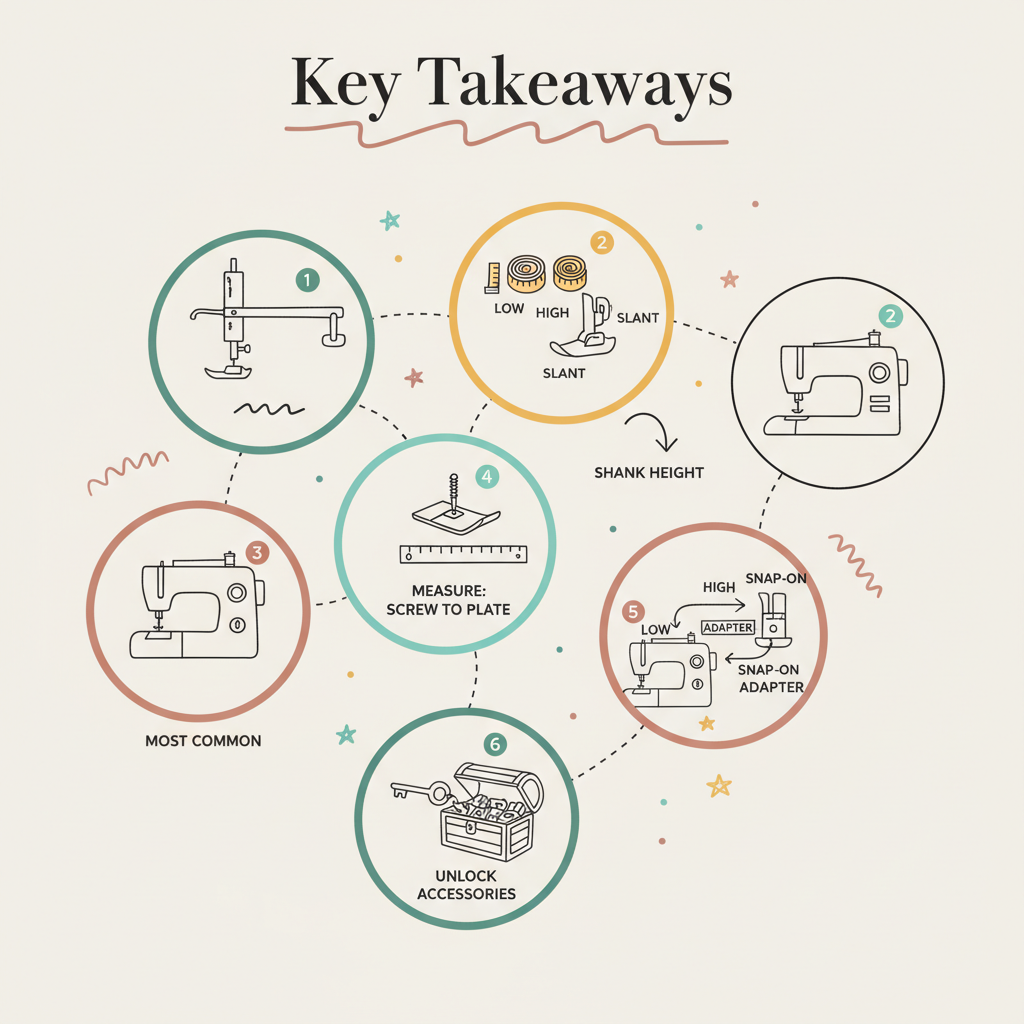
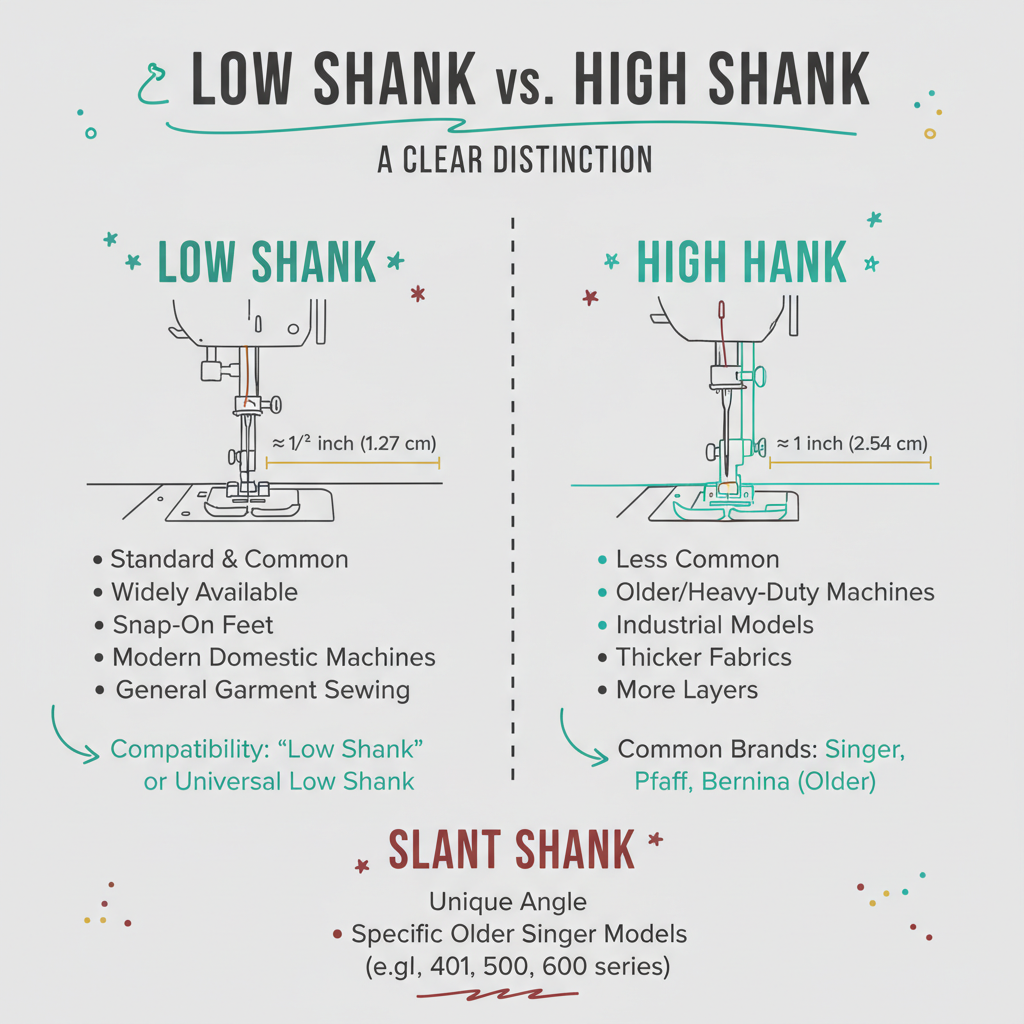
In most cases, yes. Walking feet are an accessory and are generally compatible with most low-shank or high-shank domestic sewing machines, though you may need to purchase one specific to your machine’s brand (e.g., Brother, Janome, or Singer) or a universal walking foot that matches your machine’s shank size. Always ensure the foot’s fork-like arm can properly engage with the needle screw for the mechanism to work effectively.
The journey through the world of presser feet might seem complex at first, but with a patient and encouraging approach, each foot becomes a familiar friend. When it comes to achieving flawless results on challenging materials, the answer to what does a walking foot do on a sewing machine becomes perfectly clear: it’s your indispensable ally against puckering, shifting, and stretching.
By providing an even, dual-feed system, the walking foot ensures that whether you are tackling thick quilted layers or delicate silk organza, your seams will be impeccably neat and perfectly aligned. The difference between struggling with a slippery fabric and gliding smoothly through a seam often comes down to this simple, yet ingenious, piece of equipment. Remember that tools like the zipper foot and the walking foot are designed not to complicate your life, but to empower you to handle any project with elegance and confidence.
If you are a beginner sewist just discovering the magic of these tools, or an advanced student looking to refine your finishing techniques, the path to expert sewing is always smoother with the right knowledge and the right accessories.
Ready to put this knowledge into practice? Why not take the next step in your creative journey? We offer friendly, tailored Sewing Classes North London for all levels, from those just learning how to sew to those mastering advanced garment construction. Come and join our community, where we guide you through every presser foot, seam, and stitch. You can also dive deeper into specialised topics by visiting our informative Sewing Blog for more expert advice and inspiration.
About the Author: Grace, Founder of London Sewing Courses
Grace is the heart and hands behind London Sewing Courses. A passionate and experienced sewing instructor, she founded the studio with a unique mission: to create a calm, friendly space for adults to learn and connect, while using the profits to fund free sewing classes for local children in need. Her personal expertise and commitment to community building are at the core of every class and every stitch.
Sources
The following resources were consulted to provide you with the most up-to-date and authoritative information:
The Sewing Directory (Guide to the Walking Foot) https://www.thesewingdirectory.co.uk/walking-foot-guide/
Self-Teaching is Possible: The answer to “can sewing be self taught” is yes, but it demands dedication and a structured approach, often starting with high-quality online resources.
Time Commitment Varies: Basic proficiency can be reached in months, but mastering complex skills like tailoring takes years of consistent practice.
Start Simple with Equipment: A reliable, decent sewing machine for a beginner doesn’t require a huge initial investment, but look for key features like adjustable stitch length and good reviews.
Guided Learning Accelerates Progress: While possible to teach yourself, a sewing class provides immediate feedback, corrects bad habits early, and shortens the learning curve significantly.
Easiest Projects: Start with non-garment items like cushion covers, tote bags, or simple elastic-waist skirts to build confidence.
the creative world of fabric, thread, and machine is calling. Perhaps you’ve been scrolling through images of beautifully made garments or perfectly tailored home furnishings, and the spark of ambition has ignited. Now you face the first, most fundamental question on your journey: Can sewing be self taught? The short, encouraging answer is a resounding “yes.” Countless talented seamstresses and tailors across history have started their journey with nothing more than a curious mind, a needle, and a piece of cloth. The path is open to anyone with the passion and patience to pursue it.
However, the journey of learning to sew outside of a formal setting is less a straight road and more an adventure full of twists, turns, and the occasional unpicking session. It requires discipline, a knack for finding high-quality resources, and the mental resilience to learn from every mistake. As seasoned educators in the craft, we believe that understanding the commitment involved is the true first step. The modern world offers an unparalleled wealth of video tutorials, blogs, and online communities that make self-teaching more viable than ever before. But to truly succeed, one must approach it with the rigour of an actual student, following a curriculum rather than simply bouncing from one project to the next.
Is it Possible to Be a Self-Taught Seamstress?
Absolutely, it is possible to become a highly competent self-taught seamstress or tailor. The craft is fundamentally a collection of mechanical skills—how to operate the machine, how to cut fabric, how to manage tension—all of which can be learned through dedicated practice. The internet has levelled the playing field by putting world-class instruction in front of anyone with an internet connection. Whether you are looking to create simple items for your home or dream of one day designing your own capsule wardrobe, your commitment is the only true prerequisite. You can certainly learn the mechanical fundamentals of the machine and the basics of stitching without ever setting foot in a classroom.
Passion Trumps Pedigree: The Self-Teaching Mindset
The key differentiator for those who succeed in self-teaching is mindset. It’s not about having a certificate; it’s about having an unshakeable drive. The self-teaching path requires you to be your own most patient tutor. You will inevitably encounter problems—tension issues, puckered seams, misaligned patterns—that a professional would solve instantly. When this happens, you must embrace a spirit of forensic investigation. You need to be prepared to search for the answer, read multiple sources, and meticulously test adjustments until the problem is solved. This resilient, problem-solving approach is what defines a successful self-taught crafter. Your enthusiasm for the final creation must outweigh the frustration of the learning process.
The Importance of High-Quality Resources
While a tutor offers direct, real-time feedback, the self-taught student must become adept at curating their own syllabus. The quality of your learning materials directly impacts the speed and depth of your progress. Relying on poor tutorials can lead to ingraining bad habits that are incredibly difficult to unlearn later on. When looking for guidance on how to sew and alter clothes, for example, seek out sources that are clear, provide high-quality visuals, and explain why a certain technique is used, not just how. Look for comprehensive guides on how to learn to use a sewing machine before you even thread your first needle. A strong foundation built on reliable teaching is essential for long-term success, even in a self-guided environment.
Our Unique Insight: Self-Taught vs. Guided Learning
The choice between self-teaching and guided learning often boils down to two things: time and confidence. While can sewing be self taught is a question of possibility, how quickly and how well is a question of strategy. The greatest advantage of a structured learning environment, such as dedicated sewing classes London for adults, is the immediate access to expert knowledge and real-time correction. This support system dramatically reduces the amount of time spent on guesswork and frustration.
Why a Class Accelerates ‘How Long Does It Take to Learn to Sew’
One of the most common questions we hear is, how long does it take to learn to sew? The answer is heavily dependent on your learning environment. A self-taught student may spend an entire weekend trying to solve a machine tension problem that a tutor in a Sewing Classes North London course could identify and fix in five minutes. Classes provide a proven, sequential curriculum that ensures you master foundational skills—like cutting accurately and understanding fabric grain—before moving on to more complex patterns. This structured approach means you progress faster, build a solid technical base, and avoid the pitfalls of skipping crucial steps in your development. For those serious about rapid skill acquisition, joining sewing classes London for beginners is the most effective accelerator.
The Hidden Costs of Trial-and-Error
Self-teaching can seem free, but it often comes with hidden costs. The money saved on tuition can quickly be spent on wasted fabric due to bad cutting or incorrect seam allowances. More importantly, there’s the cost of time and motivation. Constantly struggling with a project or trying to decipher confusing instructions can lead to burnout, and many aspiring sewists abandon their machine altogether. A tutor not only shows you the right way but also teaches you the industry-standard techniques that make projects look professional. They provide the encouragement and structure needed to keep momentum, turning potential frustration into satisfying progress.
The Time Commitment: How Long Does It Take to Learn to Sew
The answer to the time commitment query is nuanced, as it depends entirely on your goal. To be able to operate a machine competently, mend clothing, and produce simple items like cushion covers, you might reach this basic level of functional skill within a few months of dedicated, weekly practice. This early phase is focused on mastering the mechanics. However, to achieve a state where you can confidently tackle complex patterns, understand fabric drape, and make garments that look professionally finished, the timeline extends significantly.
From Zero to Hero: The Beginner’s Timeline
For the purpose of achieving basic proficiency, let’s look at the rough timeline:
1-2 Months (The Basics): Learning to thread the machine, understanding different stitches, sewing a straight line, and completing simple projects like a tote bag or a pillowcase.
3-6 Months (Functional Skill): Confidently following a simple pattern, managing basic fabrics (cottons, linens), and learning to insert a simple zip or elastic waistband. This stage is where your skill truly starts to solidify, allowing you to confidently tackle simple patterns with minor adjustments. It is vital to consistently practice different types of seams and finishes, which elevates a handmade item from a simple project to a piece of carefully crafted work. Do not rush through this foundation phase; solid skills now prevent costly mistakes later on.
1 Year+ (Intermediate Skill): You can alter commercial patterns, handle trickier fabrics (e.g., silk, knits), understand garment construction techniques, and complete tailored items like jackets or trousers. At this point, moving to intermediate London sewing courses for adults is a great way to refine your skills and address specific weaknesses.
How Long Does It Take to Learn to Sew Clothes?
Focusing specifically on garment making, the complexity increases significantly because clothes require three-dimensional thought and an understanding of how fabric behaves on a human form. To make a simple item, like an elasticated skirt or pyjama trousers, you can achieve a wearable result within a few weeks of concentrated effort. However, to consistently produce well-fitting garments—where the shoulders don’t slump and the darts are perfectly positioned—you should budget at least one year of consistent practice. This time is spent not just sewing but mastering fit, pattern reading, and the often-overlooked skill of pressing. It is in this field that a supportive environment, such as that offered by various sewing classes London for adults, truly pays dividends by correcting fitting errors early on.
How Long Does It Take to Learn Tailoring? The Advanced Skillset
Tailoring is not just sewing; it is an entirely different discipline and is widely considered the pinnacle of garment construction. If you are asking, how long does it take to learn tailoring with the goal of producing bespoke, structured items like fully lined suit jackets, the answer is measured in years, not months. A master tailor spends years as an apprentice honing skills in padding, canvassing, and complex hand-stitching. While you can certainly learn advanced techniques through a specific programme, true mastery requires consistent dedication, an exceptionally fine eye for detail, and a deep understanding of wool and interlining. Acquiring these skills means dedicated study of advanced pattern drafting, fabric manipulation, and meticulous handwork, and for many, this is where the support of a master tutor becomes indispensable. This pursuit represents the ultimate commitment to the craft, and even professionals seek out custom private sewing lessons London to hone specific, high-level skills.
Actionable Strategy: Your First Sewing Machine and Projects
The machine is your primary tool, and choosing the right one is crucial to maintaining enthusiasm when self-teaching. The market is flooded with options, but a beginner needs a reliable, user-friendly model that won’t fight them on every seam. The first step in this actionable strategy is to set a budget and focus on core features over unnecessary digital bells and whistles.
How Much is a Decent Sewing Machine? Setting a Realistic Budget
Asking how much is a decent sewing machine is like asking how much a decent car costs—it depends on your needs. For a beginner, you do not need an industrial or high-end embroidery machine. A solid, mechanical machine from a reputable brand (like Brother, Janome, or Singer) can be acquired new for between $\text{£}150$ and $\text{£}300$. This budget range provides you with a robust, metal-framed machine that will handle most common fabrics and offer the essential stitches (straight, zigzag, buttonhole) you need. Anything significantly cheaper may lack the necessary power or reliability, leading to tension and maintenance issues that will frustrate a novice.
Which Sewing Machine is Best for Home Use Beginners?
When selecting which sewing machine is best for home use beginners, look for the following features:
Top-Loading Bobbin: These are much easier to install and monitor than front-loading bobbins, reducing a common source of beginner frustration.
Adjustable Stitch Length and Width: While basic, having the control to adjust these is vital for sewing different types of fabric.
Automatic Needle Threader: A huge time-saver and a great convenience feature.
Included Accessories: Ensure it comes with a few basic presser feet (zipper foot, buttonhole foot).
A simple mechanical machine is often better than a complex computerised one because it forces you to understand the mechanics, not just push a button. You want a workhorse, not a gadget.
Keeping Your Machine a Trusted Companion: Basic Maintenance
A crucial piece of advice for the self-taught sewist is to become intimately familiar with your machine’s maintenance routine. A high-quality sewing machine is an investment, but it will quickly underperform if neglected. You must learn the essentials: cleaning out the bobbin case area, removing lint buildup from the feed dogs, and regularly oiling the specified points. These simple acts are often overlooked by beginners but are responsible for the most common faults, such as skipped stitches or uneven tension. Every machine comes with a manual—consider this your second most important instruction book after your first pattern. Take the time to read the maintenance chapter cover-to-cover. By knowing how to care for your machine, you transform it from an intimidating tool into a trusted, reliable companion, saving you countless trips to a repair technician and preventing hours of troubleshooting frustration. This proactive approach to machine care ensures your dedication to the craft is rewarded with consistent, high-quality results.
What is the Easiest Thing to Sew? 3 Perfect Starter Projects
To build confidence and a successful track record, you must start with simple, flat projects before attempting anything that requires a sleeve or a neckline. Directly answering what is the easiest thing to sew, we suggest these three perfect starter projects:
The Cushion Cover (Envelope or Simple Zip): This project teaches you to cut straight, sew a perfectly square seam, and master a closure method. It’s forgiving and instantly rewarding.
The Simple Tote Bag: Ideal for learning to manage seam allowances, reinforce stress points (like handles), and handle a slightly heavier weight fabric.
The Elastic-Waist Skirt/Pyjama Bottoms: Your first garment! Because there are no complex curves, set-in sleeves, or tricky waistbands, it’s a great introduction to using a pattern, sewing in the round, and creating a wearable item.
Beyond the Basics: Mastering Advanced Skills
Once you have mastered your first set of projects, you will inevitably hit a wall where self-teaching becomes less efficient. You know the basics, but your finished garments lack that professional polish, or you struggle with complex materials. This is the natural point where many sewists seek out professional instruction to make the leap from competent hobbyist to skilled artisan.
Making the Leap to Intermediate London Sewing Courses for Adults
The decision to enrol in formal training is an investment in quality and speed. Intermediate London sewing courses for adults are designed to tackle the skills that are hardest to teach yourself. These classes typically cover:
Advanced dart manipulation and complex fitting adjustments.
Working with specialist fabrics (e.g., chiffon, leather, stretch knits).
The use of interfacings, linings, and specific closures.
The value here is the direct, expert critique of your work. A tutor can spot a tension issue or a pressing mistake that you may overlook, shaving months off your learning curve. This focused, collaborative environment is the best way to move from simply making clothes to creating well-made clothes. You can see the range of options available on our sewing blog.
The Path to Custom Private Sewing Lessons London
If your passion leans towards highly specialised work—perhaps bridal alterations, advanced menswear, or historical costume—you will find that general classes no longer meet your needs. At this stage, the ultimate step is to seek out custom private sewing lessons London. This is a one-on-one consultation with a master tutor designed entirely around your specific goal. You may want to master a specific French seam technique, learn advanced grading, or troubleshoot a complex design project. Private lessons offer an unparalleled depth of focused instruction, providing the most direct route to professional-level mastery and the precision needed for complex tasks like tailoring.
Frequently Asked Questions (FAQ)
What is the quickest way to learn to sew?
The quickest way to learn is through immersion and consistency. Enrolling in intensive seamstress courses or a series of dedicated workshops provides a structured curriculum and immediate access to a tutor for rapid feedback. This eliminates the trial-and-error of self-teaching. Commit to practising the same technique until it is perfect, and focus on mastering the machine’s operation before moving on to complex patterns.
How many hours a week should I practise?
For meaningful progress, aim for a minimum of 4-6 hours of focused practice per week. This can be split into two or three sessions. Consistency is far more important than intensity; two hours twice a week is better than one eight-hour marathon session. Regular, short practice allows your brain to retain muscle memory and prevents burnout, which is a common problem for the self-taught.
Do I need a professional machine to start?
No, a professional or industrial machine is unnecessary for beginners. In fact, a dedicated home-use beginner machine is often better as it is designed to be more intuitive and versatile for a wide range of projects. Professional machines are highly specialised for one type of fabric or stitch. Focus your investment on a reliable, mechanical model with good reviews that offers essential features like adjustable stitch length and a decent set of included feet.
Conclusion
So, can sewing be self taught? Yes, it absolutely can. Your journey into the world of fabric and thread begins the moment you decide to pick up a needle or sit at a machine. The path you choose—whether it’s a self-guided adventure through online tutorials or a structured course with our London sewing courses—depends entirely on your budget, your timeline, and your personal learning style.
The self-taught sewist must embrace the role of the dedicated detective, seeking out quality resources, troubleshooting every setback, and remaining motivated through every unpicking session. For those who value speed, professional polish, and an accelerated learning curve, formal Sewing Classes North London or other metropolitan areas offer an invaluable, confidence-building head start. Ultimately, whether you teach yourself or take classes, your greatest asset will always be your passion for the craft. If you have the drive to turn a flat piece of fabric into a three-dimensional creation, the world of sewing is wide open and ready for your talent to take root and flourish. If you’re ready to start your guided journey, we encourage you to get in touch with us today.
About the Author: Grace, Founder of London Sewing Courses
Grace is the heart and hands behind London Sewing Courses. A passionate and experienced sewing instructor, she founded the studio with a unique mission: to create a calm, friendly space for adults to learn and connect, while using the profits to fund free sewing classes for local children in need. Her personal expertise and commitment to community building are at the core of every class and every stitch.
Welcome, aspiring sewists and seasoned stitchers alike, to a truly rewarding journey into the world of fabric and thread! Here at London Sewing Courses, we believe that learning how to sew is not just about mastering a practical skill; it’s about unlocking a vibrant creative outlet that brings immense satisfaction and allows you to express your unique style. Whether you dream of creating your own wardrobe, mending beloved garments, or crafting thoughtful gifts, this comprehensive guide will walk you through everything you need to know, from the absolute basics to practical alterations and inspiring beginner sewing projects.
Sewing has an enduring appeal, connecting us to a rich craft heritage that spans thousands of years, long before the invention of the sewing machine. Today, with an abundance of online resources, it’s easier than ever to get started, regardless of your prior experience. We’re here to guide you, step by step, with a warm and encouraging approach, just as we would in our London classrooms. So, let’s begin to transform flat pieces of fabric into beautiful, wearable creations, one stitch at a time.
Essential Tools for Sewing
Before we delve into the exciting realm of stitches and seams, let’s talk about the foundation of any successful sewing endeavour: your tools! Think of them as your trusted companions on this creative journey. While the world of sewing offers a vast array of gadgets, you certainly don’t need everything to start. As you progress, you’ll naturally discover which tools become indispensable for your projects. A well-organised sewing box is a wonderful way to keep your essentials tidy and accessible.
1. Sewing Machine: Your Primary Companion
For many, the sewing machine is the heart of their sewing space. It’s a versatile tool that can drastically speed up your projects and allow for a wider range of techniques compared to hand sewing alone.
Choosing Your First Machine: What to look for in a sewing machine for beginners
If you’re looking to purchase your first machine, it can feel a little daunting with so many options available. Don’t worry about getting the most advanced model right away. A good sewing machine for beginners should be straightforward to operate and offer essential functions. Many machines, even older ones like a Singer machine from a previous generation, can work perfectly well. If you’re on a budget, consider borrowing one from a friend or family member or looking for a secondhand machine. The most important thing is that it makes stitches on fabric effectively.
Understanding Machine Parts
While machines vary, they all share fundamental components. Familiarising yourself with these parts will give you confidence and control.
The Hand Wheel: This is a circular dial typically found on the side of your machine. Always turn it towards you to manually form a stitch. It’s particularly useful when you’re a beginner and prefer to go slowly, or when you need precise control, such as when pivoting at corners.
Stitch Selector: This dial or display allows you to choose the type of stitch you want to make. For beginners, focusing on the basic straight stitch is key, as it’s the most common and versatile stitch.
Stitch Width: Often represented by a zigzag symbol, this setting controls how wide your stitch is. For a straight stitch, it won’t have a width, but for a zigzag, you can adjust how broad it is.
Stitch Length: This setting determines how long or short your stitches will be. Shorter stitches are generally more secure and neat, while longer stitches (around 4mm) are perfect for temporary stitches like basting or gathering, as they are easier to remove. A basic stitch length of 2.5mm is often recommended.
Bobbin Winder: This is a small spindle on your machine used to wind thread onto your bobbin. We’ll go into detail on how to use this soon.
Tension Dial: This dial controls the tension of your thread, ensuring your stitches are even and smooth. For most machines, a setting around ‘4’ works well, and it’s best not to adjust it much as a beginner unless you notice problems like loose threads.
Presser Foot: This little foot holds your fabric firmly in place while you sew. It has a lever, usually at the back or side, that allows you to raise and lower it. Always lower the presser foot before you start sewing, otherwise your fabric won’t move forward, and you might get tangled threads.
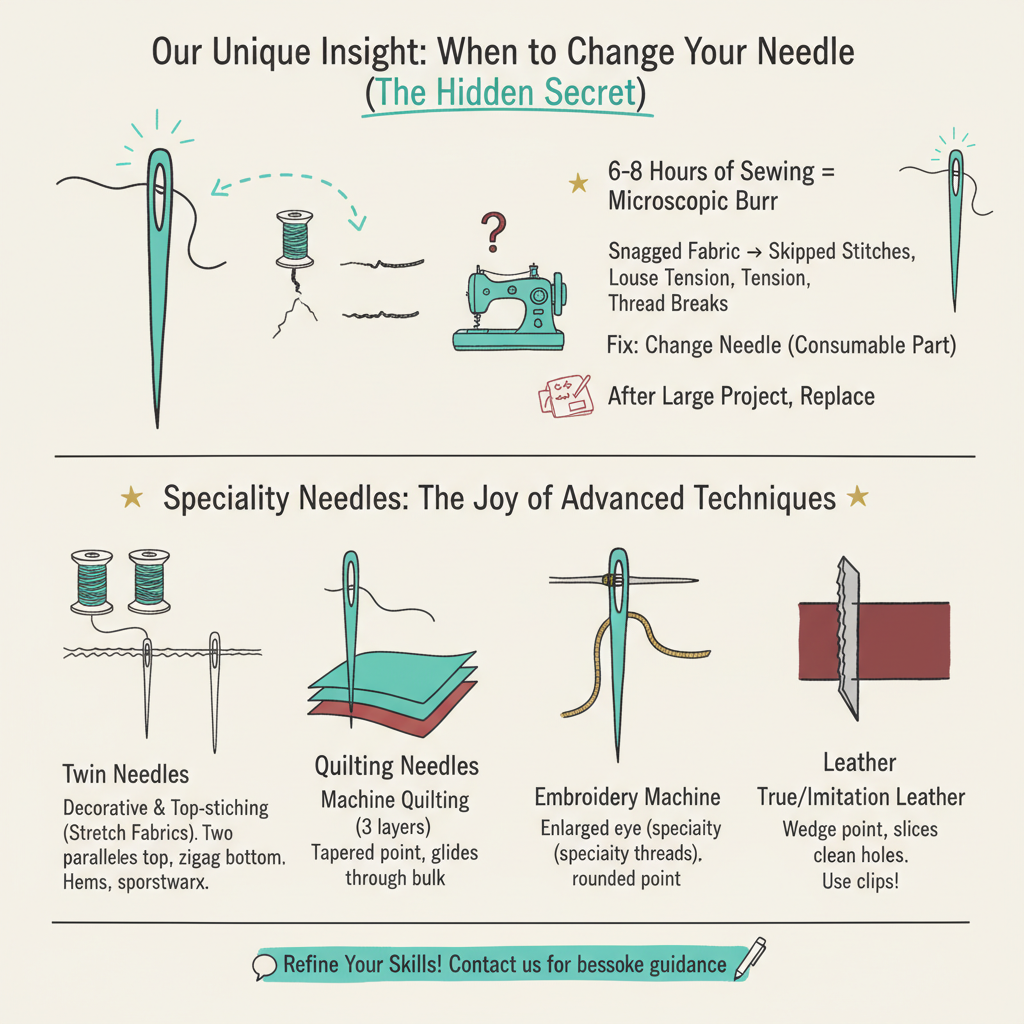
Needle: This is where your upper thread passes through to meet the bobbin thread, forming your stitches. Machine needles need to be changed regularly to prevent snags and skipped stitches.
Backstitch Button/Lever: This function allows your machine to stitch backwards, which is crucial for securing your seams at the beginning and end of a stitching line.
On/Off Button: Simply put, this controls the power to your machine.
Types of Sewing Machines (Briefly)
While the basics are universal, sewing machines come in various types. Most home sewists use mechanical or computerised machines. Mechanical machines are typically simpler, with manual dials, while computerised ones offer more stitch options and sometimes automated features. For finishing raw edges, you might eventually explore an overlocker (also known as a serger), which trims and neatens the fabric edge very professionally.
2. Hand Sewing Supplies
Even with a machine, hand sewing remains an invaluable skill for delicate work, mending, or when you just don’t feel like setting up your machine. Let’s explore the essential tools for how to hand sew.
Needles: Hand sewing needles come in various types and sizes, each suited for different tasks. The size numbers range from 1 (coarsest) to 10 (finest).
Sharps: These are medium-length, slender needles with round eyes, good for general hand sewing. A number seven sharp is a good choice for beginners.
Betweens: Shorter than sharps, these are used for fine handiwork, such as quilting.
Crewel (or Embroidery) Needles: These have larger eyes, making them easier to thread, and are used for darning, embroidering, and regular sewing with thicker threads like embroidery floss.
Darning Needles: Longer than crewel needles with wider eyes, used for mending.
You’ll often find a pack of assorted needles useful. Smaller needles are better for thinner fabrics, while larger ones suit thicker materials.
Threads:
For most projects, especially as a beginner, 100% polyester thread is recommended due to its strength and smoothness. Cheaper polyester threads can be fluffier and break easily, perfect for practice projects that don’t need to last professionally. For items you want to be strong and durable, a good quality 100% polyester thread like Gutermann Sew-All is excellent. This type of thread is also typically very strong and smooth.
Threads come in numerous sizes and colours to match your project. When choosing polyester thread, look for spools with a cream or white top, as other colours indicate different thread types for specific uses.
For hand sewing, all-purpose thread is usually sufficient. The general rule is to match your thread colour as closely as possible to your fabric so it doesn’t show. If an exact match isn’t possible, choose a slightly darker shade. You can also choose a contrasting colour for decorative stitches.
Cotton and silk threads are also available, often chosen to match the fabric type (e.g., cotton fabric with cotton thread, silk with silk thread).
Scissors: Investing in good quality cutting tools is essential for a clean finish and to prevent fabric damage.
Fabric shears (often called dressmaking shears) are long scissors with one small ring for your thumb and a larger handle for other fingers. Always use these exclusively for fabric to keep them sharp.
Pinking shears have triangular teeth that create a zigzag edge, which helps prevent fabric from unravelling.
Smaller embroidery scissors are handy for cutting thread. Keep your scissors clean and sharp, occasionally oiling the blades with a drop of sewing machine oil.
Pins and Pin Cushion: Pins are incredibly helpful for holding fabric layers together, especially for beginners. A pincushion keeps your pins neat and handy, some even designed to be worn on your wrist for convenience.
Dressmaker or silk pins have sharp points and are good for fine fabrics.
For knit fabrics (stretchy materials), use ball-point pins, as their rounded points won’t snag the threads.
When pinning, you can place pins perpendicular or parallel to your seam line. The crucial thing is to remove pins before your needle reaches them to avoid breaking your machine needle or causing it to fly off.
Measuring Tools:
A flexible tape measure (60-inch, fabric or plastic-coated) is vital for taking body measurements and marking fabric.
A small measuring gauge or 6-inch ruler can help with smaller measurements like seam allowances and hems.
Marking Tools: To transfer pattern markings to fabric, you’ll need:
Tailor’s chalk or fabric pens are great for making thin lines that brush off easily.
A tracing wheel is also used with tracing paper to transfer markings, such as for darts and folds, to the wrong side of the fabric.
Seam Ripper: Affectionately known as a ‘stitch un-picker’, this tool is your best friend for correcting mistakes, and believe us, everyone makes them!
Thimble: A small, hard cap, usually metal, wood, or leather, worn on your middle finger to protect it from needle pricks while hand sewing. It helps you push the needle through the fabric more easily.
Beeswax: This may sound unusual, but running your thread over beeswax before hand sewing gives it a coating that helps prevent tangling and makes it stronger.
Emery Bag: Often shaped like a small strawberry, an emery bag is used to sharpen dull hand needles by pushing them back and forth through it.
3. Fabrics and Threads: Making Informed Choices
Choosing the right fabric is like picking the perfect canvas for your masterpiece. It significantly impacts your project’s outcome and ease of sewing.
Beginner-Friendly Fabrics:
For your initial projects, we highly recommend stable woven fabrics. These materials don’t stretch much and are less likely to slip around while you’re sewing, making them much easier to manage. Excellent choices include:
Cotton: Quilting cotton or broadcloth is fantastic for learning due to its stability and ease of handling.
Linen: This natural fibre is very fashionable and, when woven, is quite stable and a great beginner-friendly fabric.
Flannel: Soft and easy to work with, flannel is also a good option.
Denim: While heavier, lightweight denim can also be manageable for beginners, just ensure you have the correct needle size for thicker materials.
It’s also crucial to pre-wash your fabric before you begin sewing. This prevents it from shrinking later and distorting your finished garment. Always check the care label for specific instructions.
Understanding Fabric Grain:
Fabric is made up of threads running in specific directions, and understanding these “grains” is fundamental to cutting and sewing correctly.
Lengthwise Grain (Warp): These threads run the length of the fabric, parallel to the selvage (the self-finished, non-fraying edge along the long side of the fabric). Fabric is typically purchased by “yardage” (or metreage in the UK) measured along this grain. Garments cut on the lengthwise grain tend to hang smoothly with minimal stretch.
Crosswise Grain (Weft): These threads run across the width of the fabric. They have a bit more stretch than the lengthwise grain.
Bias: This is the diagonal line across the fabric, running at a 45-degree angle to the lengthwise and crosswise threads. The bias has the most stretch and drape, making it ideal for creating garments with a beautiful flow, though it can be trickier for beginners to sew.
Raw Edge: This is the cut or torn edge of the fabric, which will typically fray if not finished.
Right Side and Wrong Side of Fabric: The ‘right side’ is the “pretty” side, with the print or more vibrant colour, which you want to face outwards on your finished garment. The ‘wrong side’ is the back, or inside, which is usually less vibrant. When sewing, you’ll often place right sides together so the seam is hidden on the inside.
Thread Selection:
As mentioned, polyester thread is a great all-rounder. The key is to match your thread to your fabric type and colour. When in doubt, a slightly darker thread colour will blend in better than a lighter one.
Now that your tools are ready and your fabric is chosen, let’s dive into the core techniques that will bring your sewing projects to life. We’ll start with preparing your machine, then move on to mastering its basic operations, and finally explore essential hand stitches.
1. Preparing Your Machine: How to Thread a Sewing Machine
Properly threading your machine is crucial for preventing common issues like tangled threads or skipped stitches. While specific diagrams may vary by machine model (always consult your manual!), the general steps are quite similar.
Winding the Bobbin:
The bobbin holds the lower thread, which locks with the upper thread to create a secure stitch. You’ll often need to wind your own bobbins to match your project’s thread colour.
Position the Spool: Place your spool of upper thread onto the spool pin, usually horizontally or vertically. On many machines, the thread should be coming off the bottom of the spool, similar to a toilet paper roll that unwinds from underneath. Use the correct sized spool holder to keep it secure.
Guide the Thread: Follow your machine’s diagram (usually on the top) to guide the thread through a tension disc or gauge. You should feel it snap or click into place, ensuring proper tension for even winding. Without proper tension, your bobbin won’t wind nicely.
Thread the Bobbin: Take an empty bobbin and feed the thread from the inside to the outside through one of its small holes.
Place on Bobbin Winder: Put the bobbin onto the bobbin winder spindle and push it firmly to the right to engage it.
Disengage Needle: Pull the hand wheel out towards you (it might make a popping sound). This disengages the sewing mechanism, allowing the machine to only wind the bobbin without moving the needle.
Start Winding: Hold onto the thread tail coming out of the bobbin tightly. Press your foot down on the pedal to start winding. Wind a few times, then cut off the excess tail close to the bobbin.
Fill the Bobbin: Continue winding until the bobbin is full. Most machines have a sensor or stopper that will automatically stop the winding when the bobbin is completely filled.
Remove Bobbin: Push the bobbin winder back to the left, lift the bobbin off, and trim the thread.
Threading the Upper Thread: Detailed instructions on how to thread a sewing machine
The upper thread is the one that goes through the needle. Again, follow your machine’s numbered guide or arrows, but here’s a general path.
Position Spool: Ensure your thread spool is correctly placed on the spool pin, typically unwinding from underneath for cross-wound threads, or at a right angle for stacked threads, using a horizontal or vertical spool pin as appropriate.
First Guide: Take the thread end and guide it through the first tab or hook, often marked ‘1’, ensuring it clicks in.
Down the First Channel: Guide the thread down the first channel or slit, usually marked ‘2’.
U-Turn at the Bottom: Make a U-turn at the bottom of the channel and bring the thread back up the second channel.
The Take-Up Lever: This is a crucial step! At the top of the second channel (marked ‘3’), your thread must go through the hole in the take-up lever. If the take-up lever isn’t visible, turn the hand wheel towards you to raise it. Ensure the thread clicks into the front of the eye or slit of the lever. If this step is missed, you’ll likely encounter tangles and nests of thread on the back of your fabric.
Down to the Needle: Bring the thread back down the channel towards the needle, through any remaining hooks or guides, often marked ‘4’.
Thread the Needle: Now, thread the needle from front to back, either by eye or using a needle threader if your machine has one (these can be temperamental, ensure the needle is at its highest point first). Pull several inches of thread through the needle.
Position Under Foot: Pass the threaded upper thread neatly under the presser foot and towards the back of the machine.
Bringing Up the Bobbin Thread:
This vital step connects the upper and lower threads so they can form a proper stitch.
Insert the Bobbin: Open your machine’s bobbin case (usually a clear cover at the bottom). For a drop-in bobbin case, hold the bobbin so the thread unwinds counter-clockwise (like a ‘ P′ for perfect), then drop it into its spot. Feed the thread tail through the designated slit or groove until it clicks securely into place.
Connect the Threads: Hold the upper thread tail loosely. Gently turn the hand wheel towards you for one full rotation. Watch as the needle goes down, catches the bobbin thread, and pulls it up through the hole in the throat plate. Continue turning until the take-up lever is in its highest position again.
Pull Out Loop: You should see a loop of the bobbin thread appear. Use a scissor blade or a pointer to pull this loop fully through, bringing the bobbin thread to the top of the machine.
Position Threads: Pull both the upper and bobbin threads together, place them under the presser foot, and guide them towards the back of the machine.
Close Bobbin Case: Close the bobbin case cover, ensuring it clicks firmly into place. Now, your machine is ready to sew!
2. Mastering the Machine: How to Use a Sewing Machine
With your machine threaded and ready, let’s explore the fundamental controls for making your first stitches.
Foot Pedal Control: The foot pedal controls the speed of your machine, much like an accelerator in a car. Practise gently pressing and releasing it to gain control over your speed. It’s perfectly fine to start slowly; control is more important than speed, especially when learning.
Stitch Selection: As a beginner, you’ll primarily use two main stitches:
Straight Stitch: This is the most basic and frequently used stitch, forming a straight line of individual stitches. It’s ideal for joining two pieces of fabric to create a seam.
Zigzag Stitch: This stitch forms a “zig-zag” pattern and is excellent for finishing raw edges to prevent fraying or for sewing stretchy fabrics.
Seam Allowance: This is the distance between your stitching line and the raw edge of your fabric. Sewing patterns will specify the seam allowance (e.g., 5/8′′ or 15mm is common in patterns, while 21′′ is often used in the fashion industry). Your machine’s needle plate often has guidelines to help you maintain a consistent seam allowance by aligning the edge of your fabric with the corresponding mark. Consistency is key for a well-fitting garment.
Backstitching: This technique involves stitching backward a few stitches at the beginning and end of a seam to lock it in place and prevent it from unravelling. It’s a fundamental step for durable sewing.
Pivoting: This technique allows you to stitch around corners neatly. When you reach a corner, stop with your needle down in the fabric. Lift the presser foot, rotate your fabric, lower the presser foot, and continue sewing in the new direction.
Practising Straight Lines and Curves: The best way to get comfortable is to practise! Use scrap fabric to simply stitch straight lines, trying to keep them even. Then try curves, lifting your presser foot and pivoting as needed for smooth turns. This builds muscle memory and confidence.
3. How to Hand Sew
Even with a machine, hand sewing is an essential sewing skill for finishing details, mending, or for times when a machine isn’t practical. Let’s explore the fundamental hand sewing stitches.
Threading a Hand Needle:
Cut the Thread: Take about an arm’s length of all-purpose sewing thread. Cut the end cleanly with sharp scissors to prevent fraying, and if needed, lick or wet the end to make it stiff.
Guide Through Eye: Carefully push the thread through the eye (the hole) of your needle. If you struggle, consider a needle threader or needles with larger eyes.
Single or Double Threaded:
Single Threaded: Pull the thread through until the needle is a few inches from one end. You’ll work with one long strand.
Double Threaded: Pull the thread through until both ends meet, effectively doubling your thread. This creates a stronger seam.
Tie a Knot: At the longer end (or both ends for double threading), tie a secure knot. A simple method is to loop the thread around your finger, slip the loop off, and pull the end through. Double or triple knotting ensures it stays secure.
Basic Hand Sewing Stitches:
These stitches are the building blocks of any hand-stitched project.
Running Stitch: This is the simplest and quickest stitch, creating a dashed-line pattern.
How to: Bring your needle up from the back (wrong side) of the fabric, pull until the knot catches. Go forward about ¼½ inch, push the needle down, then come up from the back the same length forward, and repeat. You can pick up several stitches on the needle before pulling the thread through to speed up the process.
Uses: Ideal for temporary basting (holding fabrics together before machine sewing, easily removed due to longer stitches), gathering fabric, or for seams that won’t experience much wear and tear. It looks similar on both sides of the fabric.
Backstitch: This is a strong and durable stitch that closely resembles machine stitching.
How to: Start like a running stitch, bringing the needle up and making one stitch forward. Then, bring the needle up again one stitch length ahead of your first stitch, and push the needle back into the hole where the previous stitch ended. This creates a continuous, strong line.
Uses: Perfect for securing seams that need to be strong, like clothing construction. It’s often used for embroidering letters.
Whipstitch/Overcast Stitch: This stitch connects two pieces of fabric or finishes raw edges.
How to: Bring your needle up through the top of a folded edge (or through both layers if joining two pieces). Then, at an angle, catch just a tiny bit of the opposing fabric, bringing the needle back up through the fold. It creates a distinct angled look.
Uses: Excellent for hemming (especially on jeans), closing the sides of pillows, cushions, stuffed animals, or as a decorative stitch on blankets and plushies. It helps prevent fraying.
Slip Stitch/Ladder Stitch: This stitch creates an almost invisible seam or hem.
How to: Fold in the raw edges of the fabric. Bring your needle up from inside one fold. Go directly across to the other folded edge, push the needle into that fold, and travel a short distance (about 41 inch) inside the fold before bringing the needle back out. Repeat, going back and forth across the opening, creating tiny, barely visible stitches on the outside.
Uses: Ideal for closing openings in stuffed items (like toys or pillows) after turning them right side out, or for invisible hems on garments.
Catch Stitch: Used to help fabric stretch or for hemming. While the zigzag stitch is its machine equivalent, the catch stitch creates a flexible, invisible-like hand stitch.
How to: Pierce the needle through the wrong side of the fabric at a diagonal, then bring it back up through the first hole to create a point. Repeat this process, moving left to right and creating points by sliding the needle through the previous stitch’s first hole.
Uses: Commonly used for sewing in elastic waistbands or for flexible hems.
Basic Embroidery Stitches:
While our main focus is practical sewing, basic embroidery stitches can add beautiful decorative details. The running stitch and backstitch are fundamental for outlining and simple designs. The satin stitch is used to fill in designs smoothly, with stitches placed close together without overlapping. For long lines, an outline stitch (also called stem stitch) is effective.
Altering Clothes: Practical Skills for Everyday Wear
One of the most empowering aspects of learning to sew is the ability to alter and mend your clothes, ensuring a perfect fit and extending the life of your favourite pieces.
1. How to Hem Pants
Hemming trousers or skirts is a common alteration that can make a huge difference to how a garment looks and fits.
Measuring and Marking: First, try on the trousers (inside out if possible) and mark the desired new length. Add a seam allowance to this mark (usually around 1-2 inches, depending on the desired hem width).
Pressing and Pinning: Fold the raw edge up by about 41 inch and press (this initial fold hides the raw edge and prevents fraying). Then, fold it up a second time to your desired hem width, ensuring all raw edges are hidden within this double fold. Press it flat and secure it with pins. Using an iron at this stage is highly recommended for a crisp finish.
Machine Hemming: You can machine stitch your hem using a straight stitch. Stitch close to the folded edge, maintaining a consistent line. Remember to backstitch at the start and end of your stitching line to secure it. Some machines also offer a blind hem stitch, which creates a nearly invisible machine-stitched hem.
Hand Hemming: For a truly tailored and invisible finish, the slip stitch is perfect. The whipstitch is another option, creating tiny, barely noticeable stitches on the front.
2. How to Sew a Button
Learning how to sew a button is a fundamental sewing skill for mending and garment construction.
Flat Buttons (Two-Hole and Four-Hole Methods):
Mark Position: Mark the precise spot where the button needs to be sewn.
Thread Needle: Use a hand sewing needle and double-threaded all-purpose thread, tying a secure knot at the end.
Start Stitching: Come up from the back (wrong side) of the fabric at the marked spot, pulling the thread until the knot catches. For a two-hole button, stitch back and forth through the holes. For a four-hole button, you can create parallel lines or a cross shape. Make sure you leave a small ‘shank’ by wrapping the thread around the stitches under the button a few times for reinforcement.
Patching Larger Holes (How to Sew on a Patch): For bigger holes, a patch is needed.
Choosing and Preparing the Patch: Select a fabric for your patch that matches or complements the garment. Cut the patch slightly larger than the hole, ensuring it has clean edges, perhaps by folding them under or using a zigzag stitch.
Applying the Patch: Position the patch over the hole on the right side of the fabric. You can then machine or hand-stitch it in place for durability. Stitch around all edges of the patch, reinforcing with backstitching at the start and end.
Decorative Patches: Attaching iron-on or sew-on patches for aesthetic purposes is also popular. While iron-on patches offer a quick fix, sewing them on provides much greater durability. You can use a running stitch or machine stitch around the edge of the patch.
4. How to Sew a Zipper
Learning how to sew a zipper can seem intimidating, but with practise, it becomes a straightforward sewing skill.
Finding Quilt Shops Near Me (Quilt Shops Near Me / Quilting Shops Near Inspiring Beginner Sewing Projects
The best way to solidify your new skills is to apply them to a fun, tangible project. Here are a few ideas that are perfect for beginners.
1. How to Sew a Tote Bag
A tote bag is a classic first project for a reason! It’s forgiving, practical, and teaches several essential sewing skills.
Skills Learned: Straight seams, hemming, creating a casing, and inserting a drawstring or handles.
Project Overview: You’ll typically cut a rectangular piece of heavy fabric (like denim or burlap). You’ll sew the side seams, create a casing at the top for a drawstring or straps, and hem the edges. This project is a great way to practise machine stitching long, straight lines.
2. How to Sew a Pillowcase
This project is not only useful but also a fantastic way to practise precise straight lines and explore seam finishes.
Skills Learned: Straight stitching, hemming, and potentially French seams (a neat, enclosed seam finish).
Project Overview: You’ll typically cut rectangular pieces of fabric, sew them together along straight lines, and hem the opening. It’s an ideal project for getting a feel for your machine’s feed dogs and practicing with different fabric types. It typically involves sewing a tube and twisting it.
Simple Pouch/Cosmetic Bag: This project introduces you to zippers on a smaller, more manageable scale before tackling larger items.
How to Sew Felt: Felt is a non-fraying fabric, making it very forgiving for hand sewing. You can make simple hand-sewn toys or decorations, which are excellent for practising basic stitches like the running stitch or blanket stitch.
How to Quilt for Beginners: An introduction to basic quilting techniques, such as piecing fabric squares together, for small projects like placemats. This focuses on precise straight stitching.
Cloth Napkins: A quick and satisfying project that teaches hemming and pivoting at corners. You can use quilting cotton, which tears easily for straight edges, and then iron the edges before hemming.
Tips for Your First Projects:
Topstitching: A visible line of stitching on the right side of the fabric, used for decorative purposes, to flatten seams, or to add durability.
Start simple: Don’t pick something too complicated that might put you off.
Practice on scrap fabric.
Learn about different types of seam finishes, such as a French seam which encloses the raw edge, providing a very professional and durable finish that prevents fraying, especially useful for knit fabrics. If you don’t have an overlocker, a zigzag stitch can serve a similar purpose.
Edgestitching: Stitching very close to a folded edge or a seam line for decorative or reinforcing purposes.
Understitching: A line of stitching sewn on the facing or lining close to the seam line, which is then pressed towards the facing/lining. This helps the facing or lining stay hidden inside the garment.
Staystitching: A row of simple straight stitches sewn within the seam allowance on curved or bias edges of fabric (like necklines or armholes) to prevent them from stretching and distorting before the seam is sewn. It’s a foundational step for maintaining the shape of your garment.
As you become more comfortable, you’ll want to expand your skills. Here are some techniques and tools that will help you tackle more advanced projects.
Knits and Stretchy Fabrics: These fabrics require specific techniques to prevent them from stretching and getting wavy. Use fine, sharp needles to avoid snagging. Sharp scissors are crucial for clean cuts. Handle these fabrics carefully to prevent distortion. Techniques like using a walking foot or tissue paper underneath can help.
Heavy Fabrics: Materials like heavyweight canvas or upholstery fabrics require a robust approach. Use appropriate needles (larger sizes, e.g., 100/16 or 110/18) designed for heavy materials. Use strong thread suitable for heavy-duty projects. Adjust your machine settings for a longer stitch length if necessary and go slowly to avoid snapping needles.
Using a Rotary Cutter: A rotary cutter is a tool that resembles a pizza cutter, used for cutting fabric quickly and precisely.
Benefits: It’s excellent for cutting straight lines and curves, especially when paired with a self-healing cutting mat and rulers. This speeds up cutting time and provides very accurate pieces.
Safety Precautions: The blades are extremely sharp, so always remember to retract the blade after each use to protect yourself and your work surface.
Sewing Machine Maintenance and Troubleshooting:
How to Change a Needle: You should change your needle regularly, especially after every few projects or if you notice it’s getting dull or snagging the fabric. This is even more important when sewing with a special one or one with lightweight fabric. If your needle snags or puckers the fabric, it might be blunt or the wrong size.
How to change: Unscrew the little black screw that holds the needle in place, being careful to catch the old needle. Insert the new needle with the flat side facing the back of the machine, pushing it all the way up into the shaft. Tighten the screw firmly. Remember to rethread the machine after changing the needle.
General Care: Keep your machine covered when not in use to protect it from dust. Always unplug it when performing maintenance or when you’re finished sewing.
Sewing Machine Troubleshooting: Even with diligent maintenance, you might encounter occasional issues. Don’t panic! Many common problems have simple solutions.
Common Issues and Solutions:
Skipped Stitches: Often caused by a dull or incorrect needle (especially with knits), or improper threading (particularly the take-up lever). Try changing the needle, rethreading the entire machine, or checking the tension.
Tangled Threads: A ‘birds nest’ of thread on the back of your fabric is almost always due to improper threading. Rethread the entire machine, ensuring the presser foot is up when you do this. Also, ensure the bobbin is inserted correctly.
Broken Needles: This can happen if you pull on the fabric while sewing, if your needle is the wrong size for the fabric, or if you hit a pin. Always remove pins before you sew over them.
When to Seek Professional Help: If you’ve tried troubleshooting common issues and your machine still isn’t performing correctly, or if you suspect a deeper mechanical problem, it’s best to seek assistance from a qualified sewing machine technician. They can diagnose and repair issues safely.
Non-Sewing Related Keywords
We understand that you might search for a wide range of topics related to your home and environment. However, some search terms, such as “How to Get Rid of Sewer Gnats” or “How to Get Rid of Sewer Flies,” relate to household pests and plumbing issues, which are entirely unrelated to the craft of sewing. For these queries, we recommend consulting resources specifically dedicated to home maintenance or pest control, as they fall outside the scope of sewing techniques and fabric arts.
Conclusion: Your Journey into Sewing
Congratulations on embarking on or continuing your sewing journey! We hope this comprehensive guide has provided you with fundamental knowledge and practical sewing skills to empower you to create and alter clothes with confidence. From understanding the essential tools and mastering basic machine and hand sewing stitches, to tackling practical alterations and exciting beginner sewing projects, you now have a solid foundation. Learning to sew offers so much more than just functional skills. It’s a wonderful creative outlet that allows for self-expression, a way to mend and extend the life of your garments, and a deeply satisfying pursuit. The joy of wearing something you’ve made yourself, or the satisfaction of expertly repairing a beloved item, is truly unparalleled. As Shaelynn Haning, a professional tailor, wisely advises, committing to doing each step right leads to better sewing outcomes.
Remember, sewing is a continuous learning process. Mistakes will happen, even to experienced sewists, but each one is an opportunity to learn and improve. Don’t be afraid to unpick a seam and try again; it’s all part of the journey. We encourage you to continue exploring more advanced sewing techniques, experiment with different fabrics, and challenge yourself with new patterns. Join online sewing communities, or even consider taking local classes – a fantastic way to connect with fellow sewists, share knowledge, and further develop your skills.
The world of sewing is vast and wonderful, and your creative potential is limitless! We look forward to seeing the amazing things you’ll create. Happy stitching.
About the Author: Grace, Founder of London Sewing Courses
Grace is the heart and hands behind London Sewing Courses. A passionate and experienced sewing instructor, she founded the studio with a unique mission: to create a calm, friendly space for adults to learn and connect, while using the profits to fund free sewing classes for local children in need. Her personal expertise and commitment to community building are at the core of every class and every stitch.
Have you ever looked at a beautifully tailored dress and wondered about the magic behind its creation? Dress design is a fascinating blend of artistic vision and technical precision, a craft that turns a flat piece of fabric into a three-dimensional work of wearable art. The world of fashion is more accessible than ever, and with a growing interest in creative expression and customisation, more people are looking for a formal pathway to develop their skills. For those in the UK with a passion for fashion, the good news is that there are numerous brilliant options for a range of dress design classes available to help you on your journey.
This comprehensive guide is designed to help you navigate the rich landscape of fashion education. We’ll explore what dress design classes encompass, why they are so important for aspiring designers, and we’ll highlight five key types of courses that can help you cultivate your creativity and master the skills needed to bring your sartorial dreams to life.
Overview of Dress Design Classes
Before we dive into our top five, let’s define what dress design education entails and why it’s such a valuable pursuit.
Defining Dress Design Education
Dress design classes are far more than just basic sewing instruction. They are structured programmes that guide you through the entire creative process, from initial concept to the finished garment. This includes:
Concept and Sketching: Learning to translate your ideas from your mind to paper through fashion sketching and illustration.
Pattern Making: The technical process of creating a pattern, which is the blueprint for your garment.
Fabric Selection: Understanding textiles, their properties, and which ones are suitable for a particular design.
Garment Construction: The hands-on process of cutting and sewing the garment together with professional finishes.
This blend of artistic vision and practical skill acquisition is what distinguishes a dedicated dress design programme from a general sewing class.
Importance of Dress Design Education
Enrolling in dress design classes offers a number of key benefits for any aspiring designer:
Building a Portfolio: Coursework provides the perfect opportunity to build a strong professional portfolio, which is essential for showcasing your skills to potential employers or clients.
Cultivating Creativity: A structured course provides a framework for exploring and developing your creative ideas. Tutors guide you through brainstorming, mood boarding, and thematic development, fostering innovative thinking.
Mastering Technical Skills: A well-structured course is essential for learning precise pattern cutting, accurate garment construction, and beautiful finishing techniques. These are the skills that make the difference between a handmade garment and a professional-looking one.
Understanding Materials: You’ll learn about the properties of different fabrics, their drape, their weight, and their suitability for various designs. This is crucial for making informed choices that will make your designs successful.
Industry Knowledge: Many courses provide insights into fashion history, current trends, and the business of fashion, giving you a broader context for your work.
The world of fashion education is vast, with courses catering to all levels and interests. You can find everything from a beginner’s workshop to a full university degree.
Categorisation by Level and Format
Specialised Training: Niche areas like bridalwear or costume design classes offer targeted training for specific career paths.
Beginner Courses: These are the perfect starting point. A good beginner class will focus on foundational sewing classes for beginners, basic garment construction, and simple pattern interpretation.
Intermediate Courses: These courses build on the basics, moving on to more complex patterns, advanced construction techniques, and an introduction to fitting and alterations.
Advanced/Professional Courses: For those serious about a career in fashion, these courses offer deep dives into couture techniques, advanced pattern drafting, tailoring, and conceptual design.
Short Courses and Workshops: Fashion design workshops are a brilliant way to learn a specific skill, such as corset making or advanced draping, without committing to a long-term programme.
Diplomas and Degree Programmes: For a comprehensive, career-focused education, look for accredited diplomas (like those offered by City & Guilds) or degree programmes at universities.
Top 5 Dress Design Classes (Illustrative Examples and Their UK Equivalents)
To give you a better sense of what’s available, let’s explore five types of popular dress design classes.
1. Dress Design Classes in Montana (Illustrative Focus on Specialisation)
While a physical location like Montana may seem far away, it helps us illustrate a point about the specialisation of some design programmes. Programmes in such regions might focus on niche aesthetics, such as sustainable design, ethical production, or crafts-based design, often drawing from the local landscape and culture.
Curriculum Characteristics: Such courses typically cover core design principles, sustainable material sourcing, and a strong emphasis on hands-on making.
UK Equivalents and Focus: The UK fashion scene is a global leader in sustainable design and textile innovation. Many UK art and design universities and independent schools offer modules or entire programmes dedicated to sustainable fashion practices, blending technical skills with conceptual development and ethical sourcing. A search for a dress design class in the UK will reveal many options that have a strong focus on these modern values.
2. Dress Designing Classes in Pune (Illustrative Focus on Cultural/Commercial Design)
Similarly, programmes in a city like Pune might focus on traditional textiles, elaborate embellishment techniques, or fast-paced commercial fashion for a large market.
UK Equivalents and Focus: UK fashion programmes, particularly those in London, offer a brilliant balance of commercial and creative education. Modules in global fashion contexts, textile innovation, and a strong emphasis on industry relevance, provide a well-rounded and versatile education. A search for a dress designing class will show a variety of options that are both creative and business-minded.
This is a fantastic specialisation for those with a love of theatre, film, or history. Costume design classes are distinct from general dress design.
Comparison with Dress Design: While both require sewing skills, costume design is about conveying character and narrative, whereas dress design is focused on creating a beautiful, wearable item.
Specific Skills Taught: A costume design course will teach you:
Historical Accuracy: The crucial role of historical research and period-specific construction.
Character Development: How costumes are designed to convey a character’s personality, status, and emotional journey.
Wearability for Performance: Considerations for movement, durability, and quick changes.
UK Institutions: The UK has numerous world-class universities and drama schools that offer excellent costume design programmes, making it a brilliant place to pursue this specialisation.
Designing for bridalwear is a beautiful and highly specialised niche. A class focused on this area will teach you the specific skills required to create a perfect wedding dress.
Techniques and Styles: You’ll learn to work with delicate fabrics like silks, satins, and intricate laces. Embellishment is key, so you’ll master hand embroidery, beading, and appliqué techniques.
Structure and Support: You’ll also learn how to create internal structures using boning, corsetry, and linings to give a dress its shape and drape.
High-Class Wedding Dress Designers: The work of high class wedding dress designers is characterised by meticulous attention to detail, luxurious materials, and a focus on perfect fit. A wedding dress design class will give you the foundational skills to aspire to this level of craftsmanship.
UK Offerings: Many UK independent schools and advanced fashion courses include modules on bridalwear or offer dedicated workshops.
For any aspiring designer, fashion illustration is a foundational skill. These classes are an essential part of a comprehensive fashion education.
UK Institutions: These classes are widely available as standalone courses or integrated into broader fashion design programmes at UK art schools and colleges.
Visual Communication: Illustration is how you translate your design ideas from concept to paper. It’s the first step in the design process.
Figure Drawing and Garment Representation: You’ll learn to draw the human form accurately and to depict fabric drape, texture, and silhouette effectively.
Integration with Dress Design: Fashion illustration classes are a critical tool throughout the design process, from initial sketches to professional presentation boards.
(Quilt Shops Near Me / Quilting Shops Near Me / Course Content and Structure (Comprehensive Curriculum)
A strong curriculum is a key indicator of a valuable course. Here is an overview of what you should expect from a good dress design class.
Foundational Skills
Sewing Machine Proficiency: Beyond basic sewing, you should learn advanced techniques, including how to use industrial machines and specialised attachments.
Hand Sewing and Finishing: Meticulous hand stitches are a hallmark of haute couture and are essential for a professional finish.
Draping on the Stand: This is a crucial skill for understanding form and flow, where you create patterns directly on a dress form.
Pattern Making and Drafting
Flat Pattern Drafting: You’ll learn to create patterns from measurements or basic blocks, understanding dart manipulation and pattern adjustments.
Digital Pattern Making: Many modern courses introduce you to CAD software for pattern creation and grading.
Pattern Grading: This is the process of adapting a pattern for different sizes.
Garment Construction Courses
Advanced Seam Finishes: Learn how to create professional seam finishes like French seams, bound seams, and Hong Kong finishes.
Lining and Interfacing: You’ll learn the techniques for using linings and interfacing to give your garments structure.
Specific Garment Components: You’ll learn how to construct collars, cuffs, pockets, plackets, and complex closures.
Textile and Material Studies
Fabric Manipulation Workshops: These are fun and creative workshops where you explore techniques like pleating, smocking, and ruffles.
Fabric Properties: An in-depth analysis of different fabric types and their appropriate uses.
Fibre Science: Understanding the origins and properties of natural and synthetic fibres.
With so many options available, how do you choose the right one for you?
Factors to Consider: Making an Informed Decision
Your Learning Objectives: Are you seeking a hobby, vocational training, or a full degree? This will determine the type of course you choose.
Accreditation and Reputation: For professional pathways, look for recognised qualifications (e.g., City & Guilds) or degrees from reputable institutions.
Instructor Experience: Assess the faculty’s expertise and professional networks. Are they well-respected in the industry?
Course Curriculum Depth: Does the course cover all the areas you wish to learn comprehensively?
Facilities and Equipment: Check if you’ll have access to industrial machines, specialised studios, and other resources.
Cost and Funding: Consider tuition fees, material costs, and potential for scholarships or grants.
Location: If you’re looking for in-person learning, a key consideration will be finding “dress designing classes near me.” Major cities like London are hubs for fashion education.
Conclusion
Additional Resources: Expanding Your Learning Horizons
The journey of a designer is one of continuous learning. Even after a formal course, there are many resources to help you continue to grow.
Online Platforms for Learning: Websites like Coursera and The University of Fashion offer structured courses that you can take from home. These are brilliant for their flexibility and global access to instructors. A search for online seamstress courses or virtual sewing classes will provide many options.
Local Institutions Offering Classes: In the UK, art colleges and adult education centres offer a range of courses. A search for “dress design classes near me” will reveal many options in your area, from local community centres to independent sewing schools.
Industry Organisations: UK-based fashion organisations or guilds can also offer educational resources and networking opportunities.
Final Thoughts on Pursuing Dress Design
Learning dress design is a rewarding journey that blends artistry with technical skill. It is a brilliant way to express your creativity, learn a valuable skill, and create a wardrobe that is truly and uniquely yours. The UK offers a diverse and vibrant landscape of learning opportunities, catering to various aspirations and skill levels. With the right course, you can unlock a world of creative possibilities and take your first steps towards becoming a skilled designer. Happy designing!
About the Author: Grace, Founder of London Sewing Courses
Grace is the heart and hands behind London Sewing Courses. A passionate and experienced sewing instructor, she founded the studio with a unique mission: to create a calm, friendly space for adults to learn and connect, while using the profits to fund free sewing classes for local children in need. Her personal expertise and commitment to community building are at the core of every class and every stitch.
ntroduction: Beginning Your Sewing Journey with the Right Machine
The decision to learn to sew is an exciting one. It opens up a world of creativity, from mending your own clothes to crafting unique garments and home décor. But before you can take your first stitch, there’s a crucial first step: choosing the right machine. For a beginner, this can feel overwhelming. The sheer number of models, brands, and features can be a lot to navigate. That’s why choosing the right novice sewing machine or beginner sewing machine is so important. A well-chosen machine will make your learning process smooth, enjoyable, and free from unnecessary frustration.
Many people think a “simple” machine means a less capable one. This is a myth. The perfect novice sewing machine isn’t about having a thousand decorative stitches; it’s about having the right features that empower you to learn and grow. In this guide, we’ll debunk the common misconceptions and outline the seven key features you should look for to find the best novice sewing machine for you. By the end, you’ll feel confident and ready to take your first step into the wonderful world of sewing.
Understanding Novice Sewing Machines
Before we get into the features, let’s clarify what a novice sewing machine actually is and what makes it ideal for a new sewer.
What Defines a Beginner Sewing Machine?
A beginner sewing machine isn’t necessarily the cheapest model on the shelf. Instead, it’s defined by its user-friendliness. The ideal machine for a sewing machine for novices focuses on core functionality and reliability. It has a straightforward design, clear instructions, and is built to withstand the bumps and learning curves of a new sewer. An overly complicated machine with dozens of buttons and dials can be overwhelming, causing you to lose confidence before you’ve even sewn your first seam. A novice sewing machine should feel like a patient tutor, not a confusing puzzle.
Importance of User-Friendly Design (Easy-to-Use Sewing Machines)
Simplicity is the most important feature of an easy-to-use sewing machine.
Manual vs. Computerised: For many beginners, a mechanical (manual) machine is a great choice because of its robust simplicity and ease of troubleshooting. However, some basic computerised models offer wonderful features like automatic needle threading and a start/stop button that can significantly reduce frustration.
Simplicity in Operation: Look for a machine with fewer dials and buttons. Clear, well-labelled controls are a huge plus.
Intuitive Threading: An easy-to-follow thread path is essential. Many good beginner machines have numbered diagrams printed directly on the body, guiding you step-by-step.
Clear Bobbin Access: Top drop-in bobbins are generally considered easier for beginners to use than front-loading ones. They allow you to see exactly how much thread you have left and are less prone to jamming if installed incorrectly.
7 Essential Features for Novice Sewing Machines (Sewing Machine Features for Beginners)
When you’re shopping for your first machine, these are the seven non-negotiable features that will make your sewing journey easier and more enjoyable.
1. Straightforward Stitch Selection
The most important stitches you’ll ever use are the straight stitch and the zigzag stitch.
Basic Stitches: A good novice sewing machine should have a reliable, consistent straight stitch for piecing seams and a zigzag stitch for finishing raw edges to prevent fraying.
Limited but Useful Options: Don’t be swayed by a machine that boasts hundreds of decorative stitches. For a beginner, these are largely unnecessary and often add to the cost. A few basic utility stitches are all you need to get started.
Clear Stitch Dial/Buttons: The stitch selection mechanism should be simple to use, with a clear dial or easily identifiable buttons.
2. Adjustable Stitch Length and Width
Even as a beginner, you’ll need to adjust your stitch length and width.
Why these adjustments are crucial: A longer stitch is great for gathering fabric, while a shorter stitch is ideal for reinforcing seams at the beginning and end. You’ll need to adjust the zigzag width for different seam finishes.
How to adjust: Look for clear dials or buttons that allow you to easily change these settings.
3. Easy Threading System
Threading your machine can be one of the most frustrating parts of learning to sew. The right features can make a huge difference.
Clearly Marked Thread Path: As mentioned before, a numbered diagram on the machine is a fantastic feature.
Top-Loading Bobbin System: This system is not only easy to access but also makes it simple to see if your bobbin is running low.
Automatic Needle Threader: This feature is a game-changer for beginners and can save you from a lot of eye strain and frustration. While not on every budget model, it’s a definite plus to look for.
While often a feature on more expensive models, it’s worth noting. The presser foot holds the fabric down while you sew.
Why this is important: This feature allows you to adjust the pressure for different fabric thicknesses. Lower pressure is great for delicate fabrics, while higher pressure is needed for thicker materials like denim. If a machine has it, it’s a sign of a high-quality beginner sewing machine.
5. Free Arm Capability
This is an essential feature for a versatile machine.
Essential for a variety of projects: A free arm is a narrow extension of the sewing bed. You access it by removing the accessory tray. It’s crucial for sewing small, tubular items like trouser hems, cuffs, and children’s clothing.
6. LED Lighting
Good lighting is more important than you might think.
Visibility is key: Good illumination of the needle area helps with visibility, especially when you’re working on detailed seams or with darker fabrics. Many modern machines come with bright LED lights, which are a vast improvement over older, dimmer bulbs.
7. Reverse Lever/Button
This is a fundamental feature for securing your stitches.
Crucial for durability: A reverse lever or button allows you to sew backwards a few stitches at the beginning and end of each seam. This locks the stitches in place and prevents your work from unravelling.
Bonus Feature: Speed Control Slider (Sewing Machine Tips for Beginners)
This is a brilliant feature for building confidence.
Start/Stop Button: On some computerised models, a start/stop button is also available, which can be very helpful for beginners who aren’t yet comfortable with a foot pedal.
Allows for control: A speed control slider allows you to set a maximum speed for your machine, regardless of how hard you press the foot pedal. This enables you to sew at a slower, more controlled pace, reducing mistakes and helping you master a consistent seam.
Budget-Friendly Sewing Machines for Beginners (Budget Sewing Machines for Beginners)
You don’t need to spend a fortune to get a great first machine. There are many reliable, affordable sewing machine options on the market.
Finding Value in a Novice Machine
Reasonable price ranges: For a solid beginner sewing machine, a price range of £150-£300 is a good starting point. This range often includes machines with a metal internal frame and the key features we’ve outlined.
Affordable doesn’t mean low quality: An affordable sewing machine can still be a reliable one if you focus on build quality and essential features.
Best Budget Sewing Machines for Beginners
When it comes to finding a novice sewing machine, there are a few brands and models that consistently get good feedback in the UK market.
General Recommendations: Look at trusted brands like Brother, Singer, and Janome. Hobbycraft’s own brand also offers popular entry-level models.
Where to Buy: You can find these machines at specialist sewing machine shops like The Sewing Studio and Direct Sewing Machines, as well as department stores like John Lewis and Argos. Online retailers like Amazon UK and Singer Outlet also have a huge selection.
Value for Money Recommendations
Look for a Good Warranty: Check for a good warranty and see if spare parts and servicing are readily available in the UK. This is crucial for maintaining your novice sewing machine over time.
Prioritise Durability: A machine with a strong metal frame is a better long-term investment than an all-plastic one. It will be a more durable sewing machine in the long run.
User Reviews and Feedback (Sewing Machine Reviews for Beginners)
Before you make your final decision, take some time to read sewing machine reviews for beginners from other users. Their real-world experience can be invaluable.
The Importance of Real-World Experience
What to look for: Look for comments on the machine’s ease of threading, stitch quality, noise level, and customer support. You’ll find honest insights that a product description might not provide.
Community insights: Forums like Reddit can be a great place to ask “what is the best sewing machine for a novice?”. You’ll often find a community of experienced sewers who are happy to share their recommendations.
What Users Say About Their Novice Machines
Addressing frustrations: Common frustrations, such as thread jamming or tension issues, can often be solved with the right machine features or simple sewing machine tips for beginners. For example, a top-loading bobbin system can help prevent a lot of common bobbin-related frustrations.
Common positive feedback: Beginners often praise machines that are “easy to learn,” “great for simple repairs,” and “reliable for my first few projects.”
Setup and Initial Use Tips (Sewing Machine Tips for Beginners)
Once you’ve chosen your novice sewing machine, it’s time to get it set up.
Unboxing and First Steps
Read the manual: Don’t skip this step! The manual is your best friend. It will show you exactly how to thread your specific machine and what each dial does.
Practice, practice, practice: Start by practising on scrap fabric. Sew straight lines, turn corners, and get a feel for the foot pedal and speed.
Basic Maintenance for Longevity
Simple cleaning: Regularly remove lint and thread build-up from the bobbin area and under the needle plate.
Needle changes: Change your needle regularly, especially after a big project. A fresh, sharp needle makes a huge difference to your stitch quality.
Proper storage: Keep your beginner sewing machine covered when not in use to protect it from dust.
Final Thoughts on Choosing the Best Novice Sewing Machine
Your first sewing machine is the foundation of your creative journey. Choosing the right one can make all the difference in whether sewing becomes a lifelong passion or a short-lived frustration.
Summary of Key Features
Remember to prioritise ease of use, essential stitches, a clear threading system, and a robust build. The best novice sewing machine for you will be the one that feels intuitive and encourages you to keep stitching.
Empowerment for New Sewers
Don’t be afraid to take your time and do your research. The right beginner sewing machine will make the learning process enjoyable and rewarding, giving you the confidence to tackle more and more ambitious projects. This foundational choice paves the way for a rich and creative sewing hobby. Happy sewing!
About the Author: Grace, Founder of London Sewing Courses
Grace is the heart and hands behind London Sewing Courses. A passionate and experienced sewing instructor, she founded the studio with a unique mission: to create a calm, friendly space for adults to learn and connect, while using the profits to fund free sewing classes for local children in need. Her personal expertise and commitment to community building are at the core of every class and every stitch.
Welcome, budding creators and curious crafters! Have you ever dreamt of mending your own clothes, crafting unique gifts, or even designing your very own garments? Perhaps you’ve acquired a sewing machine, still gleaming in its box, or dusted off a beloved hand-me-down, and found yourself asking, “how do I learn to use a sewing machine?” You’re not alone! Many aspiring sewists look at their machine and feel a mix of excitement and apprehension, thinking, “is learning to use a sewing machine hard?”. Let us reassure you right from the start: learning to use a sewing machine is a wonderfully rewarding and entirely achievable journey, especially with the right guidance.
Introduction to Sewing for Beginners
The enduring appeal and practical benefits of learning to sew. Sewing for beginners opens up a world of possibilities, transforming simple fabric into something truly personal and practical. It’s a skill that lasts a lifetime, allowing you to create beautiful items for your home, craft unique garments, or simply mend and alter existing pieces, giving them a new lease of life. Imagine the satisfaction of seeing your creative visions come to life, stitch by stitch! Beyond the joy of creation, sewing is incredibly practical, helping you save money on alterations and repairs, and even contributing to a more sustainable lifestyle by extending the life of your textiles.
Why a sewing machine is a fundamental tool for various crafting and repair tasks. While hand sewing has its place for delicate finishes or quick mends, the sewing machine is truly the workhorse of the modern sewist. It allows you to produce strong, consistent stitches at a much faster pace, making larger projects manageable and professional-looking. Whether you’re crafting a sturdy tote bag, assembling a flowing dress, or adding decorative flair to a cushion, your machine will be your most valuable companion. Its efficiency and versatility make it an indispensable tool for almost any fabric-based project you can imagine.
Reassure prospective learners that mastering a sewing machine is a straightforward process with the right guidance. It’s completely normal to feel a little daunted by the array of dials, levers, and mechanisms on a sewing machine. Many people ask, “is it easy to learn to use a sewing machine?” and the answer is a resounding yes! While there’s a learning curve, much like learning to drive a car, it quickly becomes intuitive with practice. You don’t need to read every single page of the manual before you start; many prefer to jump in and learn as they go, referring to the manual for specific instructions. Think of this guide as your patient, skilled tutor, here to walk you through each step of your creative journey, demystifying the process and building your confidence.
Overview of what this comprehensive guide will cover to help readers effectively learn to use a sewing machine. This comprehensive guide is designed to help you confidently learn to use a sewing machine, from the very first plug-in to completing your first project. We’ll delve into the sewing machine basics, including its essential parts and how they work together to create magic with thread. We’ll then provide precise, step-by-step instructions on how to operate a sewing machine, covering everything from winding a bobbin to mastering different stitch types. You’ll also discover fundamental sewing techniques for beginners, helpful troubleshooting tips for common issues you might encounter, and inspiring beginner sewing patterns to get you started. Finally, we’ll guide you on where to learn to use a sewing machine further, from online resources to local sewing workshops near me. So, take a deep breath, embrace your curiosity, and let’s unlock the wonderful world of sewing together!
Before you begin stitching, it’s incredibly helpful to familiarise yourself with the different parts of your sewing machine and understand their purpose. Think of it as getting to know your new creative companion!
Understanding Your Machine’s Anatomy
Every sewing machine, whether a classic mechanical model or a modern computerised one, shares core components that work in harmony to create stitches.
Main Components: Detailed explanation of the handwheel, bobbin winder, spool pin, thread guides, tension dial, stitch length/width selectors, pattern selector, reverse lever, presser foot lifter, needle clamp, presser foot, needle plate, feed dogs, and foot pedal.
Power Switch and Cord: This is your machine’s lifeline. It’s normally found on the right side or back of the machine. Some models power on immediately when plugged in, while others have a dedicated switch.
Spool Pin: Located on the top of your machine, this small pin holds your spool of top thread. It might be horizontal or vertical, depending on your machine’s design. Some machines also come with caps or holders to secure the spool.
Bobbin Winder: Typically to the right of the spool pin, this is where you load an empty bobbin to fill it with thread from your main spool. There’s often a stopper or lever that disengages the needle when winding the bobbin.
Thread Guides: These are a series of hooks, grooves, and channels that guide the top thread from the spool pin all the way down to the needle. Following the numbered path on your machine is crucial for correct threading.
Tension Dial: A small numbered wheel, usually near the thread take-up lever. This controls the amount of pressure applied to the top thread as it feeds through, ensuring balanced stitches. Incorrect tension can lead to looping or puckering stitches. We’ll discuss this in more detail later.
Stitch Adjustment Buttons/Dials: These controls allow you to select your desired stitch type (such as a straight stitch or zigzag), adjust the stitch length (how far apart each stitch is), and the stitch width (for zigzag or decorative stitches). Computerised machines often have screens, while mechanical ones use dials.
Pattern Selector: This allows you to choose from the various stitch patterns your machine offers, from basic straight stitches to more elaborate decorative ones.
Reverse Lever/Button: An essential feature that allows you to stitch backwards, typically used at the beginning and end of a seam to secure your stitches and prevent them from unravelling. You might need to hold it down or press it once to engage.
Handwheel: Located on the side of the machine, this large wheel allows you to manually raise and lower the needle. Always turn it towards you (counter-clockwise) to avoid tangles or timing issues.
Presser Foot Lifter/Lever: Usually a lever located behind or to the right of the needle assembly. It raises and lowers the presser foot, which holds your fabric in place while sewing. You must lower it before you start stitching.
Needle Clamp Screw: This metal screw securely holds the sewing machine needle in place. You’ll loosen it with a screwdriver or your fingers to change needles.
Presser Foot: This metal attachment sits just below the needle and looks somewhat like a small ski. It applies pressure to the fabric, keeping it flat against the needle plate and allowing the feed dogs to move it smoothly. Different feet are available for various tasks, like zippers or buttonholes.
Needle Plate (or Throat Plate): The flat metal plate directly beneath the needle. It often features measurement markings or guidelines to help you maintain a consistent seam allowance.
Feed Dogs: These are small, serrated metal “teeth” that emerge from slots in the needle plate, just under the presser foot. Their primary job is to grip the fabric and move it forward at a steady pace as you stitch.
Foot Pedal: This pedal sits on the floor and connects to your machine by a cord. It controls the speed of your stitching; pressing harder makes the needle move faster. It’s widely recommended to use the foot pedal for better control.
Bobbin Cover: A movable cover, usually near the needle plate, that provides access to the bobbin compartment.
Safety Features: Emphasise proper plugging/unplugging, keeping fingers clear of the needle. Safety is paramount when learning to use a sewing machine. Always ensure your machine is unplugged before you begin any setup, threading, or needle-changing tasks. This prevents accidental power-ons and potential injury from a sharp, moving needle. Keep your fingers well clear of the needle area while sewing. Your hands are for guiding the fabric, not pushing or pulling it directly under the needle. Develop the habit of keeping your foot off the pedal when your hands are near the needle area.
Types of Sewing Machines for the New Seamster
When embarking on your sewing journey, you’ll encounter various types of machines, each with its own advantages. Understanding these can help you decide which is the best sewing machine for me.
Mechanical Machines: Simple, durable, and often recommended for sewing for beginners due to their straightforward operation. Mechanical machines are often the traditional choice for sewing for beginners. They typically feature manual dials and levers for stitch selection, length, and width. Their simpler mechanics make them durable and often easier to troubleshoot basic issues. If you’re looking for a workhorse machine that focuses on fundamental stitches without too many bells and whistles, a mechanical model can be an excellent starting point. They are robust and reliable, often lasting for decades with proper sewing machine maintenance.
Computerised Machines: Offer more features, stitches, and often automated functions; discuss their benefits and potential for growth. Computerised machines, as the name suggests, incorporate electronic components and often have a digital display. These machines tend to offer a wider variety of stitches, including decorative and stretch options, and may have automated features like needle threaders or stitch memory. While they might seem more complex initially, their user-friendly interfaces and automated functions can greatly enhance your sewing experience and offer more room for growth as your skills develop. Many even feature speed control sliders to help you ease into stitching.
Overlockers (Sergers): Briefly mention their purpose (finishing seams) as a potential future upgrade. While primarily focusing on standard sewing machine basics for beginners, it’s worth noting that an overlocker (often called a serger in other regions) is a different type of machine entirely. Overlockers use multiple threads (typically 3-5) and a cutting blade to simultaneously sew, trim, and finish fabric edges, creating very neat and professional-looking seams, especially on knit fabrics. They are fantastic tools for garment sewing but are generally not recommended for true beginners as a first machine due to their complexity. Consider an overlocker as a future upgrade once you’ve mastered your basic sewing machine skills.
Considerations for Choosing Your First Machine (Best Sewing Machines for Beginners) Choosing your first sewing machine is an exciting step! The best sewing machine for beginners isn’t necessarily the most expensive or feature-rich one, but rather one that aligns with your initial goals and comfort level.
Prioritise Basic Stitches: For starters, you primarily need a machine that can perform a straight stitch and a zigzag stitch. A buttonhole feature is also highly beneficial. These foundational stitches will enable you to tackle a vast array of projects. Don’t be swayed by machines offering hundreds of decorative stitches if you’re just beginning; you’ll likely use only a handful.
Ease of Threading: A machine that is intuitive to thread, often with clear numbered guides or even an automatic needle threader, will save you a lot of frustration. This is a common pain point for new sewists, so a user-friendly threading system is a big plus.
Robust Build: While cheaper machines might be tempting, investing in a quality machine, perhaps one with more metal parts, can lead to a much more satisfying experience in the long run. Durable machines are less prone to issues like poor stitch tension or thread breakage, which can quickly discourage a beginner. Look for models known for their reliability rather than just a multitude of functions.
Suitable Price Points: Entry-level machines are perfectly adequate for learning to use a sewing machine. You don’t need to spend a fortune to get started. However, be wary of extremely cheap machines that might offer a frustrating experience. If possible, try out a machine before buying it.
Common Beginner-Friendly Brands: Brands like Brother and Singer often offer excellent beginner models. Many users recommend these for their reliability and ease of use. Researching reviews and asking other sewists in online forums or local fabric shops for recommendations can be very helpful.
Portability: Consider where you’ll be sewing. If space is limited or you plan to attend sewing classes for adults, a lighter, more portable machine might be a good choice.
Machine Manual: Ensure the machine comes with a clear, comprehensive manual, or that one is readily available online. This will be your primary guide as you learn how to use a sewing machine.
Remember, the goal is to find a machine you’re comfortable and happy with, one that encourages you to keep coming back to your creative projects. If you find yourself eager to sew, you’ve made a great choice!
Now that you’re familiar with your machine’s anatomy, it’s time to delve into the practical steps of how to operate a sewing machine. This is where the real fun begins, and we’ll break it down into manageable steps to ensure a smooth and enjoyable learning to use a sewing machine experience.
Setting Up Your Workstation
A well-organised and comfortable workspace is key to enjoyable and efficient sewing.
Placement and Lighting: Ensure a stable surface and adequate light. Place your sewing machine on a sturdy table or desk that can handle the machine’s vibrations. A dining room table can work, but ensure the machine is near a leg for extra stability. The surface should also be non-slippery to prevent your machine from “travelling” as you sew. Sit in a chair that allows you to be comfortable, with your arms and shoulders relaxed, and your machine at a height similar to a computer keyboard. Good lighting is crucial for precise stitching and reducing eye strain. Most machines come with a built-in sewing light, which is a good start. However, consider supplementing this with a gooseneck lamp directed at the presser foot area, positioned so it illuminates your work without shining directly into your eyes. A well-lit room overall will also help reduce harsh contrasts.
Power Connection: Safe plugging in of the machine and foot pedal. Before connecting any power, ensure the machine’s power switch is off. If your machine has a detachable power cord and foot pedal cord, locate their respective ports on the side or back of the machine. Plug them in securely. Position the foot pedal comfortably on the floor where you can easily control it with your dominant foot. Only once everything is connected and your workstation is ready should you turn on the power switch or plug the machine into the mains.
Threading the Machine: Step-by-Step Mastery
Threading your sewing machine might seem complex at first glance, but it’s a foundational skill for learning to use a sewing machine. All machines have a top thread (from the spool) and a bottom thread (from the bobbin), both essential for forming a stitch.
Winding the Bobbin: Detailed instructions on how to wind a bobbin evenly and correctly, ensuring proper tension. This is the first crucial step in getting your machine ready.
Place the Spool: Position your main spool of thread onto the spool pin. Pay attention to how the thread comes off the spool – for cross-wound threads (most common, zigzagging pattern), it should come off the end. For stacked threads (older method, smooth windings), it should unwind from the side, often requiring a vertical spool pin. Some machines have an accompanying cap to hold the spool in place.
Guide the Thread: Follow your machine’s specific diagram or arrows (often numbered) for bobbin winding. This typically involves guiding the thread around a small tension disc or guide near the spool pin, ensuring it’s pulled tightly between any discs to ensure proper tension when winding. If you don’t hear a “clicking” noise when pulling the thread through the tension gauge, your bobbin might not wind with good tension.
Prepare the Bobbin: Take an empty bobbin (ensure it’s compatible with your machine). Feed the thread through one of the small holes in the bobbin, from the inside out, leaving a few inches of tail.
Place on Winder: Put the bobbin onto the bobbin winder pin.
Engage Winder: Slide the bobbin winder to the right (or engage a lever/pull out the handwheel). This action typically disengages the sewing needle, preventing it from stitching while the bobbin winds.
Wind: While holding the thread tail initially for a few rotations, gently press the foot pedal. The bobbin will begin to fill. Most machines automatically stop when the bobbin is full.
Finish: Once wound, slide the bobbin winder back to its original position. Snip the thread connecting the bobbin to the spool.
Inserting the Bobbin: Guidance for both top-loading (drop-in) and front-loading bobbin systems. How you insert the bobbin depends on your machine’s system. Always refer to your manual for precise instructions.
Top-Loading (Drop-in) Bobbins: These are often found under a clear cover on the needle plate, allowing you to see when you’re running low on thread. You typically drop the bobbin in so the thread unwinds in a specific direction (usually counter-clockwise). Then, you pull the thread through a designated notch or guide, often hearing a click as it secures. Leave a few inches of thread hanging out.
Front-Loading Bobbins: These are inserted into a bobbin case, which then slots into the machine behind a small door, usually at the front. The bobbin thread needs to be seated correctly in the bobbin case for proper tension. After inserting the bobbin, close its cover.
Threading the Upper Thread (How to Thread a Sewing Machine / How to Put Thread into Sewing Machine): A precise, step-by-step walkthrough, highlighting the importance of following the machine’s numbered path and lifting the presser foot to engage tension discs. Mention specific threading techniques for popular UK brands if widely relevant (e.g., “how to thread a Singer sewing machine” or “how to thread a Brother sewing machine” as general examples of machine-specific instructions). This is arguably the most critical step for smooth stitching. Incorrect upper threading is a common cause of stitch problems.
Needle Up: Ensure your needle is in its highest position. This aligns the take-up lever correctly for threading. You can achieve this by turning the handwheel towards you or pressing a needle-up button if your machine has one.
Spool Pin: Place your main spool of thread on the spool pin, ensuring the thread comes off correctly.
Follow the Path: Most machines have numbered guides and arrows printed on their body. You’ll typically guide the thread:
Through the first thread guide at the top.
Down the main channel (often numbered “2” or “3”).
Around the bottom of this channel, making a U-turn.
Back up the second channel to the take-up lever.
Engage Take-Up Lever: This is a crucial step. The thread must go through the eye or hook of the take-up lever, often from right to left. If the lever isn’t visible, turn the handwheel towards you until it comes up.
Down to the Needle: Guide the thread back down the machine, through any remaining hooks or guides just above the needle.
Thread the Needle: The final step is to pass the thread through the eye of the needle. Most machines thread from front to back, but check your manual. If you have an automatic needle threader, follow its specific instructions; these are wonderful time-savers. If threading by hand, a clean, moist end of the thread can make it easier. Pull several inches of thread through to the back. For common machines, such as when you learn how to thread a Singer sewing machine or how to thread a Brother sewing machine, the general path is often similar to the one described, but always defer to your specific model’s manual for accuracy.
Bringing Up the Bobbin Thread: The final crucial step before you begin stitching. Now that both your top thread and bobbin are in place, you need to bring the bobbin thread up to meet the top thread.
Hold Top Thread: Hold the tail of your top thread (the one coming from the needle) with your left hand, gently pulling it away from the machine.
Turn Handwheel: With your right hand, slowly turn the handwheel towards you (counter-clockwise). The needle will go down into the needle plate, catch the bobbin thread, and then come back up.
Pull Up Loop: As the needle rises, you should see a loop of the bobbin thread appear through the needle plate. Tug gently on the top thread you’re holding, and the bobbin thread loop will emerge.
Free the Thread: You can then use scissors or a pointed tool to pull the bobbin thread fully free.
Position Threads: Pull both the top and bobbin threads to the back of the machine, under the presser foot, leaving about 4-6 inches of excess. This prevents them from being pulled back into the machine when you start sewing. You are now ready for your first stitch!
Controlling the Stitch: Your First Seams
With your machine threaded, it’s time to start sewing! This section focuses on the practical application of how to operate a sewing machine to create your first seams.
Lowering the Presser Foot: Why this is essential before you begin to sew. Before you even touch the foot pedal, always lower your presser foot onto the fabric. The presser foot applies the necessary pressure to the fabric, allowing the feed dogs to grip and move it evenly. If the presser foot is up, your fabric won’t feed properly, and you’ll end up with a tangled mess or stitches that don’t form correctly. It’s a habit you’ll quickly develop.
Foot Pedal Control: Learning to start slowly and gradually increase speed; practising consistent speed. The foot pedal is your accelerator. The more pressure you apply, the faster your machine will stitch. As a beginner, it’s paramount to start slowly and gently. Just a little pressure is enough to get the needle moving at a controlled speed. Practise maintaining a consistent speed throughout your stitch. This creates even, beautiful stitches. It’s perfectly fine to stop and start again as you get a feel for the pedal. Many machines also offer a speed control slider, allowing you to limit the maximum speed, which can be incredibly helpful when you’re learning how to use a sewing machine. Don’t “floor it” until you feel completely comfortable.
Guiding Fabric: How to guide fabric without pushing or pulling, letting the feed dogs do the work. This is one of the most important aspects of mastering your sewing machine. Your hands are there to guide the fabric, not to push or pull it through the machine. The feed dogs beneath the presser foot are designed to move the fabric along at the correct speed. Pushing or pulling can distort your fabric, break the needle, or cause stitches to jam. Position your hands lightly on the fabric, one to the left and one in front of the presser foot, keeping them well clear of the needle. Your fingertips should slide easily over the fabric as the machine feeds it through. If the fabric isn’t moving fast enough, increase your foot pedal pressure, rather than forcing the fabric. This takes practice, but once mastered, it will make your sewing much smoother and more enjoyable.
Backstitching: Explaining its purpose for securing seams at the beginning and end, and demonstrating the technique. Backstitching is a fundamental technique for securing your stitches. Without it, your seams could easily unravel, especially at the start and end of a stitching line.
Start of Seam: Begin by sewing a few stitches (typically 2-5) forward.
Reverse: Then, hold down your reverse lever or button and sew backwards over those same few stitches.
Continue Forward: Release the reverse control and continue sewing forward along your seam. This creates overlapping stitches that lock the thread in place.
End of Seam: When you reach the end of your seam, stop a few stitches from the edge. Engage the reverse control again and sew backwards for 2-5 stitches. Then, release and sew forward again until you reach the fabric edge or beyond.
The only time you might not backstitch is for temporary stitches, like basting, which are designed to be removed later. Getting into the habit of backstitching will ensure durable, professional-looking projects.
Pivoting: How to turn corners neatly by stopping with the needle down. When sewing square or rectangular shapes, you’ll often need to turn a corner. Pivoting allows you to do this neatly without breaking your stitching line.
Sew to Corner: Sew along your seam line until you reach the point where you want to turn the corner.
Needle Down: Stop with the needle down in the fabric. If your needle isn’t down, turn the handwheel towards you until it is.
Lift Presser Foot: Raise the presser foot using its lever. Keeping the needle down acts as an anchor, holding your fabric in place.
Rotate Fabric: With the needle still in the fabric, gently pivot or turn your fabric to align with the new stitching direction.
Lower Presser Foot: Lower the presser foot back down onto the fabric.
Continue Sewing: Resume sewing in the new direction.
This technique ensures sharp, crisp corners, greatly enhancing the finish of your projects. For tight curves, you can use a “stop-and-go” method, taking a few stitches, lifting the presser foot, turning slightly, lowering, and repeating.
Adjusting Stitch Settings
Beyond the basic operation, learning to use a sewing machine also involves understanding how to adjust your stitch settings to suit different fabrics and purposes.
Stitch Length: Understanding how to adjust it for different fabrics and purposes (e.g., longer for basting, shorter for stronger seams). Stitch length refers to how long each individual stitch is. On your machine, this is typically controlled by a dial or buttons.
Standard Length: For most general sewing on woven fabrics, a standard stitch length of 2.5 to 3.5 millimetres (mm) is common. This provides a strong, neat seam.
Shorter Stitches: You’ll want a shorter stitch length (e.g., 1.5-2mm) for very thin, lightweight fabrics, loosely woven materials, or when working with stretchy fabrics. Shorter stitches create a denser, stronger seam. They are also used for securing high-stress areas like corners.
Longer Stitches: A longer stitch length (e.g., 4-5mm) is used for thicker fabrics, sewing through multiple layers, or when you need a basting stitch. Basting stitches are temporary and easily removed, as their longer length makes them less secure. Longer stitches are also suitable for materials like leather or vinyl, where needle marks can easily damage the fabric.
Always adjust your stitch length with the needle up and out of the fabric, as it can sometimes cause the needle to move.
Stitch Width: Primarily for zigzag stitches, explaining how to adjust it for finishing raw edges or decorative work. Stitch width primarily applies to zigzag and other decorative stitches. It controls how far the needle moves from side to side. For straight stitches, the width setting often controls the needle position (left, centre, or right), rather than actual width.
Zigzag Stitch: The zigzag stitch is incredibly versatile. A narrow zigzag stitch can act as a makeshift stretch stitch for knit fabrics if your machine doesn’t have a dedicated one. A wider zigzag stitch is excellent for finishing raw edges of fabric to prevent fraying. It’s also used for decorative purposes or appliqué.
Adjusting Width: On computerised machines, you’ll typically use buttons to increase or decrease the width. On mechanical machines, a dial controls it. Experiment on scrap fabric to see how different widths look.
Tension: A comprehensive explanation of thread tension, how to test for balanced stitches, and basic adjustments to resolve common issues like looping thread. Thread tension is crucial for strong, balanced stitches. It controls how much thread passes through the machine for each stitch. Both the top thread and the bobbin thread have tension settings, though the bobbin tension is usually preset and rarely needs adjustment.
Troubleshooting Tip: If you’re having persistent issues with thread tension, such as the thread not laying close to the fabric or knotting up, check the “Thread Bunching Solution Guide” (if you have one) or consult your machine’s manual. Often, the problem lies not in the tension dial itself but in incorrect threading of the upper thread or bobbin.
Balanced Stitch: The ideal stitch looks the same on both the top and bottom of your fabric, with the threads locking neatly in the middle of the fabric layers. You should see one thread on each side.
Too Loose (Top Tension): If the top tension is too loose, the top thread will appear wavy or loose on the top of the fabric, and the bobbin thread will lie flat on the bottom, often looking messy or like loops. This is commonly referred to as a “bird’s nest” on the underside of your fabric. To fix this, you need to increase the top tension using the tension dial.
Too Tight (Top Tension): If the top tension is too tight, the top thread will appear very straight, almost like one line, pulling the bobbin thread up to the top side of the fabric. The bottom side of the fabric might show gaps or pulls. To correct this, you need to decrease the top tension.
Default Setting: Many machines recommend a default tension setting, often around 4 or 4.5. This is a good starting point for most fabrics.
Testing Tension: The best way to learn how to use a sewing machine for tension is to test it. Always sew a few test stitches on a scrap piece of the actual fabric you’ll be using, folded in half to mimic two layers. This allows you to fine-tune the tension before you begin your project.
Once you’re comfortable with the basics of operating your machine, it’s time to explore fundamental sewing techniques for beginners that will form the backbone of your sewing skills.
Foundational Stitches and Seams
Straight Stitch: The most common stitch; importance of consistent seam allowance. The straight stitch is your go-to stitch for most construction seams. It creates a sturdy, straight line of stitching, perfect for joining two pieces of fabric together. For most projects, you’ll be using this stitch almost exclusively. A key concept when working with the straight stitch is seam allowance. This is the distance from the raw edge of your fabric to your line of stitching. Sewing patterns will specify a seam allowance (e.g., 1.5 cm or 5/8 inch), and it’s vital to maintain this consistently. Your machine’s needle plate often has guidelines marked in centimetres or inches to help you align your fabric and maintain an even seam allowance. Practising sewing straight lines, focusing on keeping your fabric edge aligned with these guides, is excellent practice for consistency.
Zigzag Stitch: For preventing fabric fraying and sewing stretch fabrics. The zigzag stitch is incredibly versatile and a must-know for any beginner.
Finishing Raw Edges: Its primary use for beginners is to prevent raw fabric edges from fraying. Instead of leaving a raw edge that can unravel, you can sew a zigzag stitch along the edge, effectively encasing the threads and creating a neat finish. Many inexpensive machines even offer an overlock stitch setting, which is a variation of the zigzag stitch for edge finishing.
Sewing Stretchy Fabrics: Crucially, the zigzag stitch is also used when sewing stretchy fabrics like jersey knit. Unlike a straight stitch, which can cause seams to pop when stretched, the zigzag stitch has inherent give, allowing the seam to stretch with the fabric. For a more subtle look, a narrow zigzag stitch or a dedicated stretch stitch (which is a very narrow zigzag) can mimic a straight line while retaining stretch.
Decorative Use: Of course, the zigzag stitch can also be used for decorative purposes or appliqué.
When using a zigzag stitch on stretchy fabrics, ensure you’re also using the correct needle, such as a ballpoint or jersey knit needle, which has a rounded tip to prevent tearing the fabric’s elasticity.
Pressing Techniques: Emphasise the importance of pressing seams as you go for a professional finish. Often overlooked by beginners, pressing is as important as stitching for a professional finish. It’s not just about removing wrinkles; it’s about shaping your fabric and creating crisp, flat seams.
Seam Direction: Seam allowances are typically pressed open (flat on both sides of the seam) for garment sewing, or pressed to one side (usually towards the darker fabric or as per pattern instructions).
Pressing as You Go: Get into the habit of pressing your seams after each significant step of sewing, rather than waiting until the end. This is sometimes referred to as “ironing every seam”.
How to Press: Use an iron and ironing board or mat. Press by lifting and replacing the iron onto the fabric, rather than sliding it, to avoid distorting the fabric.
Congratulations, you’ve embarked on a fantastic journey of creativity and skill! We’ve walked through the sewing machine basics, demystified how to operate a sewing machine, explored essential sewing techniques for beginners, and discovered inspiring beginner sewing patterns to get you started. From understanding the handwheel to mastering the perfect zigzag stitch, every step you’ve taken brings you closer to unlocking your full potential.
Remember, the true mastery of learning to use a sewing machine comes with consistent practice. Each stitch, whether perfect or slightly wobbly, is a valuable learning experience.
Embrace the process, be patient with yourself, and celebrate every small victory. The possibilities are truly endless once you can confidently learn to use a sewing machine. You can mend, create, and customise to your heart’s content.
We hope this guide has inspired you to explore more sewing crafts for beginners and confidently tackle your next project. Keep on stitching, keep on learning, and most importantly, keep enjoying the wonderful world of sewing!
About the Author: Grace, Founder of London Sewing Courses
Grace is the heart and hands behind London Sewing Courses. A passionate and experienced sewing instructor, she founded the studio with a unique mission: to create a calm, friendly space for adults to learn and connect, while using the profits to fund free sewing classes for local children in need. Her personal expertise and commitment to community building are at the core of every class and every stitch.
Have you ever walked into a shop and felt a sense of creative dissatisfaction? You love the silhouette, but the colour is all wrong. The fabric is beautiful, but the fit is just a little off. The high street, despite its vast offerings, often falls short of fulfilling our truly unique style needs. In an era of mass-produced fast fashion, a growing number of people are asking the question: “how can i make clothes?”.
Learning to sew your own garments is an incredibly empowering journey. It’s a creative skill that gives you complete control over your wardrobe, ensuring every piece fits your body and reflects your personal aesthetic. Beyond the joy of creation, it is also a fantastic way to engage with sustainable fashion practices by making durable, long-lasting garments. The idea of sewing a complete outfit might seem intimidating at first, but with the right guidance, it is entirely achievable. This comprehensive guide is designed to answer the common question, “how can i make my own clothes?” by walking you through every step, from initial inspiration to your first finished garment. Get ready to transform your relationship with fashion and create a wardrobe that is uniquely and beautifully yours.
Understanding Your Fashion Aesthetic
Before you even touch a needle and thread, the journey of making clothes begins with a bit of self-reflection and imagination. The most successful projects are those that you are truly passionate about.
1. Discovering Your Personal Style: Beyond Trends
Self-Reflection and Inspiration: Start by looking at your current wardrobe. What are the items you reach for most often? What colours, fabrics, and silhouettes do you love? Pinpointing what you already adore in your wardrobe is the first, most important step to developing a cohesive, handmade collection. Similarly, take note of what you dislike. This can be as insightful as identifying your favourites.
Mood Boards and Vision Books: A mood board is a powerful tool for visualising your style. Use platforms like Pinterest, or get hands-on by cutting out images from magazines and creating a physical scrapbook. Collect pictures of desired styles, colours, silhouettes, textures, and even atmospheres that resonate with you. This visual collection will serve as your guiding light throughout the sewing process, ensuring your projects feel connected and intentional.
Understanding Body Shape: It’s helpful to have a basic understanding of your body shape. This isn’t about fitting into a prescriptive mould; rather, it’s about helping you choose garment styles that you feel comfortable and confident wearing. A well-fitting garment is the most flattering one, and a key advantage of sewing is that you can make clothes that fit you perfectly.
2. Researching Fashion Trends and Ideas
DIY Fashion Tips and Online Communities: There are countless blogs, vlogs, and Instagram accounts dedicated to DIY fashion tips and inspiration. You can learn a lot from these communities. A search for “handmade clothing ideas” will also open up a treasure trove of creative inspiration and tutorials from other makers in the UK and beyond.
Observing the High Street vs. Personal Interpretation: It’s smart to draw inspiration from current trends, but the beauty of making your own clothes is that you’re not a slave to them. Use them as a starting point and adapt them to your personal taste and lifestyle. This approach leads to a unique and timeless wardrobe.
Exploring Different Eras and Cultures: Broaden your horizons by exploring vintage fashion or traditional garments from different cultures. This can spark unique ideas and lead to truly one-of-a-kind handmade clothing ideas.
Having the right tools and materials is essential for a smooth and enjoyable sewing experience. Don’t be overwhelmed; you can start with a very basic setup and build your collection over time.
1. Essential Supplies for Beginners (Sewing Basics for Beginners)
Before you invest in a machine, you’ll need a basic hand sewing kit. This is a great starting point for anyone looking for sewing basics for beginners.
Basic Hand Sewing Kit: Your kit should include: hand sewing needles in a variety of sizes; a selection of thread colours; sharp fabric scissors (the most important rule: never use them on paper!); a seam ripper for unpicking mistakes; a thimble to protect your finger; a good set of pins or clips to hold fabric together; a flexible measuring tape; and some tailor’s chalk or a fabric marker for making temporary marks.
Iron and Ironing Board: This is non-negotiable. Pressing your seams as you go is a key step to creating a professional-looking garment. Skipping this step is the easiest way to make a handmade garment look homemade.
Cutting Mat and Rotary Cutter: While not strictly essential for your very first project, a cutting mat and rotary cutter are brilliant for beginners. They make cutting fabric incredibly precise and efficient, which is crucial for achieving a good fit.
2. Choosing the Right Fabric: The Foundation of Your Garment
The fabric you choose is the foundation of your garment. It affects everything from how it drapes and feels to how easy it is to sew.
Fabric Types for Beginners: For your first few projects, stick to stable woven fabrics. Cotton is an excellent choice, especially quilting cotton, broadcloth, or a simple canvas. Linen and stable denims are also great options. These fabrics are forgiving, easy to handle, and don’t slip and slide under the machine needle. Avoid slippery silks, delicate chiffons, and very stretchy knits until you’ve built up your confidence.
Understanding Fabric Properties: It’s helpful to understand a few key terms. The ‘grainline’ of a fabric is a key concept; it’s the direction of the yarns and is crucial for ensuring a garment hangs correctly. ‘Drape’ refers to how the fabric hangs, and ‘weight’ determines how thick or thin it is.
Where to Buy Fabric in the UK: You’ll find a wealth of local fabric stores and reputable online stores across the UK. Local shops are great for feeling the fabric in person, while online stores often have a huge selection. For great variety and quality, a search for fabric stores in the UK will provide a good starting point.
Pre-Washing Fabric: Always wash and dry your fabric before you cut into it. This step is critical as it pre-shrinks the fabric and removes any residual dyes, preventing your finished garment from changing size or colour after its first wash.
3. Investing in a Sewing Machine for Beginners (Sewing Machine for Beginners)
While you can sew by hand, a machine will significantly speed up the process and open up a world of possibilities. A good sewing machine for beginners doesn’t need to be expensive or complicated.
Care and Maintenance: Your machine is an investment. Keep it clean and oiled (following the manufacturer’s instructions) to ensure it runs smoothly and lasts for years to come. This simple maintenance will prevent many of the common issues that can frustrate new sewists.
What to Look For: Look for a mechanical or computerised machine with the basic stitches you need: a straight stitch and a zigzag stitch. A one-step buttonhole function is also a very useful feature. Make sure the machine is easy to thread and has a ‘free arm’—a detachable section of the machine bed that allows you to sew in the round, for example, on sleeves or trouser hems.
Recommended Beginner Models: Brands like Brother, Janome, and Singer all have excellent, reliable models that are perfect for beginners. Don’t be tempted by machines with hundreds of stitches; the basics are all you need to start.
This is where your creativity truly comes to life. Don’t feel you have to reinvent the wheel; even small modifications can create a unique, personal garment.
1. How to Design Clothes That Fit Your Vision (How to Design Clothes)
Sketching Your Ideas: You don’t have to be a professional artist to sketch your ideas. Simple stick figures or basic shapes are enough to get your vision down on paper. Focus on the silhouette and key details. This is an important and fun step in learning how to design clothes. These rough sketches can be a brilliant reference when you choose a pattern.
Adapting Existing Patterns: For beginners, commercial patterns are your best friend. They come with detailed instructions and a pre-made shape. You can easily modify them for a unique look, such as changing a sleeve length, adding a pocket, or creating a different neckline.
Understanding Pattern Terminology: Patterns have their own language. Learning what symbols and instructions mean will make your life much easier. Many online resources and books can help you with this.
The Importance of a Toile/Muslin: A toile (or muslin in the US) is a test garment made from cheap fabric. It allows you to check the fit of the pattern and make any necessary adjustments before you cut into your beautiful main fabric. It’s an extra step that saves a lot of heartache in the long run.
2. Making Custom Patterns: A Beginner’s Guide (Making Custom Patterns / Sewing Pattern Drafting)
Draping vs. Flat Pattern Drafting: There are two main ways to draft patterns. Draping involves pinning and shaping fabric directly onto a mannequin. Flat pattern drafting is done on paper with a ruler and specific measurements.
Using Basic Blocks: Many people start with a pre-made “block” – a basic, fitted pattern for a bodice, skirt, or trousers – and adapt it to create new designs. This is a great intermediate step to move on to after you’ve mastered using commercial patterns.
When to Venture into Custom Patterns: It’s best to start with commercial patterns and gain confidence in sewing before you dive into making custom patterns. This is a skill that develops over time, and there’s no rush to get there.
3. Acknowledging Aspirations: From Maker to Brand
A common goal for many sewists is to transition from making clothes for themselves to running a business. We often get asked questions like, “how can i make a clothing brand?” or “how can i make my own clothing line?”
Pathways: The best way to start is to master making garments for yourself. You can then move on to bespoke commissions for friends and family, and perhaps sell a few items at local craft markets. This is a brilliant way to build your skills and test the waters before ever considering a full-blown brand. This section is concise, recognising that it’s a separate and complex journey that goes far beyond a single blog post.
Briefly Address Aspiration: Acknowledging this is a common goal. This guide, however, is focused on answering “how can i make clothes” for personal use. Creating a brand requires advanced skills in design, pattern making, and garment construction, as well as business acumen in marketing, finance, and production.
Reality Check for Beginners: For a beginner, the learning curve is steep. It’s a huge leap from making a simple dress for yourself to producing a full-scale clothing line.
With your supplies and a pattern ready, it’s time to bring your designs to life. Patience and practice are your best friends here.
1. Basic Sewing Techniques and Tips (Sewing Basics for Beginners)
Accurate Cutting: Precision in cutting your fabric is key. Use your sharp scissors and make sure you follow the pattern lines exactly. Any small inaccuracies at this stage can throw off the fit of the entire garment.
Pinning and Clipping: Pinning your fabric securely will prevent it from shifting while you sew. Learning when to use pins and when to use clips is a skill in itself.
Stitching a Straight Seam: Practice makes perfect. Start with a few lines on a scrap of fabric to get a feel for your machine’s speed and how to guide the fabric evenly. A consistent seam allowance is a sign of a skilled sewist.
Finishing Seams: To prevent your seams from fraying and give your garment a professional finish, you can use a zigzag stitch on your machine or a pair of pinking shears.
Pressing as You Go: This is so important, it bears repeating! Pressing your seams flat will give your garment a professional, finished look. The iron is just as important as the sewing machine.
Troubleshooting Common Issues: Don’t panic if you get a tangled bobbin or a skipped stitch. These are normal issues, and with a bit of practice, you’ll be able to fix them quickly. Online communities and YouTube tutorials are brilliant resources for troubleshooting.
2. Tailoring Clothes at Home: Alterations 101 (Tailoring Clothes at Home / Clothing Alterations Techniques)
Learning to sew also means you can fix and alter the clothes you already own. This is a brilliant skill that makes your wardrobe more versatile.
Benefits of DIY Alterations: Learning tailoring clothes at home can save you money and is a great way to extend the life of your existing wardrobe. This is a brilliant way to answer the question, “how can i make my clothes last longer?”
Basic Alterations for a Better Fit: With a few simple skills, you can hem trousers, take in a side seam, or adjust a waistband. This is an incredibly useful skill that will make your ready-to-wear wardrobe fit you perfectly.
Simple Repairs: You’ll never need to throw away a garment because of a lost button, a small tear, or a broken zip again!
Building a Sustainable Wardrobe: Sewing with Purpose
Making your own clothes is a fantastic way to embrace a more thoughtful and sustainable lifestyle.
1. Creating a Capsule Wardrobe (Creating a Capsule Wardrobe)
Definition: A capsule wardrobe is a small collection of versatile, interchangeable clothing items that you love to wear. The concept promotes mindful consumption and makes getting dressed easier every day.
Benefits: It reduces decision fatigue, promotes conscious consumption, saves money, and encourages creativity.
Role of Home Sewing: Making your own clothes allows you to create perfectly fitting, high-quality, and durable pieces that will form the cornerstone of your capsule wardrobe. You can make classic items that will last a lifetime, rather than buying into fleeting trends.
2. Upcycling Old Clothing for New Looks (Upcycling Old Clothing / DIY Fashion Tips)
Transformative Potential: With some creativity, you can turn old, unwanted garments into new, stylish items. This is a brilliant and fun form of sustainable fashion practices.
Simple Upcycling Projects: Ideas for upcycling old clothing include turning old jeans into a new pair of shorts or a skirt, or taking a dress and making it into a top and skirt set.
Adding Embellishments: You can also refresh garments with embellishments like embroidery, patches, or by using fabric dyeing methods to give them a completely new look. This is a fantastic way to create unique handmade clothing ideas without having to start from scratch.
Conclusion
Final Thoughts on Starting Your Sewing Journey: Embrace the Process
The journey of learning “how can i make clothes” is a rewarding and empowering one. It’s a skill that develops over time, and every project, no matter how small, is an opportunity to learn and grow. Don’t be afraid to make mistakes; they are an essential part of the learning process. The pride and satisfaction that come from wearing something you’ve made yourself are truly unmatched.
Encouragement to Get Started
Take that first step today. Whether it’s buying a sewing machine for beginners, taking a local class, or simply buying a simple pattern and some fabric, you’re on your way. You’re about to unlock a world of creativity and self-sufficiency that will change the way you see your wardrobe forever. You’ll be able to create a wardrobe that is perfectly tailored to you, both in style and in fit. The time and care you put into each handmade garment will make it an item you cherish, a true antidote to the disposability of fast fashion. Happy sewing!
About the Author: Grace, Founder of London Sewing Courses
Grace is the heart and hands behind London Sewing Courses. A passionate and experienced sewing instructor, she founded the studio with a unique mission: to create a calm, friendly space for adults to learn and connect, while using the profits to fund free sewing classes for local children in need. Her personal expertise and commitment to community building are at the core of every class and every stitch.
London is a global hub for fashion, design, and creativity, so it’s no surprise that its sewing scene is a thriving ecosystem of a diverse and wonderful shops. From historic haberdasheries that have served generations of makers to modern fabric boutiques and bustling markets, the city offers a treasure trove for anyone with a needle and thread. Finding the perfect sewing shop London can feel like a quest, whether you’re a seasoned professional in search of a specific silk or a complete beginner looking for your first set of tools.
This comprehensive guide is your personal tour of London’s finest sewing establishments. We’ll explore the best places to buy fabric, discover essential haberdashery, find a top-tier sewing machine, and even where to turn for expert tailoring. Our goal is to help you navigate this vibrant landscape and find your perfect creative haven, ensuring your next project is as enjoyable as it is successful.
Overview of the Best Sewing Shops in London
Before we dive into our top picks, let’s establish what makes a sewing shop London truly exceptional. The best shops aren’t just about selling goods; they’re about providing an experience, offering expertise, and fostering a sense of community.
Criteria for Selection: What Makes a Top-Tier Sewing Destination?
Quality and Variety of Stock: A great shop should have a diverse range of high-quality products. This includes an excellent selection of fabrics for different projects (dressmaking, quilting, upholstery), a comprehensive haberdashery London section with all the necessary notions, and a well-curated collection of patterns and books.
Expertise and Customer Service: The staff should be knowledgeable and passionate about sewing. Whether you need advice on which fabric to choose for a specific garment or help troubleshooting a machine issue, their expertise is invaluable.
Atmosphere and Shopping Experience: A welcoming, inspiring, and well-organised space makes all the difference. The best shops make you want to stay and explore, to touch and feel the fabrics, and to get lost in the creative possibilities.
Location and Accessibility: We’ve focused on shops that are reasonably accessible, whether they’re in central London, a key shopping district, or a neighbourhood with good transport links.
Additional Services: Many top-tier shops offer more than just products. Look out for those that also host sewing classes London, offer machine servicing, or provide a space for the local community to connect.
Reputation and Reviews: We’ve taken into account the feedback from the sewing community, including online reviews and recommendations, to ensure our guide reflects the city’s most beloved spots.
Types of Sewing Shops: Understanding the Landscape
As you explore London, you’ll encounter different types of sewing destinations:
Online and Physical Presence: The modern sewing shop London often has a strong online presence alongside a physical store. This offers the best of both worlds: the joy of in-person shopping and the convenience of Browse from home.
Specialist Fabric Stores: These shops, like Dalston Mill or Cloth House, are primarily focused on a vast selection of fabrics. They are perfect for when you have a specific fabric in mind or want to feel and drape materials before you buy.
Comprehensive Haberdasheries: Stores like MacCulloch & Wallis are an Aladdin’s cave of threads, buttons, zips, and every sewing notion imaginable.
Sewing Machine Retailers: These shops, such as the dedicated sewing machine shop London retailers, specialise in the sale, service, and repair of sewing machines, from beginner models to professional industrial machines.
Craft and Yarn Shops with Sewing Sections: While broader in scope, many craft stores have a decent section dedicated to sewing needs, especially for smaller projects or notions.
Bespoke Tailoring Suppliers: London is world-famous for its tailoring. Some shops, particularly in the city’s tailoring districts, cater specifically to professional tailors, offering high-end woollens and suitings.
Online and Physical Presence: The modern sewing shop London often has a strong online presence alongside a physical store. This offers the best of both worlds: the joy of in-person shopping and the convenience of Browse from home.
London is a fabric store London paradise, with options to suit every budget and style. Here’s a look at some of the city’s most celebrated destinations.
MacCulloch & Wallis, located on Poland Street, has been a cornerstone of London’s creative community since 1902. This is a truly historic and elegant sewing shop London.
Specialities: They offer a broad and high-quality range of dressmaking fabrics, a fantastic selection of theatrical supplies, and an incredible array of trims and braids.
Unique Selling Points: The haberdashery London here is legendary. They have one of the most extensive button collections in the city, from basic to vintage and highly decorative. It’s a shop where you can find everything from high-quality wool for a coat to the perfect decorative trim for a costume.
Dalston Mill Fabrics in East London has a vibrant, bustling warehouse atmosphere that is a favourite among students, designers, and home sewists alike.
Location and Vibe: This is a true fabric warehouse London experience. The shop is often packed with bolts of fabric stacked high, with a constant buzz of creative energy.
Strengths: Dalston Mill is known for its affordable prices and a wide selection of basic and fashion fabrics. It’s an ideal spot for finding bargains, buying in bulk for a large project, or for students working on a budget. You can find everything from sturdy calico to fun printed jerseys.
Cloth House, located in Soho, offers a refined and curated shopping experience. This is a more boutique-style fabric store London.
Aesthetic and Curated Selection: They focus on beautiful natural fibres, including linens, wools, silks, and cottons, with a strong emphasis on texture and quality. Their selection is perfect for high-end dressmakers and those who appreciate unique, designer textiles.
Target Audience: This shop caters to a more discerning clientele, including fashion students and professional designers. The atmosphere is calm and inspiring, making it a joy to browse.
Ray Stitch in Islington is more than just a sewing shop London; it’s a creative hub.
Modern Approach: The shop has a contemporary feel, with a carefully selected range of modern fabrics, many from independent designers. They focus on quality dressmaking fabrics, and it’s a fantastic place to find inspiration for your next project.
Community Hub: Ray Stitch is well-known for its excellent sewing workshops London and classes. They also stock a great selection of independent sewing patterns London, books, and notions, making it a one-stop-shop for a modern sewist.
The New Craft House, while having a strong online presence, also hosts physical events and pop-ups in London, cementing its place in the community.
Focus on Sustainable and Contemporary Fabrics: They are passionate about sustainable sewing and often stock deadstock designer fabrics, giving a new life to materials that would otherwise go to waste.
Community Aspect: They run popular workshops and events, bringing together modern makers who are passionate about sustainability and creating beautiful, wearable garments.
Other Notable Fabric Shops/Areas
For those who love the thrill of the hunt, there are other hidden gems. The historic fabric district of Goldhawk Road in Shepherd’s Bush is a must-visit. While it’s changed over the years, it still offers an opportunity for bargain hunting and finding wholesale options. For unique finds, the smaller boutiques in the Soho area are perfect for those who want a truly special sewing shop London experience.
Popular Fabrics Offered: What You’ll Find
In these shops, you can find a huge variety of materials, from natural to synthetic fibres.
Sustainable and Organic Options: A growing number of shops, like The New Craft House and Cloth House, are focusing on eco-friendly and organic textiles, catering to the ethical sewist.
Dressmaking Fabrics: A vast selection of cotton, linen, silk, wool, viscose, jersey, denim, brocade, and velvet for creating stunning garments.
Quilting Fabrics: High-quality cotton prints and solids, often sold in pre-cut fat quarters, perfect for quilting and patchwork.
Upholstery Fabrics: Durable and hard-wearing materials for home furnishing projects.
Specialty Fabrics: Bridal fabrics, delicate lace, theatrical materials, and even leathers or faux furs.
Bespoke Tailoring in London (Bespoke Tailoring London / Tailor Shop London)
No guide to London’s sewing scene would be complete without a nod to its world-renowned tailoring heritage. When you hear the phrase bespoke tailoring London, one street immediately comes to mind.
Notable Tailor Shops and Districts
Savile Row: This street is the undisputed epicentre of bespoke tailoring London and the global benchmark for men’s suiting. The craftsmanship here is unparalleled, with historic houses like Gieves & Hawkes, Huntsman, and Anderson & Sheppard continuing a tradition of excellence. A visit to this street is a journey into the heart of London’s sartorial history.
Other High-End Tailors: Beyond Savile Row, you can find many other high-end tailors offering bespoke services for both men and women, each with their own unique style and specialities.
Local Tailoring Services: For those seeking alterations, repairs, or simple custom garments, a good local tailor shop London is an invaluable resource. They can ensure your clothes fit you perfectly and last for years to come.
Importance of Bespoke Tailoring: The Art of the Perfect Fit
Contrast with Ready-to-Wear: The key difference lies in the fit. Ready-to-wear clothing is made to standard sizes, while a bespoke piece is crafted specifically for you, taking into account every curve and contour of your body.
Craftsmanship and Precision: Bespoke tailoring London is a meticulous process, taking many hours of hand-stitching to create a garment that fits your body flawlessly.
Quality of Materials and Construction: Bespoke garments are made from the finest fabrics and constructed with superior techniques that cannot be replicated in mass production.
Personal Expression: When you commission a bespoke suit or dress, you are creating a truly unique item that reflects your personal style and taste.
Longevity and Investment: A bespoke garment is a long-term investment. Made to last, it will stand the test of time, both in quality and style. This is the ultimate form of sustainable fashion.
Sewing Classes and Workshops (Sewing Classes London / Sewing Workshops London)
Learning to sew is a rewarding experience, and London offers countless opportunities to learn from the best. Many of the shops we’ve mentioned are also excellent places for sewing classes London.
Best Places for Sewing Classes: Learning from the Experts
Dedicated Sewing Schools: Institutions like the Royal School of Needlework (though specialising in embroidery, it’s a wonderful example of a specialist school) or community colleges like City Lit offer a wide range of courses, from a one-day workshop to multi-week programmes.
Shop-Run Workshops: Many of the best sewing shop London destinations, such as Ray Stitch and The New Craft House, host brilliant sewing workshops London. These are often a great way to learn new skills in a fun, relaxed environment and often include a project, so you leave with a finished item.
Independent Teachers and Studios: There are many freelance teachers and small studios across London who offer lessons, providing a more intimate and personalised learning experience.
What to Expect in a Class: From Beginner to Advanced
Beginner Courses: These are perfect for those just starting out. You’ll learn how to use a sewing machine, master basic stitches, and complete a simple project like a tote bag, cushion, or simple skirt.
Intermediate Courses: Once you’re comfortable with the basics, you can move on to garment construction, learning how to read a pattern, insert zips, and sew buttonholes.
Advanced Techniques: For the experienced sewist, classes on tailoring, couture sewing, or complex pattern adjustments can take your skills to the next level.
Project-Based Learning: Many classes are structured around a specific project, which is a great way to learn new skills while creating something you can wear or use.
Tools and Materials: Check whether the class fee includes materials or if you need to bring your own. Many courses provide sewing machines and basic tools, but it’s always best to check beforehand.
Accessories and Supplies (Haberdashery London / Sewing Accessories Shop London)
The perfect finishing touches can make or break a project. London has a fantastic selection of shops for all your notions, tools, and supplies.
Embroidery Supplies in London (Embroidery Supplies London)
Embroidery is a beautiful and growing craft, and London is a brilliant place to find high-quality supplies.
Specialist Embroidery Shops: Look for shops that have a dedicated embroidery section or specialise in needlework. They will have a huge range of threads (DMC, Anchor, specialist silk or wool threads), various sizes of hoops, specific needles, and a huge choice of fabrics and kits.
General Craft Stores: Many larger craft stores will have a good, basic selection of embroidery supplies London, perfect for a simple project.
Sewing Patterns and Crafting Materials (Sewing Patterns London)
Independent Pattern Companies: Many sewing shop London destinations, especially those with a contemporary feel like Ray Stitch, stock sewing patterns London from smaller, independent designers like Tilly and the Buttons, Helen’s Closet, and Deer and Doe.
Commercial Pattern Brands: Larger retailers will often carry the well-known commercial brands like Vogue, McCalls, and Simplicity.
Books and Magazines: Don’t forget to browse the book and magazine sections for endless inspiration and new techniques to learn.
Notions and Tools: Comprehensive List of Essential Haberdashery Items
A good haberdashery London shop is a treasure trove of essential items.
Threads: Look for quality brands like Gutermann or Coats for general-purpose sewing, and specialist threads for things like quilting, topstitching, or machine embroidery.
Needles: A variety of needles is essential, from hand sewing needles to machine needles of different sizes and types (e.g., universal, ballpoint, denim).
Pins, thimbles, tape measures: These are the foundational tools every sewist needs.
Scissors: Invest in a good pair of fabric shears and keep them for fabric only. A smaller pair of snips is also invaluable.
Zippers, buttons, fasteners: From basic zips to beautiful, unique buttons, the right fastener can complete a garment.
Interfacing, wadding, elastic: These are the hidden heroes of sewing, providing structure and support.
Specialist tools: Consider a seam ripper (a must-have!), a rotary cutter for quilting, or specialist pressing tools to get a professional finish.
Sewing Machine Shop London (Best Sewing Machine Shop London)
Whether you’re buying your first machine or upgrading to an industrial model, finding a good sewing machine shop London is crucial.
Second Hand Sewing Machine Shop London: For budget-conscious buyers or those who want a vintage machine, some shops or online platforms offer second-hand machines that have been serviced and are in great working order.
Retailers for New Machines: Many shops sell well-known brands like Bernina, Janome, Brother, and Singer. Look for a Bernina sewing machine shops London if you’re particularly interested in this brand. A good retailer will not only sell you a machine but also provide training and aftercare, which is a huge benefit.
Servicing and Repair: A good sewing machine shop London will have an on-site technician who can service and repair your machine. Regular servicing is key to keeping your machine running smoothly for years to come.
Industrial Sewing Machine Shops London: For professionals or those with specific needs, there are shops that specialise in heavy-duty and industrial machines.
Conclusion
Final Recommendations: Your Ultimate London Sewing Resource
London is truly a sewist’s paradise. From the timeless elegance of MacCulloch & Wallis to the sustainable focus of The New Craft House, and the tailored perfection of Savile Row, the city caters to every passion and project. The “best” sewing shop London isn’t a single place; it’s the right place for you and your current needs. Whether you’re a beginner searching for a simple pattern and fabric or an advanced maker hunting for a specific trim, London has a shop waiting to inspire you.
Encouragement to Explore: Discover Your Own Sewing Haven
We encourage you to visit these shops, to feel the quality of the fabrics, to speak with the knowledgeable staff, and to immerse yourself in the vibrant, creative atmosphere. The tactile experience of in-person shopping is a crucial part of the creative process. So, arm yourself with this guide, and start your journey through London’s wonderful world of sewing. You’re sure to find your own perfect sewing shop London, your next favourite fabric store London, and a community of like-minded makers who share your passion for creating something beautiful with your own two hands.
About the Author: Grace, Founder of London Sewing Courses
Grace is the heart and hands behind London Sewing Courses. A passionate and experienced sewing instructor, she founded the studio with a unique mission: to create a calm, friendly space for adults to learn and connect, while using the profits to fund free sewing classes for local children in need. Her personal expertise and commitment to community building are at the core of every class and every stitch.