Key Takeaways
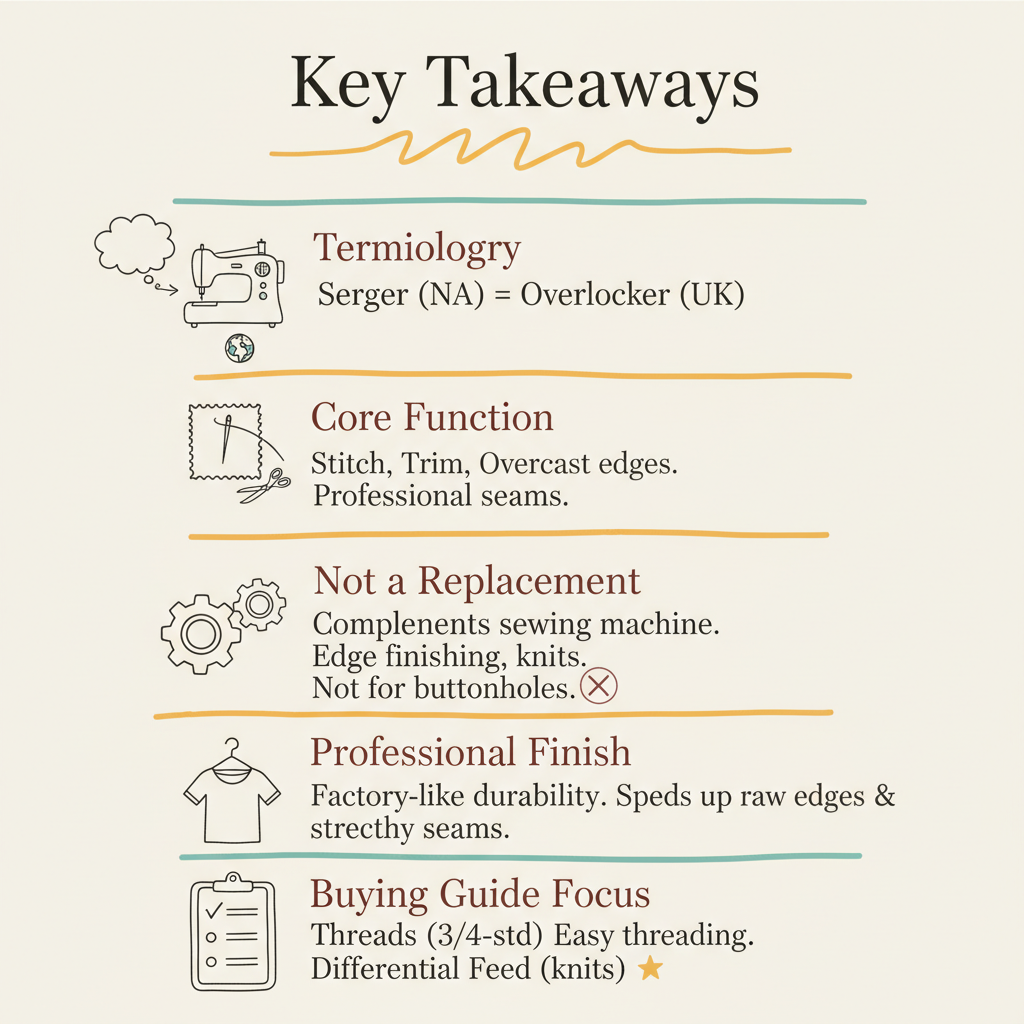
- Terminology: A serger is simply the North American term for an overlocker machine. In the UK, we almost exclusively use the term overlocker.
- Core Function: The primary role of a serger is to simultaneously stitch, trim, and overcast the edge of fabric, creating professional, non-fraying seams quickly and efficiently.
- Not a Replacement: An overlocker does not replace a standard sewing machine; it complements it. It excels at finishing edges and constructing knit garments but cannot perform tasks like buttonholes or topstitching.
- Professional Finish: Using an overlocker is the fastest way to achieve the durable, factory-like finish seen on high-street clothing, especially for securing raw edges and creating stretchy seams.
- Buying Guide Focus: When deciding what serger should I buy?, focus on the number of threads (3/4-thread is standard), ease of threading, and the presence of differential feed for working with knit and stretchy fabrics.
The Next Step: what is a serger sewing machine?
You’ve mastered your standard sewing machine, and now you’ve encountered a mysterious new tool: the serger. You might hear it called a serger, an overlocker, or even a serger sewing machine, but rest assured, they all refer to the same brilliant piece of kit. It’s the machine that transforms a home-sewn garment from ‘homemade’ to ‘professionally finished,’ and it’s essential for anyone serious about their craft.
Overlocker vs. Serger: Clearing Up the Confusion
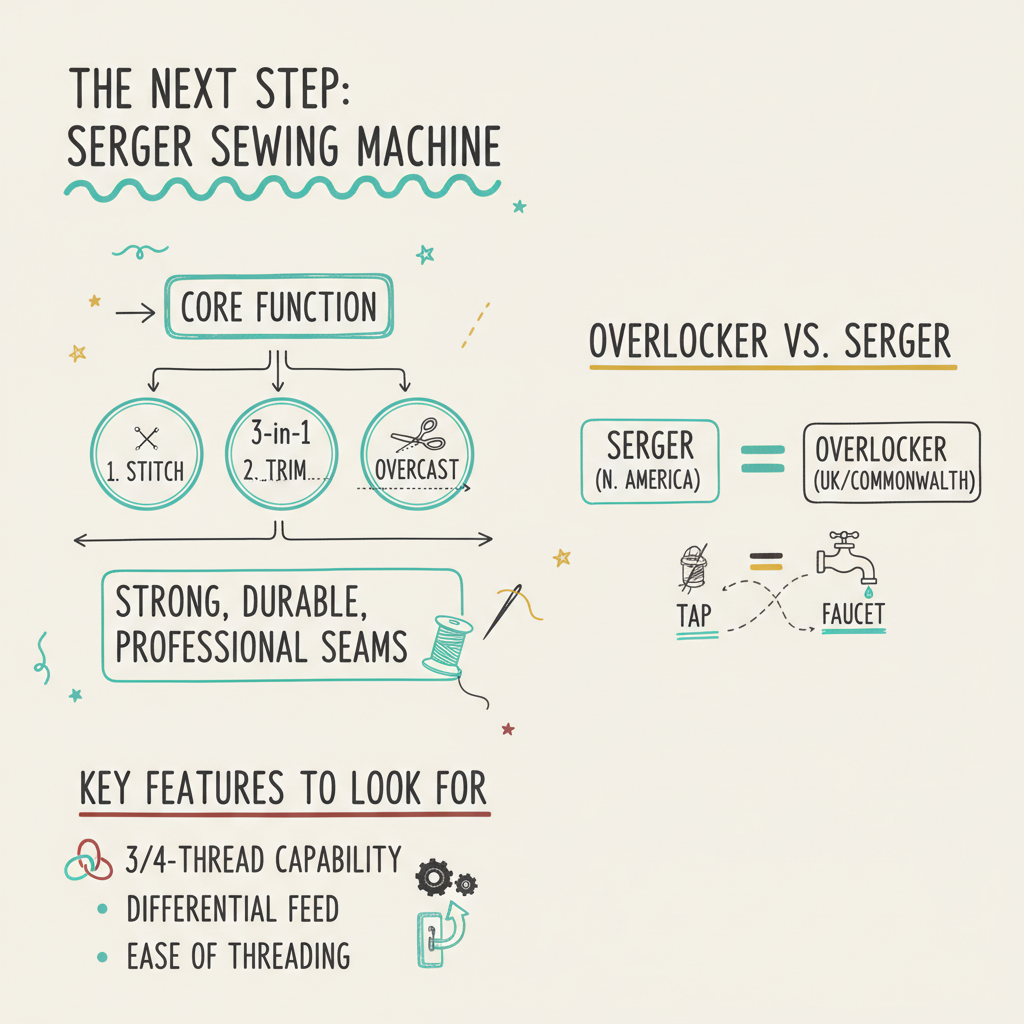
Let’s tackle the most common point of confusion first. What is a serger? In short, it’s the name used predominantly in North America. Here in the UK and in most Commonwealth countries, we call it an overlocker. They are exactly the same machine, performing the same function.
Think of it like calling a tap a faucet—different words for the same thing. Since our classes and articles use British English, we will primarily refer to it as an overlocker from here on, but know that any machine labelled a serger is its twin.
The Core Function: what does an overlocker do?
The overlocker’s function is unique and distinct from a regular sewing machine. A standard machine uses two threads (top and bobbin) to create one line of stitching. An overlocker, or serger, uses three, four, or even five threads that interlock around the raw edge of the fabric.
Critically, the machine includes a built-in blade that trims the fabric edge just before the threads wrap around it. This process achieves three things simultaneously:
- Stitch: It joins two or more pieces of fabric together.
- Trim: It neatly cuts the raw edge of the fabric.
- Overcast: It wraps the thread securely around that newly cut edge, preventing fraying forever.
This speed and efficiency are the answers to the question, what does an overlocker do? It creates strong, durable, and highly professional-looking seams in a single, fluid pass.
Our Unique Insight: The Critical Difference a Serger Makes
When we teach our students about garment construction, we always highlight that the durability and longevity of a piece of clothing often come down to the quality of the seam finish. This is the critical difference a serger makes.
Imagine sewing a T-shirt. You sew the side seam on your regular machine. The seam allowances inside are left raw. Over time, in the washing machine and through wear, those raw cotton or knit edges will begin to shed fibres and fray, weakening the seam.
If you use an overlocker instead, the moment the fabric is trimmed, those edges are encased in a cage of thread. This not only stops fraying but also provides incredible stretch and flexibility, which is non-negotiable when working with modern knit fabrics. This capacity for speed, strength, and elasticity is why every piece of clothing you buy off the rack has been touched by a serger. If you are learning to sew and alter clothes, an overlocker is your express lane to achieving professional results.
Mastering the Machine: what do overlockers do?
Understanding what do overlockers do is about appreciating their versatility beyond a simple seam finish. While the 4-thread overlock stitch is its most common function, these machines are powerhouses with several specialty stitches that can elevate your projects.
Beyond the Seam: Decorative and Specialty Stitches
The overlocker’s true magic lies in its ability to create specialist finishes that are impossible on a regular machine:
- 3-Thread Overlock: Ideal for finishing the edge of non-fraying woven fabrics, such as fine wool or gabardine, or for decorative edges.
- Rolled Hem: This stitch is a game-changer for finishing lightweight or delicate fabrics like chiffon and silk. The overlocker rolls the fabric edge tightly into itself and encases it with dense stitching, producing the neat, fine edge you see on scarves and professional eveningwear.
- Flatlock Stitch: A strong, flat seam often used for sportswear or creating decorative texture. This stitch is designed to be comfortable against the skin, making it perfect for activewear construction.
- Differential Feed: This is an essential feature that allows you to control how quickly the front and back feed dogs move. This prevents stretchy knit fabrics from puckering or woven fabrics from stretching out of shape as they pass through the machine. Learning how to use this machine effectively is a core part of our intermediate courses.
When to Use an Overlocker for a Professional Finish
You should reach for your overlocker whenever you are:
- Working with Knits: Constructing tops, dresses, or any garment made from a stretch fabric. The overlock stitch has the necessary ‘give’.
- Finishing Raw Edges: Sealing the seams inside a jacket, a pair of trousers, or any woven item to ensure they survive regular washing.
- Doing Fine Detail Work: Creating delicate edges on ruffles, napkins, or shirt collars with the rolled hem feature.
- Batch Sewing: When you need speed and efficiency, the overlocker cuts down on the time spent finishing seams.
The Purchase Decision: what serger should i buy?
Now that you know the answer to what is a serger and understand the value of an overlocker, the next logical question is: what serger should i buy? The market can seem overwhelming, filled with three-thread, four-thread, and even five-thread models. As your patient tutor, I want to guide you through the features that genuinely matter, ensuring your investment enhances, rather than complicates, your creative journey.
Essential Features: What to Look for in a Beginner Overlocker
Choosing your first overlocker isn’t about finding the most expensive model; it’s about finding a reliable workhorse with the right foundations. When shopping, focus on these three critical features:
- 3/4-Thread Capability: For almost all home sewing, a machine that can perform both a 3-thread and 4-thread stitch is perfect. The 4-thread stitch is your go-to for strong, construction seams on knits, and the 3-thread is ideal for finishing woven fabric edges and performing rolled hems. Anything more complex, like a 5-thread coverstitch, is usually only necessary for professional tailoring or commercial volumes.
- Differential Feed: As we mentioned before, this is non-negotiable. If you plan to sew stretchy fabrics—the very thing an overlocker excels at—you need the differential feed to prevent wavy, stretched-out seams or puckering. Ensure the machine has clearly labelled, easily adjustable dials for this function.
- Ease of Threading: Overlockers have a reputation for being tricky to thread, but modern machines have vastly improved this process. Look for machines with colour-coded guides inside the looper covers. Better yet, some premium models now offer air-threading, where you simply push the thread into a port and the machine blasts it into place. If you are learning Sewing Classes North London, we often recommend a model with good threading support to reduce frustration.
Addressing the Buying Anxiety: what is the best serger to buy?
The question what is the best serger to buy? is personal, but we can offer some clear direction. The “best” machine is the one you will actually use. For beginners and those moving to Intermediate London Sewing Courses for Adults, we recommend models from established, reliable brands (often Janome, Brother, or Juki).
Instead of focusing on a specific model number, look for the features above, and read reviews that focus specifically on:
- Noise Level: Some cheaper overlockers are extremely loud, which can make long sewing sessions unpleasant.
- Stitch Quality: Ensure the machine produces even, balanced stitches across a range of fabric thicknesses.
- Customer Support: A good brand will have videos and manuals readily available to help you master re-threading and tension adjustments.
Our expert advice is to invest in the best quality machine you can comfortably afford, focusing on the core 3/4-thread capability and a good differential feed.
Actionable Strategy: Troubleshooting Common Serger Issues
While overlockers are fantastic, they can occasionally present challenges. Knowing how to quickly troubleshoot common issues will keep your machine running smoothly:
- Skipped Stitches: This is almost always a sign that your needles are blunt or incorrectly inserted. Solution: Replace the needles (use high-quality serger needles) and ensure the flat side of the needle shank is facing the correct direction, usually toward the back of the machine.
- Wavy Seams (Puckering or Stretching): Solution: Adjust the differential feed. If the fabric is stretching and getting wavy, increase the differential feed setting (e.g., from 1 to 1.5). If the fabric is bunching up or puckering, decrease the setting (e.g., from 1 to 0.7).
- Tension Tangles: If your stitches are messy or loops are forming on the underside, your tension is wrong. Solution: Reset all four dials back to their factory standard setting (usually marked around 4 or 5). Adjust only one dial at a time, usually the needle tension, to see what impact it has before adjusting the loopers.
Frequently Asked Questions (FAQ)
How many threads does a serger need?
A serger typically needs either three or four threads for general home sewing. A 3-thread stitch is used for finishing the edges of woven fabrics and creating rolled hems. A 4-thread stitch is the most common for constructing strong, professional, and stretchy seams on knits. While 2-thread machines exist, and 5-thread machines are available, the 3/4-thread model offers the best balance of versatility and ease of use for the home sewist.
Is a serger hard to re-thread?
The process of re-threading a serger can be daunting at first glance due to the multiple threads. However, if you follow the colour-coded paths precisely and use a pair of long-nosed tweezers, it becomes quite manageable. Many experienced sewists use the “tie-on” method: cutting the old threads, tying the new thread ends to the old ones, and simply pulling them through the machine. This bypasses the need to thread the loopers manually altogether.
Can I use a serger without a regular sewing machine?
You can certainly use an overlocker machine independently, but you cannot replace a regular sewing machine with it. The overlocker is fantastic for creating strong seams and finishing edges, but it cannot perform essential tasks such as topstitching, creating buttonholes, sewing zips, or detailed decorative stitches. The two machines work in tandem, with the overlocker focusing on bulk construction and seam finishing, and the regular machine handling closures and flat stitching.
Conclusion
The overlocker, or serger, is the indispensable companion to your standard sewing machine. It is the tool that closes the gap between the garments you sew at home and the clothes you buy in the shops. By understanding what is a serger and embracing its unique ability to stitch, trim, and overcast simultaneously, you unlock a new level of speed, durability, and professionalism in your projects.
We hope this guide has demystified the overlocker and given you the confidence to consider adding one to your creative toolkit. Whether you’re interested in Custom Private Sewing Lessons London or have a specific question about an overlocker model, we are here to support your journey. Please feel free to visit our Contact page to ask a question or book your next class with us.
About the Author: Grace, Founder of London Sewing Courses
Grace is the heart and hands behind London Sewing Courses. A passionate and experienced sewing instructor, she founded the studio with a unique mission: to create a calm, friendly space for adults to learn and connect, while using the profits to fund free sewing classes for local children in need. Her personal expertise and commitment to community building are at the core of every class and every stitch.
Sources
What is a Serger
(https://thequiltshow.com/quiltipedia/what-is-a-serger)
Serger machine Basics & How to Use a Serger: Start to Finish! (https://www.youtube.com/watch?v=ebrstoiH51I)
What is a Serger
(https://thequiltshow.com/quiltipedia/what-is-a-serger)
Serger machine Basics & How to Use a Serger: Start to Finish! (https://www.youtube.com/watch?v=ebrstoiH51I)
Keep learning
When you want a teacher in the room, see an in-person start with the machine set up for you and the adult programme in north London.